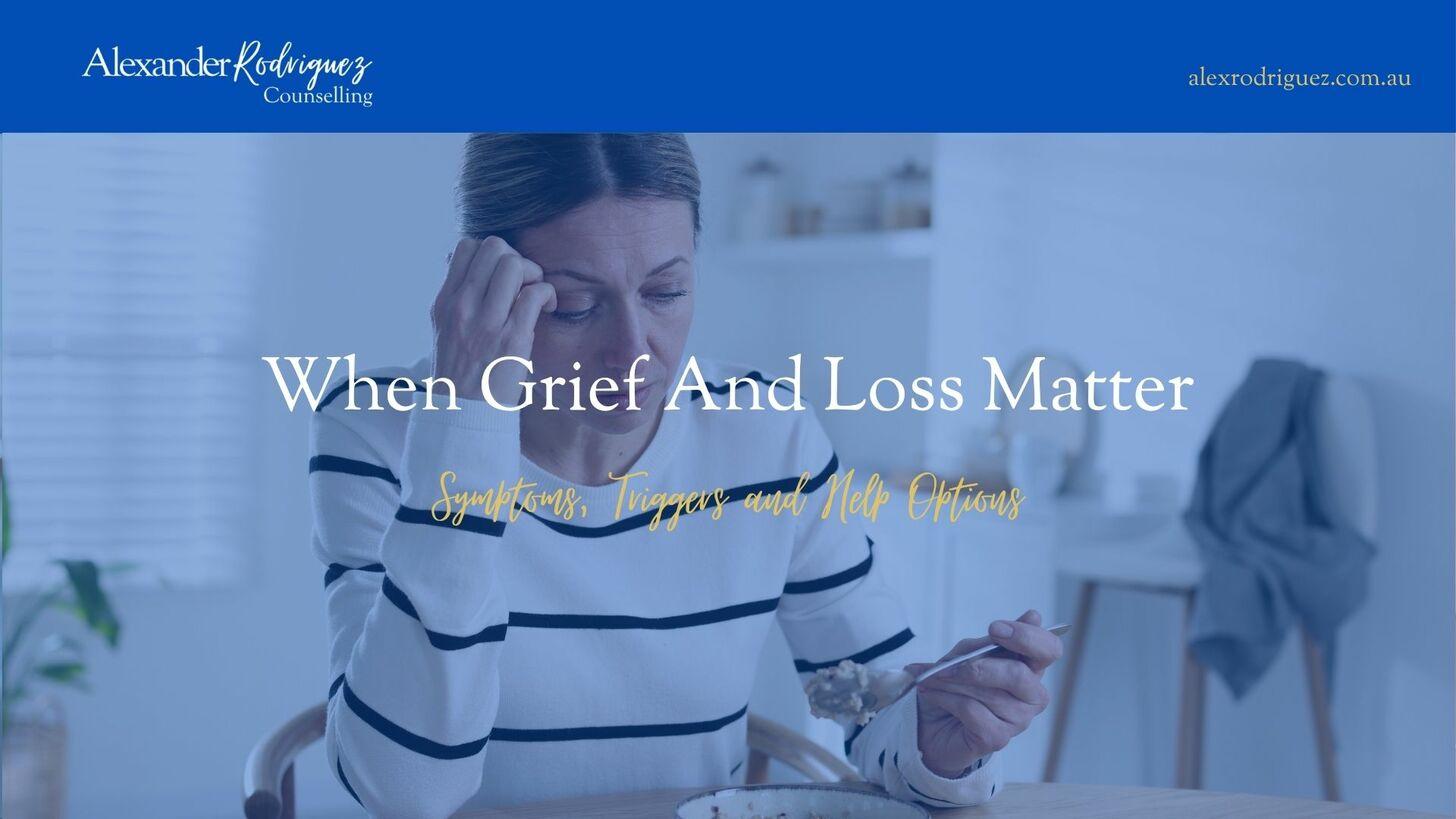
When Grief And Loss Matter: Symptoms, Triggers and Help Options
Grief and loss touch almost every Australian family at some point in life. In 2024, more than 187,000 deaths were registered across Australia, and research suggests that for every death, somewhere between four and nine people are personally affected by the loss. That means millions of people across Sydney, Parramatta and the rest of the country are quietly carrying grief right now, even when it doesn’t show on the outside. If you’re one of them, you’re far from alone, and what you’re feeling is a normal response to a very real loss.
Understanding the grief meaning behind your emotions can help you make sense of what often feels like a whirlwind of ups and downs. Many people find it helpful to learn about the stages of grief, not as a strict checklist to tick off, but as a gentle guide to the range of feelings that can come and go without warning. Dealing with grief and coping with loss looks different for everyone, and there is no single right way to do it or a set timeframe to follow. For some, managing loss becomes a little easier with the right bereavement support, whether that’s leaning on family and friends, joining a support group, or speaking with a professional. Grief counselling and other counselling options can offer a safe, supportive space to work through these feelings at your own pace, with practical strategies tailored to your situation.
You don’t have to go through grief and loss on your own. Alex Rodríguez is here to help. Contact us to talk about the right support for you. Call 0429 220 646, email info@alexrodriguez.com.au, or book online through our booking page.




Alexander Rodriguez
Seize the Day, Book an Appointment Today
Reach out anytime. Book online, call us, or visit our office in person.
Key Takeaways
Grief and loss can follow any major life change, not just death, including breakups, job loss, or health diagnoses.
Grief affects you physically too, causing fatigue, tightness, and disrupted sleep.
The stages of grief move back and forth, not in a straight line.
Coping with loss looks different for everyone, with no fixed timeline.
Grief counselling and bereavement support can help you heal at your own pace.
Understanding the Meaning of Grief and Loss
Many people see grief as a short-term feeling, something that fades after a few weeks or months. In reality, grief and loss are more like a season of life, one that can stretch on longer than you expect and shift in shape along the way. The grief meaning behind this experience goes far beyond sadness after a death. It is about any big change that shakes up your world and challenges how you see yourself, your future, or your sense of safety. You might associate grief with losing a loved one, but it can also show up after a broken relationship, the end of a marriage, a job loss, a health diagnosis, moving away from home, or any major change that turns your life upside down. All of these experiences are valid forms of loss, even if they don’t involve death, and they can affect your thoughts, your emotions, your energy levels, and even your day-to-day choices, sometimes all at once.
This is why dealing with grief looks different from person to person, and why coping with loss is rarely a straight line. Learning about the stages of grief can help you understand why your feelings seem to change without warning, from sadness one day to anger or numbness the next, but these stages are not a fixed checklist, and there is no correct order or timeline to follow. Some people move through them quickly, others sit with certain feelings for a long time, and many find themselves moving back and forth between stages more than once. Knowing this can take some of the pressure off, because managing loss is not about ticking boxes; it is about permitting yourself to feel what you feel, at your own pace. If your grief feels heavier than you can manage alone, bereavement support and grief counselling can offer a safe, steady space to process what you’re going through, and a counselling servicecan help you understand your experience, work through difficult emotions, and build practical strategies for moving forward, without rushing your healing or expecting it to look a certain way.
Defining your personal experience with loss
Understanding grief and loss means seeing how your life has changed. It’s unique to you, shaped by your past and background. You might notice changes in your life in different ways:
- Physical: Changes in sleep, appetite, or feeling tired for no reason.
- Emotional: Feeling sad, irritable, or numb.
- Mental: Trouble focusing or feeling overwhelmed by simple tasks.
By understanding your personal experience, you see that your reactions are normal. Treating yourself with kindness during this time is important.
Why grief is a natural response to change
Grief is a natural, healthy response to losing something important. When things change, your mind and body work to adjust. This shows your ability to care and connect with others.
Seeing grief as a natural response helps you understand your feelings. You’re not just trying to “get over” these moments. You’re learning to include them in your life story. This view can help you feel better as you heal.
Recognising the Common Symptoms of Grief
When you’re dealing with grief, your body often speaks louder than your words. It’s common to feel like you’re carrying a heavy weight, one that shows up as constant tiredness, trouble sleeping, a tight chest, headaches, or a loss of appetite. Some people notice their heart racing for no clear reason, or feel physically drained even after a full night’s rest. Others find it hard to concentrate, forget small things, or feel foggy and disconnected from daily tasks. These physical signs are a normal part of grief, even though they can feel confusing or even a little frightening when you don’t expect them.
Alongside the physical symptoms, grief can bring up a wide mix of emotions, sometimes all in the space of a single day. You might feel sadness, guilt, anger, relief, numbness, or anxiety, and it’s common for these feelings to shift without warning. Some days you may feel like you’re managing fine, and other days even small tasks can feel overwhelming. Coping with loss can also affect your motivation, your relationships, and your interest in things you used to enjoy. If these symptoms are making it hard to function day to day, or they are lasting longer than feels manageable, grief counselling and bereavement support can help you understand what you’re experiencing and give you practical ways to look after yourself while you heal.
Physical manifestations of emotional pain
Research suggests that grief can activate some of the same brain pathways involved in processing physical pain, which may help explain why grief can bring on real physical symptoms like chest tightness, a heavy or “gut-wrenched” feeling, or ongoing fatigue.
Your body is processing a big life event. This can lead to sleep problems or a weakened immune system. Recognising these physical signs is a key step in your grief journey.
Cognitive and behavioural changes to watch for
Beyond physical signs, your mind might change too. It’s normal to experience memory lapses or find it hard to focus on simple tasks.
These changes are usually temporary but can feel overwhelming. When dealing with grief, being gentle with yourself is crucial. Your brain is working hard to process your emotions.
If you’re withdrawing from social activities or struggling with decisions, remember these are common. Prioritising self-compassion helps you heal at your own pace.
Identifying Your Personal Triggers
Learning to spot your personal triggers is a key part of healing. A trigger can be anything that brings your grief to the surface again, even when you feel like you’re doing okay. This might be a date on the calendar, a song, a smell, a place you used to visit together, or even a simple conversation that catches you off guard. Triggers are not a sign that you’re going backwards in your healing. They are a normal part of dealing with grief, and noticing them is often the first step towards understanding your own emotional patterns.
Knowing what sets off your emotions gives you a sense of control over your coping with loss journey. When you can recognise a trigger before it hits, you have more chance to prepare for it, rather than being caught off guard. This might mean planning for anniversaries, permitting yourself to step away from a difficult situation, or simply reminding yourself that a wave of emotion is temporary. Over time, this awareness can make managing loss feel a little more predictable, and can support you in building healthier ways to respond when grief resurfaces. If certain triggers continue to feel overwhelming, grief counselling can help you explore where they come from and work through them at a pace that feels right for you.
How anniversaries and milestones impact your healing
Anniversaries, birthdays, and holidays can be tough reminders of what’s lost. Even years later, these dates can bring intense waves of grief that feel new. It’s okay to feel a surge of emotions during these times.
As a big date nears, you might feel tired, or your mood could change. Knowing this ahead of time lets you plan for self-care. This way, you’re healthily managing your grief and loss.
Navigating sensory reminders in your daily life
Sensory triggers can be subtle but powerful. A song, a scent, or a familiar place can bring back memories. These unexpected encounters with the past are a natural part of life.
When you meet these triggers, try to acknowledge the memory without letting it take over. You might take a deep breath, focus on the present, or allow yourself a moment to feel. Building these small strategies is crucial for coping with loss and staying emotionally well.
Navigating the Stages of Grief
You might have heard about the stages of grief, often listed as denial, anger, bargaining, depression, and acceptance. These emotional markers were first developed by Elisabeth Kübler-Ross to describe what people go through when facing their own death. Over time, they have been adapted to help anyone dealing with grief and loss, whether that loss is the death of a loved one, the end of a relationship, or another major life change. It’s worth knowing that these stages were never meant to be a strict step-by-step process, and using them in real life is rarely as neat as the list suggests.
In reality, grief doesn’t move in a straight line from one stage to the next. You might feel acceptance one day and then find yourself back in anger or sadness the next, and that is completely normal. Some people skip stages altogether, while others move through them slowly, or revisit certain feelings more than once. Thinking of these stages as a loose guide, rather than a checklist to complete, can take the pressure off and make coping with loss feel less like something you’re doing wrong. If you’re finding it hard to make sense of where you are in your grief, grief counselling and supportive counselling can help you understand your emotions and move through them in a way that feels right for you.
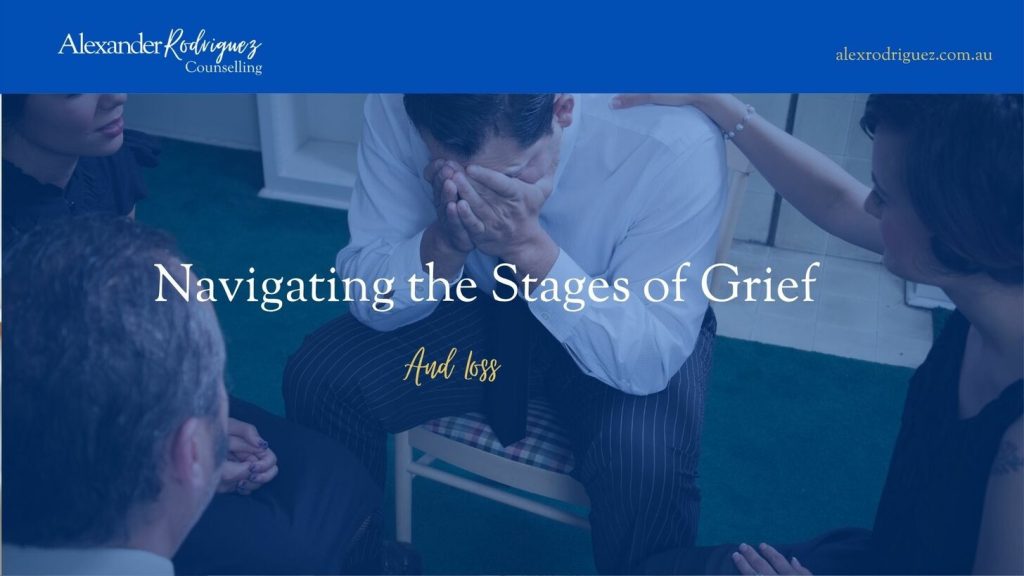
Moving through denial, anger, bargaining, depression, and acceptance
The journey starts with denial, feeling numb or detached. As the shock fades, anger kicks in. You might lash out at yourself, others, or the situation.
Then, bargaining comes, where you look for ways to change things. Depression follows, filled with deep sadness and reflection. Finally, acceptance means you’ve found a way to integrate this change into your life. Remember, these stages of grief are just tools for understanding your emotions.
Understanding that healing is not a linear process
Many think you must go through these emotions in order. But grief and loss are not always linear. You might skip stages or go back to them many times.
You could feel several emotions at once, which can be overwhelming. Know that there’s no “right” way to grieve. Your own timeline is okay. By accepting your emotions’ flow, you can release the pressure and be kind to yourself as you heal.
Step One: Acknowledging Your Need for Support
Admitting you need help is a brave step towards healing. When you’re facing grief and loss, it’s easy to feel like you have to stay strong for everyone else, whether that’s your family, your children, or your workplace. You might feel pressure to hold things together, push your feelings aside, or carry on as if nothing has changed. But asking for help is not a sign of weakness. It’s a sign of self-care and strength, and it’s often the first real step towards dealing with grief in a way that actually helps you heal.
It’s common to put off reaching out because it can feel uncomfortable, or because you’re not sure what kind of support you need yet. You don’t have to have it all figured out before you ask for help. Simply recognising that you’re struggling, and being willing to talk about it, is enough to begin managing loss more healthily. Whether that means leaning on trusted family and friends, joining a support group, or speaking with a professional through bereavement support or grief counselling, taking this first step can make the road ahead feel a little less overwhelming.
Breaking the stigma around seeking professional help
Many fear seeking a counsellor, worried about being judged or seen as weak. This fear stops many from getting the care they need. Seeking support is a sign of strength, not weakness.
Talking to a professional gives you a safe space to share your feelings. It shows you value your mental health and are taking charge of your healing. It’s a crucial step in healthily dealing with grief and loss.
Identifying when grief becomes complex or prolonged
Healing is personal, but sometimes your emotions may need extra help. Watch how your daily life is affected by your feelings. If you can’t do your usual things, it might be time to seek help.
Experts look for signs of prolonged grief disorder, lasting over 12 months in adults. Spotting these signs early helps you get the right help for your grief and loss. Your recovery is important, and noticing these signs is the first step to finding peace.
Step Two: Exploring Grief and Loss Counselling Options
You don’t have to face grief and loss alone. Professional support is available to help you make sense of what you’re going through, at a pace that feels right for you. Grief and loss counselling offers a structured, supportive way to work through your emotions, rather than trying to manage everything on your own. This might involve talking through your feelings, learning practical coping strategies, or simply having a safe space to be heard without judgement.
Choosing the right kind of support is a meaningful step towards finding balance again. Some people benefit from one-on-one grief counselling, while others find comfort in group bereavement support, where they can connect with others who understand what they’re going through. counselling service can also help if your grief feels tangled up with other challenges, such as anxiety, relationship changes, or difficulty adjusting to daily life. There is no single right option, and what works well for one person may not suit another. The most important part is taking that first step and reaching out to deal with grief in a way that feels manageable and personal to you.
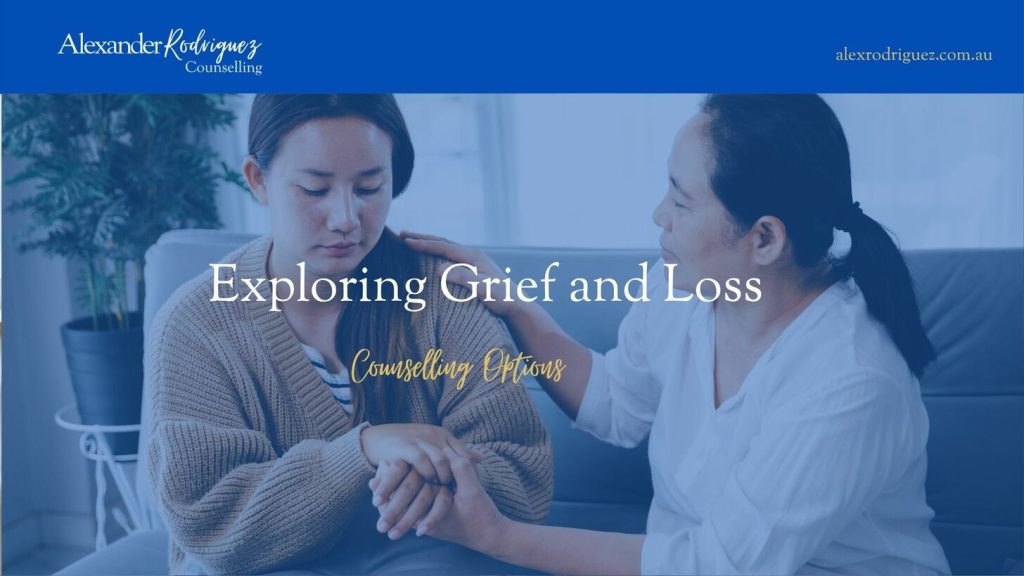
How bereavement counselling provides a safe space
Bereavement counselling gives you a confidential and non-judgmental environment. Here, you can share your deepest feelings. It’s a time to process your pain at your own pace, without pressure.
By working with a professional, you can slowly integrate your loss into your life story. This makes it feel more manageable.
Engaging in bereavement support helps you find healthy ways to cope with sadness. It provides a safe space to explore your memories and emotions. This is crucial for finding peace amidst grief.
The benefits of anticipatory grief support
Sometimes, you may feel grief before a loss, like with a terminal diagnosis. This is called anticipatory grief. It can be as intense as the loss itself. Seeking grief counselling early can help you prepare emotionally.
Professional support during this time helps you connect meaningfully with your loved ones. It gives you tools to manage anxiety and stay well during tough times. Early bereavement support strengthens you to navigate your transition with clarity and kindness.
Step Three: Managing Identity Shifts and Major Life Changes
When your world changes, you might feel like a stranger in your own life. Grief and loss can shake your sense of self in ways you don’t always expect, especially when the change touches something central to who you are, like a relationship, a career, your health, or your role within your family. You may find yourself asking who you are now, without the person, job, or life you once knew. This kind of identity shift is a normal part of grief, even though it can feel unsettling and disorienting at first.
Coping with loss in these moments often means slowly adjusting to a new reality that looks different from what you knew before. This doesn’t mean forgetting who you were or what you had. It means finding ways to rebuild your sense of self while carrying that experience with you. Small steps, like reconnecting with old interests, trying new routines, or simply giving yourself time without pressure to “move on” quickly, can support this process. If managing loss feels especially heavy during this stage, grief counselling and supportive counselling can help you work through these identity shifts and rebuild a steady sense of who you are, at your own pace.
Finding yourself after a significant loss
Rebuilding your identity takes time and gentle self-compassion. You’re not forgetting your past, but adding to it. By accepting changes, you can explore new interests and values.
Managing loss means honouring the past while looking forward. See this change as growth, not a loss of self. You’re still you, but with a deeper understanding of your strength.
Coping with the loss of a relationship or separation
Ending a relationship can make you question who you are. The absence of a partner can feel overwhelming. Seeking support after relationship loss helps you regain confidence and independence.
The table below shows how to handle different parts of your identity during this time:
| Focus Area | Initial Challenge | Growth Strategy |
|---|---|---|
| Social Identity | Feeling isolated or lonely | Reconnect with old friends |
| Daily Routine | Lack of structure | Create new, personal habits |
| Self-Perception | Loss of shared goals | Define new personal milestones |
| Emotional Health | Overwhelming sadness | Practice daily mindfulness |
Remember, grief and loss are unique to each person. Whether it’s a breakup or another big change, you’re not alone. Small, intentional steps will help you find balance and peace.
Step Four: Utilising Online Grief Counselling
Seeking help from home can feel far more comforting when you’re already carrying a lot. When you’re dealing with grief and loss, the thought of getting dressed, travelling, and sitting in an office can feel like too much on top of everything else. This is completely understandable, and it’s one of the reasons more people are turning to online support instead. Digital platforms now offer professional grief counselling that fits into your life more easily, without adding extra pressure to an already difficult time.
Online sessions can give you the same quality of support as an in-person visit, but with the comfort of being in a familiar space. This can make it easier to open up, especially in the early stages of grief when even small tasks can feel exhausting. Counselling services offered online also give you more flexibility with timing, which can be helpful if you’re juggling work, family, or simply don’t have the energy for a longer commute. If you’ve been putting off more flexibility with timing, which can be helpful if you’re juggling work, family, or simply don’t have the energy for a longer commute. If you’ve been putting off bereavement support because it felt like one more thing to manage, online counselling may be a simpler way to start getting the help you need, from wherever feels most comfortable for you.
The effectiveness of secure, remote sessions
Many wonder if online meetings can replace face-to-face ones. Studies show that grief counselling via secure video links is just as good. You get the same empathy, expertise, and support from your own space.
These sessions are private and secure, keeping your story safe. By choosing this, you get top-notch grief and loss support, no matter where you are in Australia.
How to prepare for your first online appointment
Getting ready for your first session can make you feel more grounded. A few simple steps before logging in can make your time more productive. Here are some tips to make your grief counselling session supportive:
- Find a private space: Pick a quiet room where you won’t be disturbed for the call.
- Check your technology: Test your internet, camera, and microphone a few minutes before.
- Create comfort: Keep a glass of water, tissues, or a comforting item nearby to ease your nerves.
- Set an intention: Take a moment to breathe and think about what you want to discuss or achieve.
By preparing your space, you can be more open and honest. This proactive step helps you get the most from each session as you heal.
Step Five: Implementing Daily Coping Strategies
You deserve grace as you learn to manage your grief. When you’re dealing with grief, your body often reacts to stress in ways you might not expect, including changes linked to stress hormones like cortisol. These changes can affect your sleep, your appetite, and even your immune system, which is part of why grief can leave you feeling physically drained, not just emotionally tired. This is a normal response to a difficult experience, and it’s not something you need to push through without support.
Small daily habits can make a real difference in coping with loss, even on the harder days. Simple things like keeping a regular sleep routine, eating regular meals, getting outside for fresh air, or gently moving your body can help support your wellbeing while you grieve. Journaling, talking to someone you trust, or setting aside quiet time to simply rest without pressure can also help with managing loss day to day. These strategies won’t take the grief away, and that’s okay. They are simply small ways to support yourself while you heal. If you’re finding it hard to build these habits on your own, grief counselling and bereavement support can help you develop practical, personalised strategies that suit your own pace and circumstances.
Practising self-compassion during difficult days
Remember, healing is not a race. Practising self-compassion lets you feel tired or overwhelmed without guilt. When you’re coping with loss, treat yourself with kindness, just like you would a close friend.
Small, consistent habits can greatly improve your daily life. Try gentle movement, stay hydrated, and keep a routine. Remember, managing loss takes patience and regular self-check-ins.
Building a support network that works for you
You don’t have to face this alone. Building a strong support network is key. It can include family, friends, or professional counsellors who get you.
If your grief symptoms last or are hard to handle, seeking help is brave. A good network offers emotional support and practical help. Having people who listen without pressure can help you feel grounded.
How to Connect with Alex Rodriguez Counselling
Reaching out for help is a brave step towards healing. If you’re dealing with grief and loss, you don’t have to face it alone. Alex Rodríguez Counselling offers counselling services built on empathy, care, and genuine understanding for tough times, whatever kind of loss you’re working through.
Whether you’re looking for support for yourself or a loved one, connecting with a professional can make a real difference. Our service is designed to create a safe, non-judgmental space, one where your voice is heard and your experience is genuinely understood, without pressure to feel a certain way or heal on anyone else’s timeline. If you’re ready to talk, grief and loss counselling and bereavement support are available to help you take that next step, at your own pace.
Booking your session online for immediate support
Booking your appointment is easy through our digital platform. Visit https://www.alexrodriguez.com.au/counsellor-booking/ to access our scheduling system. Choose a time that suits you best.
Contacting the service via phone or email
Want to talk directly or have questions? Feel free to reach out. Call 0429 220 646 to discuss your situation.
Starting can feel daunting. Here’s a quick guide on how we can help you.
| Contact Method | Primary Purpose | Availability |
|---|---|---|
| Online Booking | Schedule sessions | 24/7 Access |
| Phone Support | Direct enquiries | Business Hours |
| Detailed questions | Mon – Fri | |
| Service Focus | Grief and loss | Professional Care |
Conclusion
It takes courage to face your emotions and start healing. Everyone experiences grief and loss in their own way, and there is no right or wrong way to feel. Understanding the meaning behind your emotions and recognising that the stages of grief rarely move in a straight line can help you make sense of what feels like a whirlwind some days. Dealing with grief and coping with loss rarely happens all at once, and that’s okay. You have the strength to move forward when you’re ready, even if that feels hard to believe right now, and small steps taken consistently can support you in managing loss over time. Your mental health deserves that same care and attention as anything else in your life.
Seeking support from a professional can make a real difference. counselling service offering grief counselling and bereavement support can provide a safe, non-judgmental space to talk through your feelings, understand your experience, and slowly build the tools to move forward. This kind of support can help you feel a little less alone as you carry what you’re going through. Your future still holds possibility, even after loss. In time, many people find new meaning, new connections, and a renewed sense of who they are. Be patient and gentle with yourself as you navigate these changes, and know that support is there whenever you’re ready to reach out.
You don’t have to go through grief and loss on your own. Alex Rodríguez is here to help. Contact us to talk about the right support for you. Call 0429 220 646, email info@alexrodriguez.com.au, or book online through our booking page.