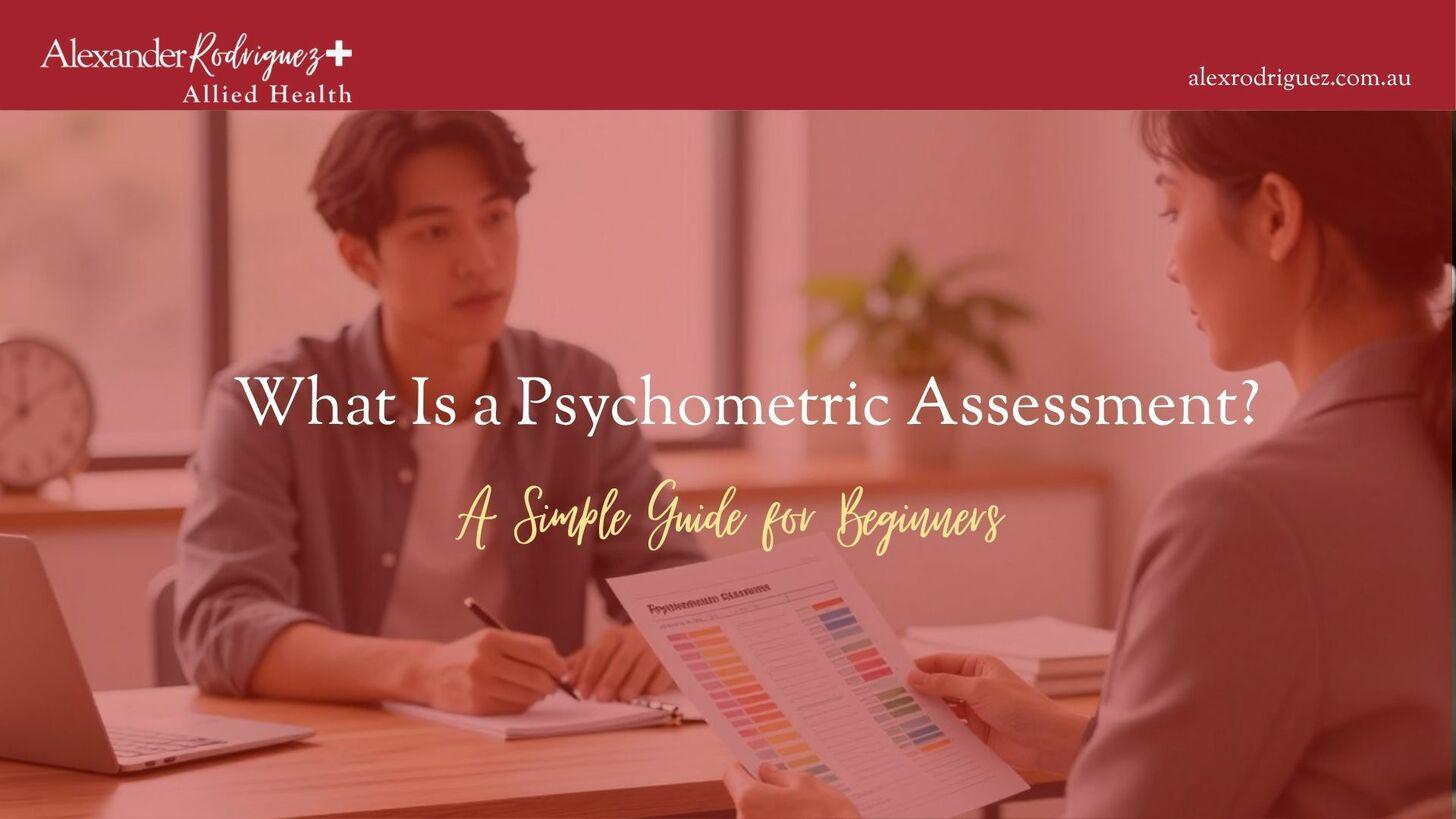
What Is a Psychometric Assessment? A Simple Guide for Beginners
A psychometric assessment can be a helpful starting point when you want to understand more about who you are and how your mind works. Mental health support matters more than ever, with one in five Australians (21.5 percent, or around 4.3 million people) experiencing a mental health condition each year, according to the Australian Bureau of Statistics.
A psychometric assessment test can offer real insight into your personality, thinking patterns, and emotional strengths. It is not about labelling you or defining who you are. It is about helping you build a clearer picture of yourself, so you can move forward with more confidence.
What is a psychometric assessment practice actually like, and what is a psychological report you might receive at the end of it? In simple terms, the process brings together structured questions, guided tasks, and professional support to complete a thorough mental health evaluation. It is often used as part of a wider psychology service or allied health service, working alongside counselling, coaching, or occupational therapy to support your overall wellbeing. Whether you are exploring this for personal growth or working through a specific challenge, this guide will walk you through what to expect, step by step, in a way that feels simple, supportive, and easy to follow.
Clarity starts with one conversation. If you are curious about what a psychometric assessment could mean for you, book yours today with Alex Rodriguez.
Book an appointment, call 0429 220 646, or email info@alexrodriguez.com.au to enquire.




Alexander Rodriguez
Seize the Day, Book an Appointment Today
Reach out anytime. Book online, call us, or visit our office in person.
Key Takeaways
- A psychometric assessment offers clear insight into your personality and thinking style.
- It’s a starting point, not an endpoint, in your mental health journey.
- Results are explained through a simple psychological report.
- A psychology service can help guide meaningful next steps.
Understanding the Basics of a Psychometric Assessment
A psychometric assessment is more than just a test. It is a structured way to understand how your mind works, how you process information, and how you respond to different situations. Rather than guessing or relying on assumptions, a psychometric assessment test uses evidence-based tools to give you a clearer, more objective picture of your strengths, thinking style, and behaviour patterns. These tools are built on established psychological research, which means the results are grounded in science rather than personal opinion. This is what sets a proper psychometric assessment practice apart from casual online quizzes or personality tests you might find on social media.
Once the assessment is complete, you are usually provided with a summary of your results, which brings us to what a psychological report is. This report pulls your responses together in plain language, explaining what your results may mean and how they relate to your everyday life, so you do not need any clinical background to make sense of it. A psychometric assessment is often just one part of a broader mental health evaluation, meaning it is rarely used on its own. It usually works alongside a conversation with a professional, who can add context to your results within the setting of a wider psychology service, which may also sit under a broader allied health service, working together with support such as counselling, occupational therapy, or life coaching.
Defining the assessment process
The process starts with a structured method. It aims to capture your cognitive and emotional state accurately. Unlike casual talks, it uses evidence-based questions for reliable results. It’s like a roadmap for tackling personal and professional challenges.
The role of standardisation in testing
Standardisation is key in a psychometric assessment. It makes sure everyone is judged the same way. This removes bias found in subjective interviews. So, your results truly show your abilities, not external factors.
What these assessments measure in your daily life
These tools check various skills that affect your daily life. They look at problem-solving and personality traits. By spotting these patterns, you get objective insights for future decisions. Knowing this makes the testing process clearer and shows why consistency is crucial.
| Feature | Subjective Interview | Psychometric Assessment |
|---|---|---|
| Data Type | Qualitative/Opinion | Quantitative/Scientific |
| Consistency | Variable | Highly Standardised |
| Bias Risk | High | Low |
| Primary Goal | General Rapport | Objective Measurement |
Why You Might Need a Mental Health Evaluation
Understanding yourself can change how you face daily challenges. Life can be tough, and there are times when working through things alone feels overwhelming. A mental health evaluation acts like a bridge, connecting what you are experiencing with practical support that actually fits your situation. Rather than leaving you to guess what might help, it gives you a clearer starting point based on real information about how you think, feel, and respond to stress. You might consider a mental health evaluation if you are feeling persistently overwhelmed, stuck in unhelpful patterns, or unsure why certain challenges keep resurfacing in your life. It can also be useful if you are preparing to start counselling or another form of support and want a clearer picture of what is going on before you begin.
In many cases, a psychometric assessment forms part of this evaluation, helping to identify patterns in your thinking, emotions, or behaviour that might not be obvious on the surface. Exploring your wellbeing this way is a meaningful step, not a small one. It is not about being given a label or a diagnosis for its own sake. It is about finding the right tools and support to help you thrive, whether that is through a psychology service, counselling, or another form of personalised care. Taking this step often brings a sense of relief, simply because you finally have language and structure around what you have been carrying.
Identifying patterns in your behaviour
We often do things without noticing. You might avoid social events or get stuck in negative thoughts. Recognising these patterns is the first step to change.
Seeing these patterns lets you choose a new path. A professional can help you understand and manage these habits.
Gaining objective insights into your mental state
It’s easy to get lost in your feelings when you’re overwhelmed. A mental health evaluation offers a clear view. You get feedback on why you feel certain ways.
This clarity helps you focus on strategies that work for you. You move from self-doubt to a structured plan for your mental health.
When to seek professional guidance
Reaching out for help is a sign of strength. If your usual ways of coping don’t work, it’s time for a professional’s view. Look for these signs:
- Your daily routine is disrupted by worry or sadness.
- Your usual coping methods aren’t enough anymore.
- Emotional strain is affecting relationships or work.
- You notice changes in sleep, appetite, or energy.
Getting a mental health evaluation ensures you get the right care. You deserve support as you work towards a better you.
The Core Components of a Psychometric Assessment Practice
Knowing what makes up a proper psychometric assessment practice can help you feel more confident about the results you receive. Rather than being a single test, it is usually broken down into a few clear parts, which allows the professional guiding you to build a fuller, more accurate picture of your mental and emotional patterns. This structured approach means every finding is grounded in solid data, rather than a general impression or a one-off conversation.
A typical psychometric assessment often includes standardised questionnaires, structured tasks, and a discussion with a professional to add context to your responses. Together, these components form the basis of a broader mental health evaluation, helping to ensure the results reflect a genuine understanding of you, rather than a narrow snapshot. This is also what distinguishes a professional assessment from an informal quiz, since each part of the process is designed to work together, giving you results you can actually trust and act on.
Cognitive and intellectual testing
This part looks at how you handle information, solve problems, and think critically. It’s not about judging you, but finding your natural cognitive strengths and areas for improvement. These tests show how your brain deals with complex tasks every day.
Personality and emotional profiling
Your character and mood are key to your well-being. A psychometric assessment maps your emotional landscape. It helps you understand your reactions to different situations. This insight is invaluable for personal growth and better coping strategies.
The importance of clinical observation
Just data doesn’t tell the full story of your life. Clinical observation adds a human touch. It looks at your test results in the context of your life and surroundings. This makes your psychometric assessment practice compassionate, accurate, and tailored to you.
| Component | Primary Focus | Key Benefit |
|---|---|---|
| Cognitive Testing | Problem-solving skills | Identifies learning strengths |
| Personality Profiling | Emotional traits | Enhances self-awareness |
| Clinical Observation | Contextual history | Ensures personalised care |
What Is a Psychological Report and How Does It Benefit You
Understanding what a psychological report is is a key part of your journey towards better self-understanding. In simple terms, it is a written summary that brings together the results of your psychometric assessment, explained in plain language rather than clinical terms. Instead of leaving you with a page of numbers or technical scores, a good report connects your results back to your everyday life, helping you understand what they actually mean for how you think, feel, and behave.
The real value of a psychological report lies in how it turns complex information into something practical and useful. Rather than being an endpoint, it often becomes a starting point, guiding the next steps in your mental health evaluation or wider support, whether that is counselling, coaching, or ongoing work with a psychology service. Many people find that having this report in hand brings a sense of clarity, since it puts language around experiences that may have felt confusing or hard to explain before. It is not about being given a fixed label, but about having a clearer, evidence-based foundation to help guide your next decisions.

Interpreting the data in your report
Receiving your results can feel overwhelming. We make sure you grasp what it means for you. We break down the data to highlight your unique strengths and areas for growth.
This clarity empowers you to manage your mental health. You’ll understand why you feel or act in certain ways. You’ll see your cognitive and emotional patterns clearly.
Using findings to inform your treatment plan
Your report’s data is crucial for a good treatment plan. Reviewing it with your therapist creates a tailored roadmap for recovery. This ensures therapy stays focused on your goals.
- Targeted interventions based on your specific needs.
- Clearer communication between you and your therapist.
- Better tracking of your progress over time.
Sharing results with other health professionals
Your care team, like GPs and psychiatrists, needs to know your history and needs. Sharing your report helps them understand you better. This leads to a holistic approach to your health, avoiding fragmented care.
By ensuring everyone is informed, your treatment is consistent. This transparency lets you confidently advocate for your health.
Common Types of Psychometric Assessment Tests
When you start focusing on your mental health, you might come across different types of assessments along the way. A psychometric assessment test is generally used by trained professionals to better understand your thoughts, feelings, and behaviour, rather than relying on guesswork or a single conversation. These tools are designed to bring more clarity to your mental health picture, helping to highlight patterns that might otherwise be difficult to put into words.
Common types include personality assessments, which look at how you typically think, feel, and interact with others, and cognitive assessments, which explore areas such as memory, attention, or problem-solving. There are also emotional and behavioural assessments, which focus on how you respond to stress, manage emotions, or navigate everyday challenges. Depending on your situation, one or more of these may form part of a broader mental health evaluation, giving both you and your practitioner a clearer, more complete understanding of what is going on beneath the surface.
Screening for anxiety and depression
Many people start with a psychometric assessment test to feel better. These tools spot symptoms early, which is key for Anxiety Support. By answering questions, you help your therapist understand your feelings better.
These tests also help with Depression Support by noticing patterns you might miss. Early intervention is crucial for a lasting recovery. You’re not alone, and these tests are a step towards the care you need.
Assessing emotional regulation capabilities
Knowing how you handle your emotions is key to your mental health. Emotional Regulation Support starts with checking how you deal with stress. These tests see if you can identify, process, and share feelings in a good way.
They help you find out how you cope now and teach you better ways. This makes you more empowered to handle life’s challenges with confidence.
Tools for measuring self-esteem and resilience
Building self-confidence is a journey that benefits from clear measures. Self-Esteem Building Support uses tools to see how you see yourself. These tests help you see your strengths, even when things are tough.
Resilience is also measured. These tools check if you can bounce back from hard times and stay positive. The table below shows how these assessments help you grow:
| Assessment Focus | Primary Goal | Outcome |
|---|---|---|
| Anxiety & Depression | Symptom Identification | Targeted Care Plans |
| Emotional Regulation | Coping Strategy Analysis | Improved Stability |
| Self-Esteem & Resilience | Strength Recognition | Increased Confidence |
Knowing about these tests can make you feel more ready and confident when seeking help. Each test is a tool to help you understand yourself better. Your mental health journey is unique, and these assessments support you every step of the way.
How Alex Rodriguez Allied Health Supports Your Mental Clarity and Resilience
Finding the right balance in life takes support, not just effort. At Alex Rodriguez Allied Health, we understand that everyone’s story is different, which is why our approach is built around you, not a fixed formula. Whether you are exploring a psychometric assessment for the first time or looking for ongoing support, our focus is on creating a safe, non-judgemental space where you can explore your thoughts and feelings openly.
We take the time to understand your circumstances before recommending any next steps, so the support you receive genuinely reflects your needs, not a generic process. Depending on what feels right for you, this may include a psychology service, counselling, or a broader allied health service, all working together to support your mental clarity and long-term resilience. Our aim is simple: to help you move forward with more self-understanding and practical tools you can actually use in daily life, at a pace that feels manageable for you.

The Approach to Holistic Mental Health
We see wellness as more than just treating symptoms. Our team takes a holistic approach that looks at your physical, emotional, and social health together. This way, we help you find the root of your challenges and celebrate your strengths.
Building your personal resilience toolkit
Life’s ups and downs can be tough, but you’re not alone. We help you build a personal resilience toolkit to manage stress better. This toolkit includes strategies to improve your Mental Clarity and Resilience Support over time:
- Mindfulness techniques to stay calm in tough times.
- Cognitive reframing exercises to change negative thoughts.
- Setting healthy boundaries to protect your emotional energy.
- Stress-management routines for everyday life.
Why Individual Needs Come First
Your mental health journey is personal, so we don’t use a one-size-fits-all approach. We focus on your unique needs by tailoring your care plan to your goals and situation. Our practitioners listen to your concerns and adjust our support to make you feel heard and valued. By focusing on your unique path, we help you achieve lasting clarity and emotional well-being.
Exploring Our Range of Psychology Services
Finding the right psychology service can make a real difference in how you manage life’s ups and downs. At Alex Rodriguez Allied Health, our approach is grounded in evidence-based practice, meaning the support you receive is based on established psychological research rather than guesswork. Whether you are working through anxiety, low mood, stress, or simply want a clearer understanding of yourself, we aim to give you practical tools you can use in everyday life, not just theory.
Our range of support may include a psychometric assessment to help build a clearer picture of your thinking and behaviour patterns, alongside structured psychological support tailored to your individual circumstances. This often works alongside other services, such as counselling or a wider allied health service, depending on what best supports your goals. Rather than a one-size-fits-all approach, everything is designed around your personal situation, so you can move forward with tools and strategies that genuinely fit your life.
General psychology and stress support
We offer General Psychology Therapy for many mental health issues. Our team helps with anxiety, low mood, and life changes. We also have Stress Support to manage daily stress.
Trauma-informed care and emotional regulation
Our clinic focuses on Trauma Support with care and science. Healing is personal, and we create a safe space for you. We teach emotional regulation support to manage strong feelings and find stability.
Relationship and family stress support
Relationships affect your well-being. We offer Relationship Issues Support for better communication and conflict resolution. Our Family Stress Support aims to strengthen family bonds and create a healthier home.
| Service Category | Primary Focus | Key Benefit |
|---|---|---|
| General Psychology | Daily mental health | Improved clarity |
| Trauma Care | Past experiences | Emotional safety |
| Relationship Support | Interpersonal bonds | Better communication |
| Family Stress | Home dynamics | Increased harmony |
Preparing for Your Individual Therapy Sessions
Starting your journey towards better mental health is a big step, and getting ready for your individual therapy sessions can help you make the most of each visit. Coming in with an open mind, rather than a fixed idea of what needs to happen, creates more space for genuine change and growth. It can help to think about what has been on your mind lately, any patterns you have noticed in how you feel or react, and what you are hoping to get out of the process, even if that feels a little unclear at first.
You do not need to have everything figured out before your first session. If you have recently completed a psychometric assessment or received a psychological report, bringing these along can give your therapist useful context and help guide your conversations from the start. Beyond that, simply showing up honestly, at your own pace, is enough. Individual therapy is not about getting things right; it is about having a consistent, supportive space to work through what matters to you, with practical strategies you can carry into everyday life.
What to expect during your first visit
Your first meeting will be in a warm and welcoming environment. We aim to understand your history and concerns. This time is just for you, helping us build trust and understanding.
Setting goals for your therapeutic journey
We think setting clear goals is key for Individual Therapy Sessions. We’ll work together to set goals that guide your progress. These goals help you see your growth and stay motivated.
Creating a safe space for open communication
Our main goal is to create a safe space for you. Here, you’ll feel heard, respected, and supported. We value honest talk, helping you share your story with empathy and guidance.
How to Book Your Allied Health Service Today
Getting help for your mental health does not need to be complicated. We have made booking our allied health service as simple as possible, so you can focus on taking the step that matters most, reaching out. Whether you are interested in a psychometric assessment, individual therapy, or a broader psychology service, the process starts with a quick conversation to understand what kind of support suits your situation.
Contacting Alex Rodriguez Allied Health
Want to talk to our team? We’re here to answer any questions. Personalised support is just a call away.
Call us at 0429 220 646 to book a time for your first visit. Our staff will help you find a good time.
Using our online booking system
Prefer to book online? Our digital platform makes it easy. You can check times and book your psychology service at your convenience.
To book, visit https://www.alexrodriguez.com.au/booking/. Choose your practitioner and time. After confirming, you’ll get a notification to complete your booking and start your journey.
Conclusion
Understanding your mental health is a meaningful step in taking care of yourself, and a psychometric assessment can help bring more clarity to that process. A psychometric assessment test, guided by a proper psychometric assessment practice, can help you move through life’s challenges with a little more confidence and a clearer sense of direction. Once complete, what is a psychological report often becomes clearer too, since it turns your results into practical insights you can actually use, rather than leaving you with confusing data on its own.
Support like this works best when it is tailored to your individual circumstances, rather than a generic, one-size-fits-all approach. Whether you are exploring a psychology service, a broader mental health evaluation, or a wider allied health service, you do not have to navigate it on your own. Taking this step is often the hardest part, and it is one worth taking. If you have been considering a psychometric assessment or wondering what support might look like for you, reaching out is a good place to begin.
Clarity starts with one conversation. If you are curious about what a psychometric assessment could mean for you, book yours today with Alex Rodriguez.
Book an appointment, call 0429 220 646, or email info@alexrodriguez.com.au to enquire.