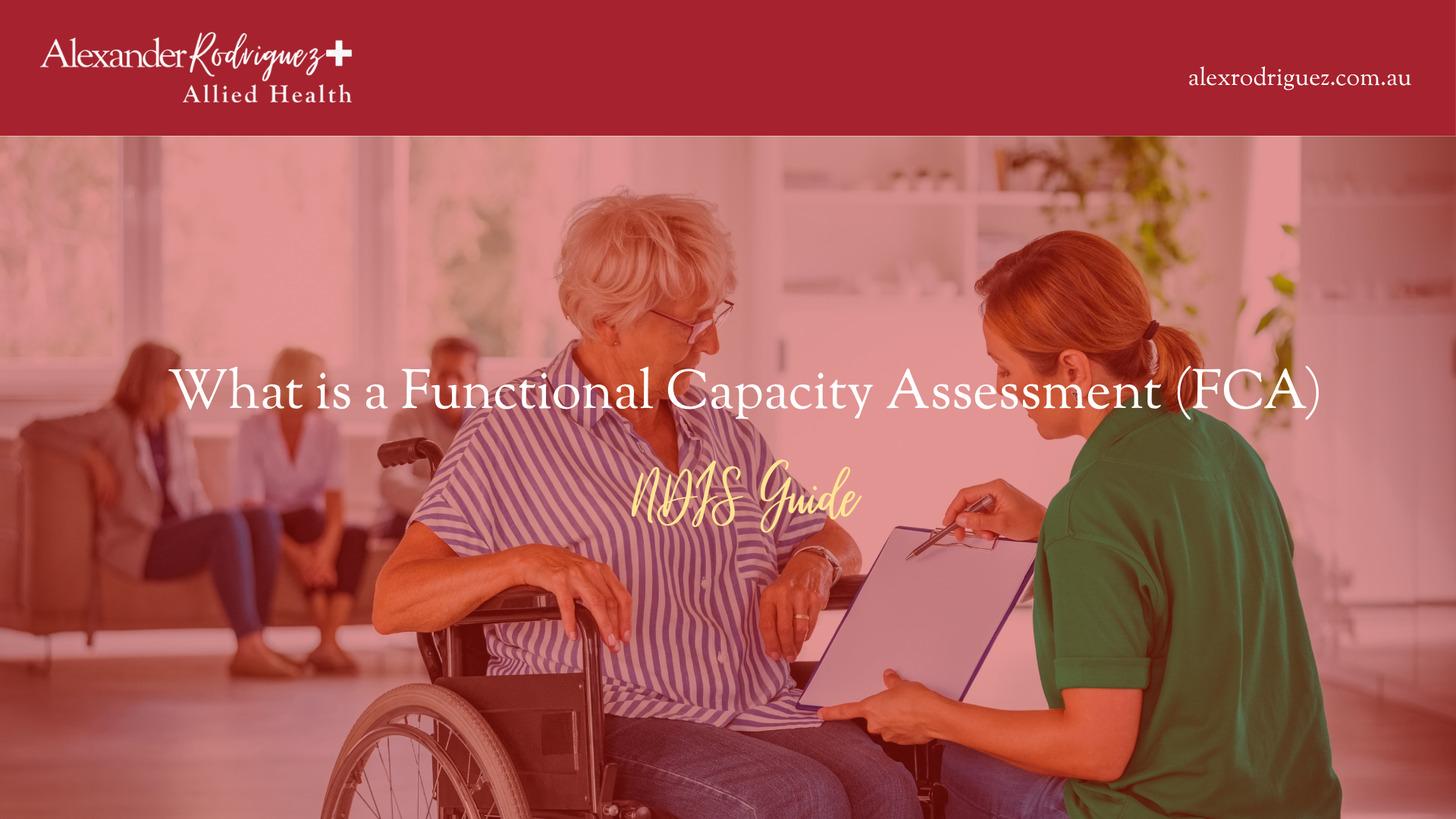
What is a Functional Capacity Assessment (FCA)? NDIS Guide.
In Australia, around 1 in 6 people, or about 4.4 million people, live with disability, and 761,442 people in Australia were benefiting from the NDIS. This shows why clear, practical evidence is so important when you are applying for support or preparing for an NDIS plan review. If you have been asking what a functional capacity assessment is, it is a professional assessment that looks at how well you manage daily activities such as personal care, mobility, communication, decision-making, and community participation. It helps show not just your diagnosis, but how your condition affects your day-to-day independence in real life.
Usually completed by an Occupational Therapy professional, a functional capacity assessment gives the NDIA a clearer picture of the barriers you face and the supports that may be considered reasonable and necessary. The final FCA report can help explain where you need help, what risks or challenges affect your routine, and what support could improve your safety, independence, and quality of life. For many people, knowing how to get an FCA through a trusted Allied Health Service can make the process feel less overwhelming and far more manageable.
Occupational Therapy is available through Alex Rodriguez Allied Health Service. Call on 0429 220 646, email info@alexrodriguez.com.au, to take the first step. We know how vital a positive outlook is, and our services aim to help people see life in a brighter light.




Alexander Rodriguez
Seize the Day, Book an Appointment Today
Reach out anytime. Book online, call us, or visit our office in person.
Key Takeaways
- Functional Capacity Assessment (FCA) explains how disability affects daily life.
- OT assessment provides evidence used in NDIS decisions.
- FCA report supports funding and plan reviews.
- Functional areas include self‑care, mobility, communication, and participation.
- Clear evidence helps align your NDIS plan with real support needs.
Understanding the Functional Capacity Assessment
Understanding a Functional Capacity Assessment is important if you want to show how your disability affects your everyday life and what supports you may need through the NDIS. This assessment is designed to look at how well you manage daily activities across different settings, not just in one place or during one moment. It helps build a full picture of how you function at home, in the community, during appointments, at work, at school, or in other parts of your routine. Rather than focusing only on a medical diagnosis, the assessment looks at how your condition affects your real-life ability to complete tasks such as showering, dressing, cooking, moving around safely, communicating with others, managing emotions, making decisions, and taking part in social or community activities. This information is important because the NDIA uses evidence like this to better understand the level of support you may need to live more independently and safely.
A qualified Occupational Therapist (OT) or another relevant health professional usually assesses by observing your abilities, asking detailed questions, and reviewing how your disability affects your day-to-day functioning over time. They look at both your strengths and the areas where you need assistance, support, supervision, or assistive equipment. The goal is not just to describe what you struggle with, but to explain how those challenges affect your independence, participation, and overall quality of life. Once completed, the assessment findings are included in a report that can help support your NDIS application, plan reassessment, or funding review. A strong assessment can make your plan more accurate by showing why certain supports, services, or therapies may be reasonable and necessary for your situation.
The Role of Occupational Therapists in Functional Capacity Assessment
Occupational Therapists play a key role in a Functional Capacity Assessment because they assess how your disability affects your ability to manage everyday tasks such as personal care, household activities, mobility, communication, community access, and work or study responsibilities.
They look at both your strengths and the areas where you need support, making sure the assessment reflects your real daily experience rather than just your diagnosis. By understanding how you function in different parts of life, they can prepare an FCA that clearly explains your needs, highlights your abilities, and supports recommendations for practical assistance, helping the NDIA make better decisions about the supports that may be reasonable and necessary for you.
Components of a Functional Capacity Assessment
A Functional Capacity Assessment looks at different areas, like:
- Daily living skills
- Community participation
- Work or school-related tasks
- Social interactions
Here’s what an FCA might check and what support you might need:
| Domain | Assessment Focus | Potential Support Needs |
|---|---|---|
| Daily Living Skills | Personal care, meal preparation, and household chores | Assistance with daily tasks, adaptive equipment |
| Community Participation | Shopping, using public transport, and social activities | Support for community access, social skills training |
| Work/School Tasks | Job-specific tasks, study skills, workplace adaptations | Workplace modifications, educational support |
Why do you need an OT functional capacity assessment for your NDIS plan?
Key Benefits of an OT Functional Capacity Assessment
The key benefits of an OT functional capacity assessment include:
- Accurate identification of your support needs
- Justification for funding requests
- Tailoring of support mechanisms to your individual needs
- Enhanced clarity for NDIS planners
Getting an OT functional capacity assessment ensures your NDIS plan supports your goals. This proactive step can make a significant difference in the effectiveness of your support plan.
Using an OT functional capacity assessment in your NDIS plan review makes support more effective. It’s a vital step to make sure your plan meets your current needs and goals.
How to get an FCA and what the process involves
Steps Involved in Getting an FCA
To start, you’ll follow a few key steps:
- Initial Meeting: You’ll talk about what you need and want with an occupational therapist.
- Information Gathering: The therapist will collect details about your health, skills, and any challenges you face.
- Practical Assessment: You’ll do tasks that show how well you can do daily activities.
- Report Writing: The therapist will write a detailed report based on what they found.
- Review: You can look over the report and talk about the suggestions made.
Knowing these steps helps you get ready. The first meeting is important because it starts the whole process.
Key Benefits of the FCA Process
In the practical assessment, you’ll do tasks that are like everyday activities. These might be physical or mental, depending on what the assessment focuses on.
The report writing phase is when the therapist puts together all the information. This report will show your strengths and challenges. It will also suggest ways to help you.
| Benefits | Description |
|---|---|
| Personalised Assessment | The FCA is made just for you, based on your needs and goals. |
| Comprehensive Evaluation | The assessment looks at many parts of your ability to function. |
| Informative Report | The final report clearly shows what you can do and what’s hard for you. |
Understanding the FCA process helps you move through the NDIS system. It makes sure your plan meets your needs.
What happens during an NDIS functional capacity assessment?
What the Assessor Will Look At During the Assessment
During the test, the assessor might use different ways to find out information. They could:
- Watch you do daily tasks to see what you can and can’t do.
- Ask you questions to learn more about your daily life and any problems you face.
- Talk to people who support you, like family or healthcare workers, to understand your needs better.
The assessor will watch how you handle personal care, household tasks, and other daily activities. They might also check if you can learn new things, manage your time, and get along with others.
The main aim of the NDIS functional capacity assessment is to understand your abilities and what support you need. By knowing what happens in this assessment, you can prepare better and feel more confident.
How an FCA report influences your NDIS plan review
Why the FCA Report Matters for Your NDIS Plan
The FCA report is important because it:
- Shows detailed evidence of your abilities and needs.
- Links strategies and supports to your personal goals.
- Helps the NDIA see how supports will improve your independence and life quality.
By using the FCA report’s evidence and recommendations, you can work well with the NDIA. This way, your NDIS plan will really meet your needs. So, the FCA report is more than a document; it’s a key to unlocking the right supports and services for your future.
Expert occupational therapy services at Alex Rodriguez Allied Health
Daily living skills and independence building
They focus a lot on daily living skills and independence building. The therapists work with you to find ways to do daily tasks better. This helps you become more independent and live on your own terms.
They give you personalised therapy to help you manage your daily life better. You’ll learn to handle everyday tasks with more ease and confidence.
Cognitive, behavioural, and emotional regulation support
The team also helps with cognitive, behavioural, and emotional regulation support. They teach you how to handle stress, improve your thinking, and control your emotions. This support helps you deal with challenges and feel better overall.
The therapists use proven methods to help with your thinking and feelings. They teach you ways to cope and improve your mental health.
Physical health: Strengthening, mobility, and Occupational injury recovery
The team also works on physical health, like getting stronger, moving better, and recovering from injuries. They use special exercises and programs to help you. This is great for people who want to get back to their usual activities or improve their physical health.
By focusing on your physical health, the occupational therapists at Alex Rodriguez Allied Health help you live better. They also reduce the chance of getting hurt again.

In summary, our occupational therapists are dedicatedis dedicated to providing top-notch occupational therapy services. They help with daily skills, thinking, and physical health. Their team of experts is ready to support you on your journey.
Specialised support for mental health and chronic conditions
Occupational therapy plays an important role in providing specialised support for people living with mental health conditions and chronic illness. It focuses on how your condition affects your daily life and helps you build the skills, routines, and strategies needed to manage everyday tasks more confidently. At Alex Rodriguez Allied Health, support is tailored to your individual needs, with a strong focus on improving your functional capacity, independence, and overall well-being.
The team works with people experiencing a wide range of mental health and chronic health challenges, offering personalised assessments and practical interventions that match their goals and circumstances. By looking at how your condition affects areas such as self-care, routine, mobility, motivation, and community participation, occupational therapists can recommend supports that make daily life more manageable and meaningful. The goal is to help you strengthen your daily functioning and improve your quality of life over time.
Mental Health Occupational Therapy Support
Mental health support is vital for those with anxiety, depression, and PTSD. Our therapists help you:
- Develop coping strategies to manage symptoms
- Improve your daily living skills and routines
- Enhance your social interactions and relationships
- Increase your participation in meaningful activities
This focus helps you gain independence and enhance your quality of life.
Managing Chronic Conditions and Home/Work Function
Managing your health and maintaining function is crucial for those with chronic conditions. Our occupational therapists offer support in:
- Assessing your home and work environments to identify potential barriers
- Developing strategies to manage your condition and reduce the risk of exacerbations
- Implementing adaptive techniques and equipment to enhance your independence
- Creating plans to maintain your physical and mental well-being
Together, we can help you reach your goals and improve your function.
Get Expert Occupational Therapy Support in Sydney
If you are looking for expert occupational therapy support in Sydney, Alex Rodriguez Allied Health is here to help. Whether you want to book an appointment, ask about available services, or learn more about how the team can support your needs, getting in touch is simple. The team is committed to providing clear guidance, helpful information, and personalised support so you can take the next step with confidence. Reaching out is a good way to explore the right service options and find support that suits your goals and daily needs.
Call Our Sydney Office
You can call 0429 220 646 to speak with our friendly staff.
Personalised Occupational Therapy Support for Your Goals
At Alex Rodriguez Allied Health, we offer personalised occupational therapy services tailored to your needs. Whether it’s daily living skills, cognitive and emotional regulation, or physical health, our team is dedicated to helping you achieve your goals.

We look forward to working with you and supporting your journey towards improved health and well-being. Don’t hesitate to reach out to us today to learn more about how we can assist you.
Conclusion
A functional capacity assessment is one of the most valuable tools you can have in your NDIS journey because it gives clear, practical evidence about how your disability affects your everyday life and the kind of support you may need. If you have been asking what a functional capacity assessment is, it is a detailed review of how you manage daily tasks such as personal care, mobility, communication, decision-making, household routines, and community participation. A well-prepared NDIS functional capacity assessment helps show not only your diagnosis, but also the real impact it has on your independence, safety, and quality of life. Completed through an OT functional capacity assessment by an Occupational Therapy professional, this process creates a strong FCA report that can support funding requests, justify services, and provide important evidence during an NDIS plan review. Knowing how to get an FCA through a trusted Allied Health Service can help you feel more prepared and confident when seeking the right supports.