
Understanding EPDS: Key Signs and Practical Next Steps
The Edinburgh Postnatal Depression Scale (EPDS) is a widely used tool in Australia that helps new parents check in on how they are really feeling after having a baby. Depression and anxiety are the most common mental health conditions during this stage of life, and according to the Australian Institute of Health and Welfare (AIHW), an estimated 1 in 5 mothers across Australia experience some form of perinatal mental health condition.
Because of this, many GPs, midwives and child health nurses now use the EPDS questionnaire as a screening tool for postnatal depression during regular check-ups. If you have been feeling low, anxious, tearful or disconnected since your baby arrived, you are not alone, and these feelings are more common than many people realise.
Recognising the symptoms of postnatal depression early can make a real difference to how you feel and how you care for your baby. A postpartum depression assessment like the EPDS is not a diagnosis on its own. It is a simple maternal mental health screening step that can help you and your healthcare provider decide what to do next. From there, you may be guided towards postnatal depression support, practical postnatal depression treatment options, or ongoing counselling to help you feel more like yourself again. Taking this step is not a sign of failing as a parent. It is a practical, caring way to look after your own wellbeing so you can look after your family too.
Take the Next Step for You and Your Baby
Understanding your Edinburgh Postnatal Depression Scale results is just the beginning. If you are noticing symptoms of postnatal depression or anxiety, reaching out for support is a positive and practical step, not something to feel unsure about. At Alex Rodriguez, we offer a safe, non-judgmental space to talk through what you are feeling and explore the right support for your situation.
- Call: 0429 220 646
- Email: info@alexrodriguez.com.au
- Book online through our Booking Page
Key Takeaways
- Recognising emotional changes early is essential for your health and family stability.
- The assessment tool helps you gain clarity on your current emotional well-being.
- Seeking professional help is a proactive and positive step for every new parent.
- You are not alone, and support is readily available across Australia.
- Early intervention leads to better outcomes for both you and your baby.
Navigating the Early Days of Parenthood and Mental Wellbeing
Having a new baby is a big change that brings both joy and unexpected emotions. It’s completely normal to feel a mix of happiness, exhaustion, worry, and uncertainty all at once, especially with broken sleep and a new routine to adjust to. Being a parent also takes a lot of energy, both physically and mentally, and your usual routines, relationships, and sense of identity might shift more than you expected. For many parents, this is also when symptoms of postnatal depression first start to show, which is why tools like the Edinburgh Postnatal Depression Scale are often introduced during this period.




Alexander Rodriguez
Seize the Day, Book an Appointment Today
Reach out anytime. Book online, call us, or visit our office in person.
It’s important to look after your mental health during this busy and demanding time. Checking in with how you are feeling, rather than pushing it aside, can help you notice early signs before they become harder to manage. If things feel heavier than expected, postnatal depression support and depression support options are available, including practical strategies and counselling, to help you feel steadier and more supported. Asking for help during this time is a sign of strength, not weakness, and taking that step early can make a real difference for both you and your family.
Signs of Postnatal Depression and Anxiety in the Early Days
To manage the early days, find a balance between your duties and your needs. Here’s a table with common challenges and ways to tackle them.
| Common Pressure | Potential Impact | Proactive Strategy |
|---|---|---|
| Sleep Deprivation | Reduced emotional regulation | Prioritise rest when possible |
| Social Expectations | Feelings of inadequacy | Set boundaries with visitors |
| Constant Multitasking | Increased mental fatigue | Focus on one task at a time |
| Isolation | Heightened anxiety | Connect with support networks |
Spotting these challenges early helps you find a better way forward. Your journey into parenthood is special, and your mental health is important. Be gentle with yourself as you start this new chapter.
What is the Edinburgh Postnatal Depression Scale
The Edinburgh Postnatal Depression Scale is a short, ten-question screening tool for postnatal depression used to check how a new parent has been feeling emotionally over the past week. It is one of the most widely used tools of its kind in Australia, and it is not used to diagnose a condition on its own.
Rather than measuring physical symptoms, the EPDS focuses on emotional wellbeing, asking questions about feelings such as sadness, anxiety, guilt, and difficulty coping. Many GPs, midwives, and child health nurses use it as part of routine care during pregnancy or in the months after birth. If your results suggest you may be struggling more than expected, this is simply a starting point for a supportive conversation, not a label or a diagnosis. From there, your healthcare provider can talk you through appropriate next steps, which may include further support or counselling.
The purpose of the screening tool
This screening tool for postnatal depression has ten easy questions. They ask about feelings of anxiety and sadness. Your answers give insight into your mental state, helping professionals help you better.
The main goal is to make sure no parent feels alone in early parenthood. It’s not a test to pass or fail. It’s a supportive mechanism to show when you might need more help.
Why maternal mental health screening matters
Regular maternal mental health screening is key because it spots issues early. Early detection means quicker access to help, therapy, and support.
The table below shows why this postpartum depression assessment is a must in Australian healthcare:
| Benefit | Outcome | Impact |
|---|---|---|
| Early Detection | Identifies symptoms quickly | Improves recovery speed |
| Standardised Care | Ensures consistent support | Reduces health inequalities |
| Open Dialogue | Facilitates honest talk | Decreases social stigma |
Putting maternal mental health screening first keeps your wellbeing in focus during parenthood. Using this screening tool for postnatal depression is a step towards keeping your health and happiness for you and your baby.
Recognising the Symptoms of Postnatal Depression and Anxiety
Starting a family is a big change that can bring both happiness and exhaustion, and it’s not always easy to tell the difference between normal tiredness and something more. It’s important to understand the symptoms of postnatal depression and anxiety, since noticing them early can help you get the right support at the right time. This is also where the Edinburgh Postnatal Depression Scale can be useful, as it gives you and your healthcare provider a simple way to check in on how you have really been feeling.
These feelings can affect anyone, and they don’t always look the same from person to person. Some parents notice changes in mood or energy fairly quickly, while for others it builds up gradually over weeks. Knowing what to look out for and having a tool like the EPDS to guide the conversation can help you feel more confident about when it might be time to reach out for support.
Common emotional indicators
Your feelings might feel stronger or last longer than you thought. You might always feel sad, irritable, or distant from your baby. You could also worry a lot or have thoughts that won’t go away.
These feelings can make you feel alone, but they’re signs you need to look after your mind. Spotting these symptoms early helps you deal with them before they get worse.
Physical signs you should not ignore
Your mental health is linked to your body. Watch out for extreme tiredness that doesn’t get better with sleep or big changes in how much you eat. Trouble sleeping, even when your baby is calm, is another sign of stress.
| Indicator | Baby Blues | Postnatal Depression |
|---|---|---|
| Duration | Short (1-2 weeks) | Long-term (weeks/months) |
| Intensity | Mild | Severe/Debilitating |
| Daily Function | Mostly manageable | Significant impairment |
When to seek professional support
If your feelings stop you from looking after yourself or your baby, it’s time to get help. Feeling hopeless or thinking about harming yourself is a big warning sign. You don’t have to face these feelings alone.
Spotting the symptoms of postnatal depression and anxiety is the first step to getting better. If you’re feeling overwhelmed or just not like yourself, help is available. It can give you the tools to find your balance and enjoy this new part of your life.
How to Complete the EPDS Questionnaire
Understanding your mental health starts with honest reflection, and the EPDS questionnaire is a simple, practical way to begin. Completing this screening tool for postnatal depression usually takes just a few minutes, and it can be done with your GP, midwife, child health nurse, or as part of a wider mental health check-in. Try to find a quiet moment without distractions, and focus on how you have genuinely been feeling over the past seven days, rather than how you feel in this exact moment.
There are no right or wrong answers, so try to be as open as possible, even about feelings that seem difficult to admit. This will give you a more accurate picture of your well-being. Your score is not a diagnosis on its own. A GP, midwife, or mental health professional can help you understand what your results may mean and talk through appropriate next steps, which may include further support or counselling.
Understanding the scoring process
Each question on the form has a score from zero to three. These scores show how intense or frequent your symptoms are. Adding these scores together gives a total. This total helps identify if you need further attention.
Interpreting your results with care
Approach your results with kindness and perspective. A higher score doesn’t mean you have a specific condition. It just shows you might be feeling emotionally heavy.
Use this postpartum depression assessment as a gentle prompt. It’s a chance to reach out for support, not a definitive label.
| Score Range | Interpretation | Recommended Action |
|---|---|---|
| 0 – 9 | Low risk | Continue monitoring your mood |
| 10 – 12 | Moderate risk | Discuss feelings with a GP |
| 13+ | High risk | Seek professional support |
Why the scale is not a formal diagnosis
While the EPDS questionnaire is very effective, it’s not a formal diagnosis. It’s a screening tool for postnatal depression to start a conversation with a healthcare professional. Only a qualified doctor or therapist can give a clinical assessment and create a recovery plan for you.
The Role of Professional Counselling in Your Recovery
You don’t have to face mental health challenges alone. Asking for postnatal depression support is a brave and practical step towards feeling like yourself again, not a sign that you have failed as a parent. Professional counselling offers a safe, non-judgemental space to talk openly about your feelings and begin finding ways to cope.
Working with a qualified professional can help you understand what you are experiencing, whether that relates to your Edinburgh Postnatal Depression Scale results or feelings you have noticed on your own. From there, you can explore practical postnatal depression treatment options that suit your circumstances, at a pace that feels right for you.
How counselling provides support
Counselling offers a safe, non-judgemental space to talk openly about how you are feeling, without fear of being judged or misunderstood. Every parent’s experience is different, which is why postnatal depression support works best when it’s tailored to your individual needs, circumstances, and goals, rather than following a one-size-fits-all approach.
As one of the practical postnatal depression treatment options available, counselling gives you access to dedicated, ongoing support as you work through this stage of life. Sessions are designed to help you understand what you are experiencing, talk through your thoughts and feelings at your own pace, and build practical strategies as part of your broader depression support.
Benefits of depression and anxiety therapy
Depression and Anxiety Therapy brings many benefits for your mental health. These sessions help you change negative thoughts to positive ones. You’ll learn how to manage stress better, keeping your emotions balanced.
Anxiety Counselling also helps you feel like yourself again as a parent. By tackling these issues early, you create a more stable home for your family. Remember, asking for help is a sign of strength. You deserve support on your journey to recovery.
Exploring Evidence-Based Treatment Options
You deserve to feel better, and exploring the right support is an important step in your journey. When you are navigating the challenges of new parenthood, having access to reliable postnatal depression treatment options can make a meaningful difference to how you feel day to day.
These treatment options are designed to support you at your own pace, helping you work towards a stronger sense of self and better overall wellbeing. From counselling to other forms of postnatal depression support, the right approach depends on your individual needs, circumstances, and goals.

CBT for Anxiety and Depression
Cognitive Behavioural Therapy, or CBT, is widely recognised as a highly effective approach for managing mental health challenges. It works by helping you identify and shift negative thought patterns that may be contributing to your anxiety or low mood. By changing how you think, you can often change how you feel and react to stressful situations.
This structured form of depression support provides you with practical skills to challenge unhelpful beliefs. You will learn to replace these thoughts with more balanced perspectives. Over time, this process helps reduce the intensity of your symptoms and builds long-term resilience.
Emotional regulation and coping support
Beyond cognitive shifts, learning to manage your emotions is a core component of recovery. Emotional regulation involves recognising when you are becoming overwhelmed and using specific techniques to calm your nervous system. These tools are essential for maintaining balance during the unpredictable days of raising a child.
Coping support often includes mindfulness, breathing exercises, and grounding techniques that you can use anywhere. These strategies provide immediate relief when you feel your stress levels rising. By integrating these habits into your routine, you gain the depression support needed to navigate life’s challenges with greater confidence.
| Therapy Type | Primary Focus | Key Benefit |
|---|---|---|
| CBT | Thought Patterns | Reduces negative cycles |
| Mindfulness | Present Moment | Lowers physical stress |
| Coping Skills | Emotional Control | Improves daily stability |
Choosing the right path is a personal decision, but you do not have to walk it alone. Exploring these postnatal depression treatment options allows you to build a toolkit that works specifically for your needs. Remember that seeking help is a sign of strength and a proactive step toward a healthier future.
Managing Stress and Burnout During Life Transitions
Starting a new chapter as a parent can be tough, and it’s common to feel like your old self and your new role are pulling in different directions. This kind of adjustment can lead to real exhaustion, both physically and emotionally. It’s important to know that feeling this way is a normal response to significant change, not a sign that something is wrong with you.
Left unchecked, ongoing stress and burnout can make it harder to cope day to day and can sometimes overlap with symptoms of postnatal depression and anxiety. Recognising the signs early and knowing that postnatal depression support and counselling are available if things feel too heavy can help you move through this transition with a bit more steadiness and self-compassion.
Addressing inner conflict and change
Big changes can make you feel like you’re caught between two worlds. This can cause anxiety or a feeling of always being on edge. Support for Life Transitions and Inner Conflict can help you process these feelings in a safe space.
By looking into these conflicts, you can understand your values and needs better. You don’t have to go through this alone. Getting help can help you sort out your thoughts and feel more grounded and capable.
Practical strategies for daily balance
Keeping a balance in your daily life is key to your well-being. When things feel too much, Stress and Burnout Therapy can give you tools to take back control. Making small changes can make a big difference in how you feel each day.
Here are some easy tips to help your mental health:
- Prioritise rest: Even short breaks can help calm your mind.
- Set realistic goals: Break tasks into smaller steps to avoid feeling overwhelmed.
- Practice self-compassion: Remember you’re doing your best and be kind to yourself when things get tough.
- Seek connection: Talk to friends or professionals when you feel like you can’t cope anymore.
Choosing to seek help is a smart move for your health. By adding these habits to your life, you build a strong base for yourself and your family.
The Accessibility of Online Therapy Sessions
Recovery doesn’t have to mean long trips out of the house or complicated childcare arrangements. Many counselling services are now available online, making it easier to access support from the comfort of your own home, at a time that works around your baby’s routine.
Online sessions can be a practical option for parents managing sleep deprivation, limited free time, or simply feeling overwhelmed by the idea of leaving the house. Whether you are exploring postnatal depression support or working through your Edinburgh Postnatal Depression Scale results with a professional, online counselling offers a flexible, accessible way to get the support you need.
Benefits of remote support for new parents
For new parents, going out can be tough. Remote support takes away the need to leave home. This lets you get essential mental health resources easily, without stress.
- Flexibility: Pick times that fit your busy schedule, like nap times or after your partner gets home.
- Comfort: Talk therapy from your favourite spot, which can make you feel more at ease.
- Consistency: Keep up with your therapy, even when your day is full of surprises.
How to prepare for your first online session
Getting ready for your first counselling session is easy. Make sure your internet is strong and your device is charged. This ensures a smooth start.
Choose a quiet, private spot where you can talk freely. Having water and a notebook handy is a good idea. They help you capture any thoughts or questions during your meaningful conversation.
| Feature | Traditional Therapy | Online Counselling |
|---|---|---|
| Travel Time | Required | None |
| Environment | Clinical Office | Your Home |
| Scheduling | Fixed | Highly Flexible |
| Accessibility | Limited | High |
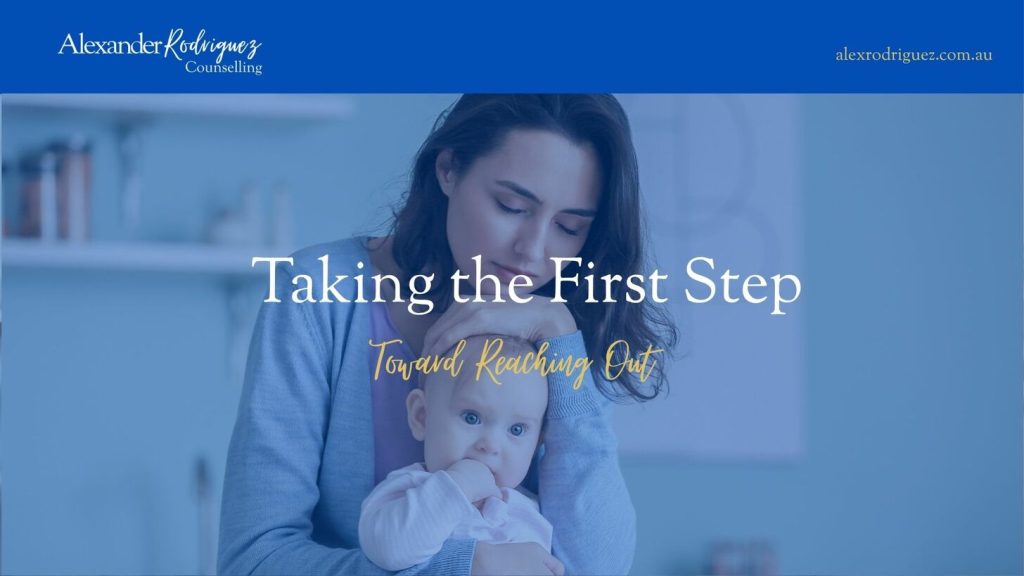
Taking the First Step Toward Reaching Out
Your journey to feeling more like yourself again often starts with a single step: simply asking for help. It’s completely normal to feel overwhelmed by everything that comes with early parenthood, and you don’t have to face it alone. Professional counselling offers a safe, supportive space to process your emotions, talk through what you are experiencing, and begin finding a sense of balance again.
Reaching out doesn’t have to be complicated. Whether you have completed the Edinburgh Postnatal Depression Scale, noticed some symptoms of postnatal depression, or simply feel like you need someone to talk to, Alex Rodriguez Counselling offers a compassionate space to explore the right postnatal depression support for your situation.
Contacting Alex Rodriguez Counselling
If you’re ready to talk, call Alex Rodriguez Counselling at 0429 220 646. You can discuss your needs in a private setting.
Using the Online Booking System
Life with a new baby can be unpredictable and busy. That’s why our online booking system at https://www.alexrodriguez.com.au/booking/ makes it easy to schedule. You can pick a time that suits you, making counselling a part of your self-care routine.
Creating a Personalised Support Plan
Creating a personalised support plan can be a helpful way to manage your mental health after having a baby. After reviewing your EPDS questionnaire results with a professional, you can start to identify which areas may need the most attention, whether that’s emotional support, practical strategies, or ongoing counselling.
This kind of approach can help you feel more in control and supported, rather than facing everything at once. A personalised plan is built around your circumstances, your goals, and the pace that feels right for you, as part of broader postnatal depression support.
Building your support network
A strong support system is crucial for your recovery. You don’t have to face this alone. Reaching out to others shows strength.
Think about including:
- Trusted family members for help with daily tasks or childcare.
- Close friends who listen without judgment.
- Professional services like your GP or counsellors.
By telling these people what you need, you build a reliable support network. This network is key for postnatal depression support and managing your well-being.
Integrating therapy into your routine
Consistency is vital for mental health. Regular therapy sessions help you make steady progress. Treat these sessions as important as any medical check-up.
Try to schedule therapy when you have reliable childcare or support. Remember, seeking postnatal depression support is an investment in your future and your baby’s well-being. Sticking to your plan is a big step towards a healthier life.
Common Myths About Postnatal Mental Health
You might have heard stories about motherhood that don’t quite match your own experience. Society often paints a picture of constant joy and instant bonding, which isn’t always the reality for every parent. When your experience looks different, it can leave you feeling isolated, confused, or like you are somehow getting it wrong.
Many of these ideas are simply myths, not facts, and believing them can make it harder to recognise symptoms of postnatal depression and anxiety or reach out for postnatal depression support when you need it. Understanding what’s actually true can help you feel less alone and more confident about seeking help if things feel difficult.
Debunking misconceptions about depression
One myth is that you should feel happy all the time after having a baby. The truth is, symptoms of postnatal depression and anxiety are common. They don’t mean you’re not a good parent.
Many people think depression is just sadness. But it can also show as irritability, exhaustion, or feeling detached from your child.
Another myth is that these feelings will just go away. While some “baby blues” do, persistent distress needs attention. Knowing the symptoms of postnatal depression and anxiety helps you take charge of your health.
- Myth: Only “bad” parents experience depression. Fact: It’s a medical condition that can affect anyone.
- Myth: You must be sad to be depressed. Fact: Anxiety and anger are also common signs.
- Myth: It’s a sign of weakness. Fact: It shows your body and mind need extra support.
Why asking for help is a sign of strength
There’s a stigma that suggests needing support means you’ve failed. But asking for professional help is courageous. Engaging in maternal mental health screening is a proactive step.
By doing maternal mental health screening, you’re putting your future and your family’s wellbeing first. You don’t have to face these challenges alone. Seeking help is the best way to thrive during this time.
Conclusion
Your journey towards feeling better often starts with the brave decision to seek help. Recognising the symptoms of postnatal depression and anxiety is an important act of self-care that can change your path forward. Tools like the Edinburgh Postnatal Depression Scale offer a simple screening tool for postnatal depression, and completing the EPDS questionnaire as part of routine maternal mental health screening gives you and your healthcare provider a clearer picture of how you have really been feeling. This kind of postpartum depression assessment is not about labelling yourself. It’s a starting point that can guide you towards the right care at the right time.
You deserve support and understanding during this stage of life. Exploring postnatal depression treatment options, including counselling and ongoing depression support, is a practical step towards feeling more balanced again. Reaching out for postnatal depression support is something you can do whenever you feel ready, at your own pace. You are not alone in this, and by taking small, steady steps to look after your mental health, you are supporting both yourself and your family.
Take the Next Step for You and Your Baby
Understanding your Edinburgh Postnatal Depression Scale results is just the beginning. If you are noticing symptoms of postnatal depression or anxiety, reaching out for support is a positive and practical step, not something to feel unsure about. At Alex Rodriguez, we offer a safe, non-judgmental space to talk through what you are feeling and explore the right support for your situation.
- Call: 0429 220 646
- Email: info@alexrodriguez.com.au
- Book online through our Booking Page