Social Anxiety Disorder: Symptoms and Support
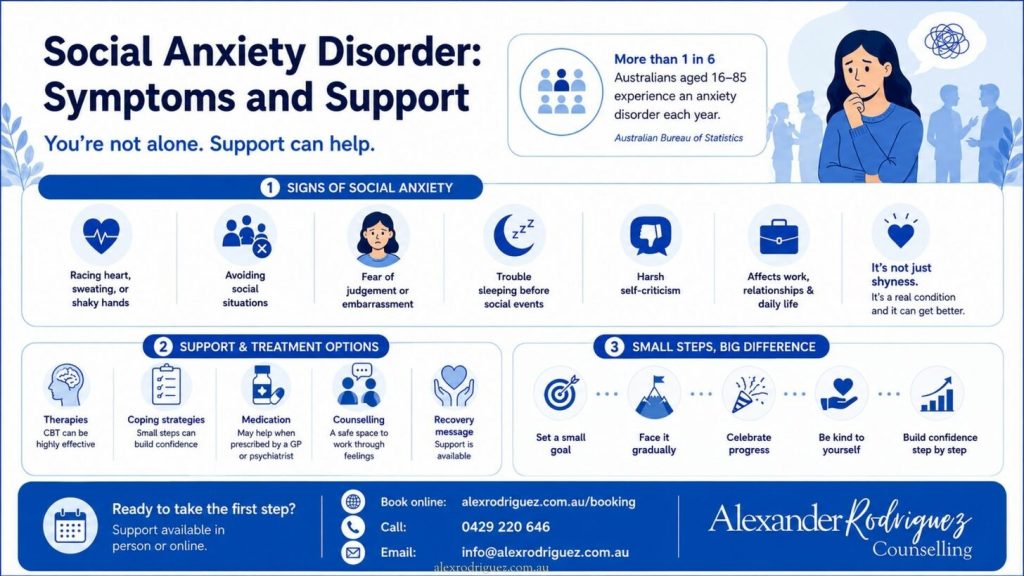
Social anxiety disorder is more common in Australia than many people realise. Do you often feel like everyone is watching your every move, even in everyday situations like ordering coffee or speaking up in a meeting? Feeling nervous before a big presentation is normal, but for many people, this fear runs much deeper and can get in the way of daily life. According to the Australian Bureau of Statistics National Study of Mental Health and Wellbeing, more than one in six Australians aged 16 to 85 experienced an anxiety disorder, such as social phobia, within a 12-month period.
That means a significant number of people right across Australia are quietly living with this experience, often without realising there is a name for what they are feeling. Recognising the social anxiety disorder symptoms and the broader signs of social anxiety is often the first step towards feeling better.
Symptoms of social anxiety can look different from person to person. You might notice a racing heart before social events, sweating, shaky hands, or a strong urge to avoid gatherings altogether. Others carry ongoing emotional distress, harsh self-criticism, or trouble sleeping the night before something social is planned. The good news is that you do not have to face these challenges alone, and helpful treatment options are available. Social anxiety disorder treatments often include therapies for social anxiety, such as cognitive behavioural therapy, alongside practical coping strategies you can build into everyday life. Some people also find that anxiety medication, prescribed and monitored by a GP or psychiatrist, offers extra support alongside talking therapies. Working with a qualified professional through anxiety counselling or broader counselling and therapy can offer a safe, supportive space to work through these feelings at a pace that feels right for you.
At Alex Rodríguez, we understand how deeply these feelings can affect your daily life. We offer personalised depression and anxiety counselling and therapy, available through face-to-face sessions or accessible online therapy, to support you at your own pace. You don’t have to navigate this alone. Book a consultation online, call 0429 220 646, or email info@alexrodriguez.com.au to discuss the right support for your needs.




Alexander Rodriguez
Seize the Day, Book an Appointment Today
Reach out anytime. Book online, call us, or visit our office in person.
Key Takeaways
- Social anxiety disorder is a persistent fear of judgement, not just shyness.
- Signs of social anxiety include a racing heart, sweating, and avoiding social situations.
- Symptoms of social anxiety can affect work, relationships, and daily routines over time.
- Support options include therapies for social anxiety, coping strategies, and sometimes anxiety medication.
- Small, gradual steps can help build confidence in social situations.
- Anxiety counselling can help you manage symptoms and feel more confident.
What Is Social Anxiety Disorder?
Social anxiety disorder is a mental health condition marked by an intense and ongoing fear of being judged, watched, or embarrassed in front of others. It’s normal to feel a bit nervous now and then, like before a job interview or a first date, but social anxiety disorder is different. It’s a persistent fear that doesn’t fade with time and can affect how you work, study, and connect with the people around you. Understanding the signs of social anxiety can help make sense of why certain everyday situations, like making a phone call, eating in public, or speaking up in a group, feel so overwhelming. For some people, these fears are limited to specific situations, while for others, the anxiety shows up across most social settings, and if left unaddressed, symptoms of social anxiety can lead to avoidance, isolation, and a lower quality of life over time.
The encouraging part is that social anxiety disorder is well understood and responds well to support. A combination of therapies for social anxiety, practical coping strategies, and, in some cases, anxiety medication prescribed by a GP or psychiatrist can help you manage symptoms and feel more confident in social situations. Exploring treatment options early, through anxiety counselling or broader counselling and therapy, can make a meaningful difference in how you experience day-to-day life.
How social anxiety differs from ordinary shyness
Shyness is common and often goes away as you get used to new places. But social anxiety disorder doesn’t fade with familiarity. It makes everyday tasks seem like huge challenges.
The table below shows the main differences between shyness and social anxiety. Social anxiety needs professional help.
| Feature | Ordinary Shyness | Social Anxiety Disorder |
|---|---|---|
| Duration | Temporary and situational | Persistent and long-term |
| Impact | Minor discomfort | Disrupts work and social life |
| Intensity | Manageable nerves | Overwhelming fear and panic |
| Avoidance | Rarely avoids events | Frequent avoidance of situations |
Why social situations can feel threatening or overwhelming
For those with this condition, social situations seem dangerous. Even without real danger, your mind might see being watched or expected to speak as a big deal. This can make simple tasks feel exhausting.
Fear of judgement, embarrassment, or rejection
A big part of this is the fear of doing or saying something wrong. You worry others will notice your anxiety or think you’re not good enough. This fear of negative evaluation makes you feel self-conscious all the time.
Physical stress responses and anxious thoughts
Your body reacts to these thoughts with real symptoms. You might get a fast heartbeat, sweat, or shake in groups. These signs of social anxiety show your body’s stress response, even when you’re safe.
What Are the Common Social Anxiety Disorder Symptoms?
Understanding social anxiety disorder symptoms can help you make sense of what you’re feeling and why. Feeling nervous now and then is a normal part of life, but with social anxiety disorder, these feelings tend to last much longer and show up more intensely than the situation calls for. The signs of social anxiety often include a racing heart, sweating, shaking, or feeling sick before or during social situations. You might also notice ongoing emotional distress, harsh self-criticism, or a strong urge to avoid gatherings, meetings, or everyday interactions altogether.
Knowing these symptoms of social anxiety is often the first step towards finding the right support. Left unmanaged, these feelings can affect your confidence, relationships, and daily routine over time. The good news is that a range of treatment options is available to help. Therapies for social anxiety, practical coping strategies, and, in some cases, anxiety medication prescribed by a GP or psychiatrist can all form part of an effective social anxiety disorder treatment plan. Exploring anxiety counselling or broader counselling and therapy with a qualified professional can help you better understand and manage these symptoms.
Emotional and cognitive symptoms
At the heart of this issue, you might fear being judged or embarrassed. You could feel like everyone was watching you. This fear makes you worry about saying or doing something embarrassing in public.
Physical symptoms of social anxiety
Your body might react to social situations with a strong fight-or-flight response. You might experience rapid heartbeats, shaky hands, or a trembling voice. You could also blush, sweat, or feel nauseous in crowded places.
Behavioural signs, including avoidance and safety behaviours
People often develop habits to deal with their anxiety. You might avoid social events or leave early to escape the stress. These actions are your body’s way of trying to protect itself from criticism.
Difficulty speaking, eating, or making eye contact around others
In social situations, you might feel like you can’t think straight. You could struggle to speak or avoid eye contact to feel less judged. Some people can’t even eat or drink in public because of the fear of being watched.
Replaying conversations and expecting negative outcomes
After talking to others, you might replay the conversation over and over. You might focus on any mistakes or feel like you came across as awkward. This thinking can make you believe future social situations will also be negative, making it hard to feel confident.
When Do Signs of Social Anxiety Affect Your Daily Life?
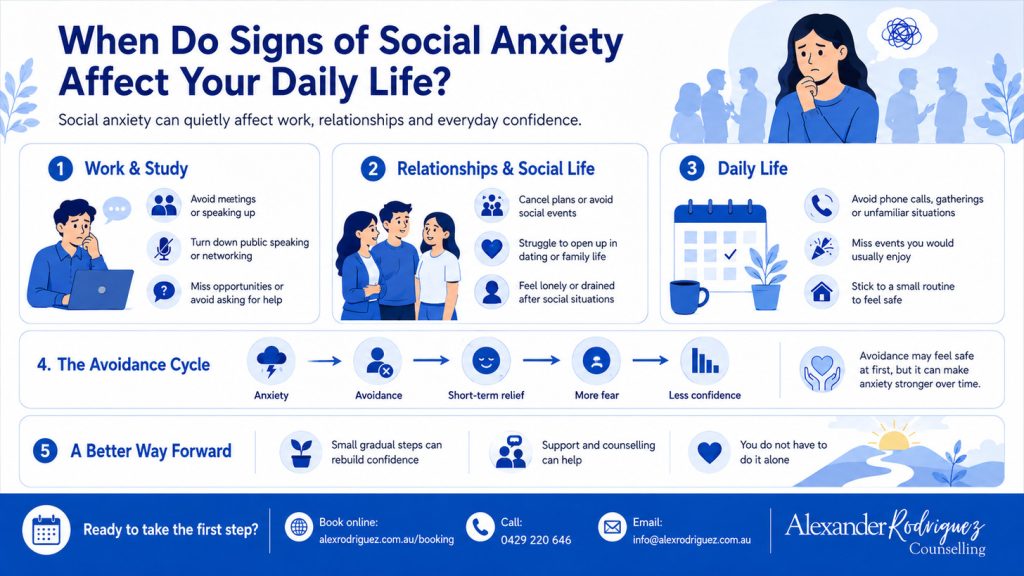
The signs of social anxiety can affect your life in bigger ways than many people expect. At work, this might look like avoiding meetings, staying quiet during discussions, or turning down opportunities that involve public speaking or networking. In relationships, it can mean cancelling plans, struggling to open up, or feeling exhausted after social interactions that others seem to move through with ease. Over time, these symptoms of social anxiety can also shape daily habits, such as avoiding phone calls, skipping social events, or sticking to a small, familiar routine to feel safe.
This shift often happens gradually, which makes it hard to notice at first. Many people don’t realise how much these social anxiety disorder symptoms are holding them back until avoidance starts to feel like the norm rather than the exception. If this sounds familiar, it may be worth looking into treatment options that can help you feel more comfortable and confident again. Therapies for social anxiety, alongside practical coping strategies, are often used as part of effective social anxiety disorder treatments. Speaking with a qualified professional through anxiety counselling or counselling and therapy can offer a supportive space to work through these challenges at your own pace.
Impact on study, work, and career opportunities
In work or school, symptoms of social anxiety can be a big problem. You might not want to join meetings or go to networking events. You might also be too scared to ask for help when you need it.
These actions can hurt your chances for promotions or new opportunities. It can make you feel like you’re missing out.
Effects on friendships, dating, and family relationships
These challenges can also affect your personal life. You might not want to go to social events, which can make you feel lonely or strain your friendships. Symptoms of social anxiety can make dating or talking to family feel too hard.
How avoidance can reinforce anxious feelings over time
Avoiding things that scare you might feel good at first. But it can actually make things worse over time. It teaches your brain that these situations are too scary to handle.
This makes it harder to face challenges in the future. Your confidence in dealing with them starts to fade.
Missing events or limiting activities you would otherwise enjoy
You might skip important events like weddings or birthdays. This might feel safe at the time. But it means you miss out on making memories and getting closer to people.
Over time, this can make you feel disconnected from things that used to bring you joy. It can make your world smaller.
Using alcohol or other substances to manage social situations
Some people use alcohol or other substances to deal with symptoms of social anxiety. It might seem like a good way to cope. But it can lead to addiction.
It hides the real problem and can cause health issues. It makes it harder to find real ways to deal with anxiety.
| Strategy | Short-term Effect | Long-term Consequence |
|---|---|---|
| Avoidance | Immediate relief | Increased fear |
| Substance use | Temporary comfort | Health risks |
| Gradual exposure | Increased stress | Building confidence |
How Is Social Anxiety Disorder Recognised and Assessed?
If social situations regularly feel overwhelming, seeking a professional assessment can help you understand what’s going on and why. A GP, psychologist, or other qualified mental health professional can talk through your experiences, ask about the signs of social anxiety you’ve noticed, and help determine whether what you’re feeling fits the pattern of social anxiety disorder or something else entirely. This process usually involves an open conversation rather than a single test, focused on understanding your specific symptoms of social anxiety and how they’re affecting your daily life.
Getting a clear picture of what you’re experiencing is often the first step towards finding the right support. From there, a professional can help guide you towards suitable treatment options, which may include therapies for social anxiety tailored to your needs. Reaching out for anxiety counselling or counselling and therapy can be a helpful starting point, offering a supportive space to talk through your concerns with a qualified professional.
What to discuss with your GP or mental health professional
Talking openly with your doctor is important. They support you without judging. Preparation is key to getting the right help.
Write down your concerns before your visit. Share how long you’ve felt this way and how it affects your life. Being honest helps your doctor guide you better.
Questions about symptoms, triggers and daily functioning
Your doctor will ask specific questions. They might ask about physical reactions like a racing heart or sweating. They’ll also ask about your avoidance patterns and safety behaviours.
Be ready to talk about your triggers, like public speaking or meeting new people. Describe how these situations affect your daily life. This helps your doctor understand your anxiety’s severity and find the best treatment options for you.
Other conditions that may occur alongside social anxiety
Social anxiety often happens with other health issues. A detailed assessment can find these conditions. Knowing everything ensures your care plan is complete and works well.
Depression, panic symptoms and generalised anxiety
Many with social anxiety also have depression or panic. You might feel low or have sudden panic attacks. Generalised anxiety can make daily stress harder to handle.
Shyness, autism, trauma, and physical health considerations
Professionals also consider past trauma or physical health. What seems like social anxiety might be related to autism or shyness. Distinguishing between these is crucial for choosing the right therapies for social anxiety.
| Assessment Focus | Key Considerations | Goal of Discussion |
|---|---|---|
| Physical Symptoms | Heart rate, shaking, sweating | Identify physiological triggers |
| Avoidance Habits | Staying home, avoiding eye contact | Assess impact on daily life |
| Co-occurring Issues | Depression, trauma, physical health | Create holistic treatment options |
After your assessment, you and your professional can discuss the next steps. Many evidence-based approaches can help you regain confidence. Together, you can find the right support to manage your symptoms.
What Can Trigger or Intensify Social Anxiety?
Identifying what triggers your anxiety is an important step towards feeling more in control. There’s rarely just one cause behind social anxiety disorder. It often develops through a mix of genetics, personality traits, past experiences, and learned behaviours. Common triggers include being the centre of attention, meeting new people, speaking in front of a group, or situations where you feel like you’re being judged or evaluated, such as job interviews or performance reviews.
For many people, these triggers don’t stay the same over time. Stressful life events, big changes like starting a new job or moving cities, or even a lack of sleep and poor well-being can make symptoms of social anxiety feel more intense than usual. Recognising your personal triggers can help you and a professional build more effective coping strategies and can guide the direction of therapies for social anxiety if you choose to seek support. Speaking with a qualified professional through anxiety counselling or counselling and therapy can help you better understand what’s driving your anxiety and how to manage it.
Life transitions, conflict, and stressful experiences
Big changes in life can make you worry more. Starting a new job, moving to a new city, or going through a breakup can shake your sense of safety.
- Being in new places means more social interactions.
- Unresolved fights with family or friends can add to your stress.
- When life is unstable, you feel more stressed all the time.
Past criticism, bullying, or difficult social experiences
Your past experiences shape how you see social situations today. If you’ve faced harsh words or bullying before, your mind might always be on the lookout for similar threats.
These memories can make you expect negative reactions before you even talk to someone. This is a natural way to protect yourself, even if it feels unhelpful now.
Work pressure, burnout, and ongoing uncertainty
The job world can be a big source of social anxiety and stress. The pressure, tight deadlines, and fear of being judged can make your fears worse.
When you’re burned out, you can’t handle social situations as well. It feels like you’re always performing, not just being yourself.
How sleep, stress, and self-criticism can influence symptoms
Physical health matters too. Not getting enough sleep makes you feel more exposed and makes it harder to control your feelings.
Adding harsh self-criticism to the mix makes things worse. You might keep replaying social moments in your head, which raises your stress even more.
Recognising personal patterns without blaming yourself
It’s key to understand these patterns without beating yourself up over them. You’re not to blame for the biological or environmental factors that cause your anxiety.
By noticing when your symptoms get worse, you can choose how to react differently. Self-compassion is a powerful tool that helps you move forward with more confidence and clarity.
What Social Anxiety Disorder Treatments Can Help?
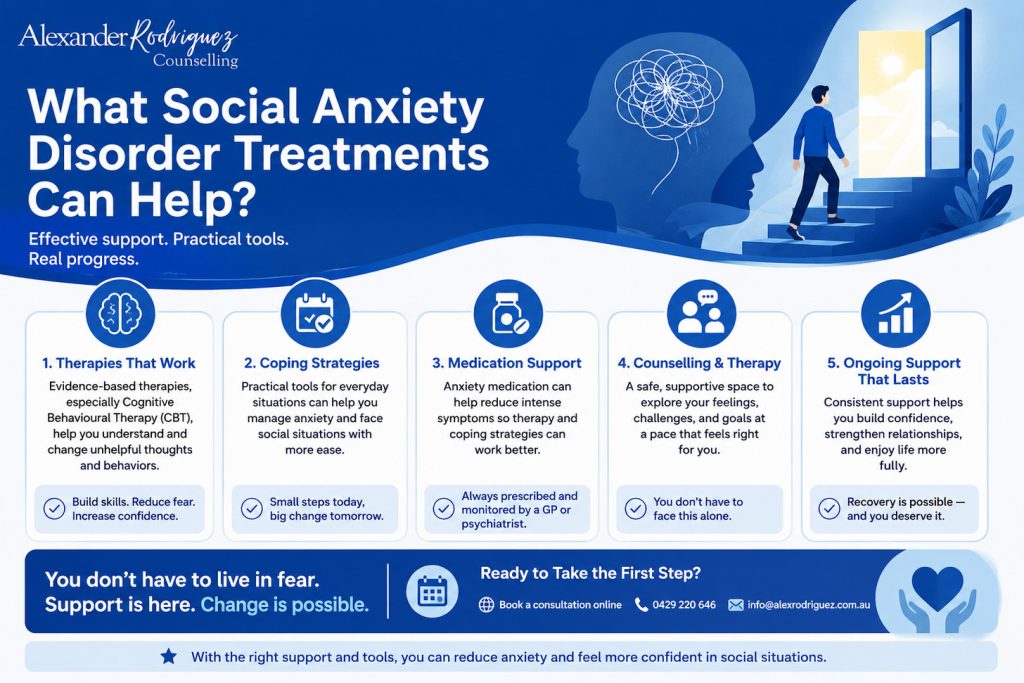
You don’t have to face social anxiety disorder on your own, and a range of social anxiety disorder treatments are available to help you feel more confident in everyday situations. Therapies for social anxiety, such as cognitive behavioural therapy, are commonly used to help you understand unhelpful thought patterns and gradually build confidence in social settings. Alongside this, practical coping strategies, like relaxation techniques, gradual exposure to feared situations, and building healthy routines, can support you in managing symptoms day to day.
For some people, anxiety medication prescribed and monitored by a GP or psychiatrist may also form part of a broader treatment plan, particularly when used alongside talking therapies. The right combination of treatment options will depend on your individual experience, so working with a qualified professional can help you understand your specific triggers and find an approach that genuinely fits your needs. Reaching out through anxiety counselling or counselling and therapy can be a supportive first step towards feeling more like yourself again.
How counselling and therapy can support recovery
Professional help offers a safe place to look at your anxiety. At Alex Rodriguez Counselling, we help you see patterns that hold you back. Through Anxiety Counselling, you can deal with tough feelings and grow your self-worth.
Cognitive behavioural therapy for social anxiety
CBT for Anxiety and Depression is a top choice for therapy for social anxiety. It helps you spot and challenge negative thoughts that make you anxious. Changing your thoughts can greatly change how you feel and act in social situations.
Gradual exposure and practical confidence-building
Stepping out of your comfort zone can lead to growth. We help you make a plan to face your fears at your own pace. This builds your strength and shows you can handle social situations.
Understanding anxious predictions and testing them safely
Many with social anxiety think others judge them all the time. You can learn to see these thoughts as hypotheses, not facts. Testing these thoughts in real life often shows they’re not as bad as you think.
Developing coping strategies between therapy sessions
It’s key to have ways to manage emotions every day. We teach you techniques like grounding exercises for when you’re stressed. These tools help you cope, whether at work or with friends.
While therapy works well, some might also look into anxiety medication as part of their treatment. It’s crucial to talk to your GP or psychiatrist about this. The table below shows how different methods can help you recover.
| Treatment Type | Primary Focus | Key Benefit |
|---|---|---|
| CBT | Thought Patterns | Reduces negative bias |
| Gradual Exposure | Behavioural Change | Builds social confidence |
| Coping Skills | Emotional Regulation | Manages immediate stress |
| Medical Review | Biological Support | Addresses severe symptoms |
Could Anxiety Medication Be Part of Your Treatment Options?
For some people, anxiety medication can be a helpful part of managing social anxiety disorder, particularly when symptoms feel overwhelming or are significantly affecting daily life. Medication is prescribed and monitored by a GP or psychiatrist, and is often used alongside, rather than instead of, talking therapies. It’s not the right fit for everyone, and whether it’s suitable depends on your individual circumstances, medical history, and the severity of your symptoms.
Looking into the full range of social anxiety disorder treatments available, including therapies for social anxiety and practical coping strategies, is a meaningful step towards feeling better. A GP or mental health professional can help you weigh up the different treatment options and determine what combination of support may work best for you. If you’d like to explore non-medication approaches first, anxiety counselling or counselling and therapy can offer a supportive, practical starting point.
When a GP or psychiatrist may discuss medication
Your doctor or psychiatrist might suggest medication if your symptoms are severe. They consider this if anxiety stops you from doing daily activities.
It’s normal to feel unsure about this. But remember, these options aim to help you feel stable again. Your healthcare provider will check your history to see if medication is right for you.
What to ask about benefits, side effects, and follow-up
Before starting any treatment, it’s key to be informed. You should ask questions to understand the process fully.
- What are the expected benefits of this anxiety medication?
- What are the common side effects I should look out for?
- How long will it take to notice a difference in my symptoms?
- What is the plan for follow-up appointments to monitor my progress?
Why medication decisions should be personasuch asd
Anxiety affects everyone differently. That’s why a tailored treatment plan is essential. It starts with your unique needs and history.
At Alex Rodriguez Counselling, we see your wellness journey as personal. Working together with your doctor and therapist ensures your care is comprehensive and supportive.
Using medication alongside psychological therapies
Well-being: combining anxiety medication with therapies such as CBT works best. Medication can manage symptoms, while therapy builds skills for recovery.
Never start, stop, or change medication without medical advice
It’s crucial to follow your doctor’s advice on social anxiety disorder treatments. Never change your medication without their say-so, as it can cause harm.
Keep talking to your medical team. Your safety and well-being are their main concerns as you work towards better mental health.
Which Coping Strategies Can You Use in Social Situations?
Feeling overwhelmed by social pressure is tough, but having a few practical coping strategies in place can make challenging situations feel more manageable. Simple techniques, such as slow breathing, grounding exercises, or preparing a few conversation starters in advance, can help ease anxious feelings in the moment. Setting small, realistic goals, like staying at an event for a set amount of time or speaking up once in a meeting, can also help build confidence gradually rather than all at once.
Change doesn’t need to happen overnight. Starting with small, manageable steps is often more effective than trying to face every feared situation at once, and it allows you to build on each success. If you find that these strategies aren’t enough on their own, exploring therapies for social anxiety with a qualified professional can give you more structured, personalised support. Anxiety counselling or counselling and therapy can help you build a toolkit of strategies suited to your specific needs.,
Preparing for conversations, appointments, and events
Getting ready can reduce anxiety. Imagine the setting and think about topics you’re okay with. Having simple conversation starters ready can make you feel more at ease.
Plan your arrival and exit times to feel in control. This can lower your stress. At Alex Rodriguez Counselling, we offer Emotional Regulation and Coping Support to help you plan.
Using breathing, grounding, and emotional regulation skills
Physical techniques can calm you down. Deep breathing tells your body you’re safe. Emotional regulation means noticing and calming your body’s stress signals.
Grounding exercises, like focusing on your surroundings, can distract you from anxiety. These skills are key for staying calm in social situations. Practice them in our online therapy sessions to fit your needs.
Replacing avoidance with manageable, gradual steps
Avoidance might feel like a quick fix, but it can make anxiety worse. Use gradual exposure to tackle big tasks in small steps. This builds confidence without feeling overwhelmed.
Setting realistic goals before and after a social activity
Setting achievable goals helps you track your progress. Before an event, aim for something small, like introducing yourself. Reflect on the positives after, not the negatives.
Responding to anxious thoughts with kindness and perspective
It’s normal to have critical thoughts when anxious. Treat these thoughts with kindness, as you would a friend. Remember, you’re learning, and every step is a win.
How Can Alex Rodriguez Counselling Support You?
At Alex Rodríguez, we believe everyone deserves a safe, non-judgmental space to talk openly about how they’re feeling. Whether you’re just starting to recognise the signs of social anxiety in your own life or you’ve been managing symptoms of social anxiety for a while, our approach is centred on listening first and tailoring support around your individual needs, rather than a one-size-fits-all plan.
Through anxiety counselling and broader counselling and therapy, we work alongside you to build practical coping strategies and explore treatment options that genuinely fit your life. Our goal is to help you feel more confident in social situations and move closer to your personal goals, at a pace that feels right for you.
Anxiety counselling for social anxiety symptoms
Our anxiety counselling is made to help you deal with social anxiety. We help you find the reasons behind your anxiety and create a plan that works for you.
CBT for anxiety and depression
We use Cognitive Behavioural Therapy (CBT) to change negative thoughts. This therapy shows you how your thoughts, feelings, and actions are connected. It helps you overcome worry and sadness.
Emotional regulation and coping support
Managing strong emotions is key to getting better. We teach you coping strategies to use in tough moments. These strategies help you stay calm in stressful situations.
Support for life transitions and inner conflict
Changes in life can make anxiety worse. We help you deal with new challenges and find your way forward. Our guidance helps you overcome inner struggles.
Online therapy sessions across Australia
You can get our help from home. We offer online therapy sessions all over Australia. This makes sure you get top-notch care, no matter where you are.
Depression counselling and stress and burnout therapy when concerns overlap
Social anxiety can come with other issues like burnout or depression. We offer care that tackles all these problems together. This includes:
- Specialised depression counselling to improve your mood.
- Targeted stress and burnout therapy to boost your energy.
- Holistic counselling and therapy for your whole well-being.
- Personalised coping strategies for your life.
How Can You Arrange Counselling and Therapy?
Booking an appointment with Alex Rodriguez Counselling
Getting in touch with a professional should be easy. You can contact Alex Rodriguez Counselling in several ways to begin your journey.
Online booking: https://www.alexrodriguez.com.au/booking/
Phone: 0429 220 646
What to expect from your first conversation
Your first talk is just to see if the support fits your needs. You don’t need to know everything right away. The therapist will help you through it.
You can talk about your symptoms and goals. It’s also a good time to ask about anxiety counselling methods and how they can help you.
Choosing online therapy sessions that suit your needs
If going to an in-person meeting feels like too much, online therapy sessions are a good option. They let you get quality care from home.
Preparing questions about symptoms, goals, and treatment preferences
Before your first session, write down what you hope to achieve. Think about what triggers your anxiety and what you want to improve.
Discussing privacy, comfort, and practical access requirements
Your comfort is key during any anxiety counselling session. You should talk about your privacy and any needs you have for your online therapy sessions to work well.
| Feature | In-Person Sessions | Online Therapy Sessions |
|---|---|---|
| Location | Clinic Office | Your Home |
| Travel Time | Required | None |
| Comfort Level | Professional Setting | Personal Environment |
| Accessibility | Limited by distance | High availability |
Whether you prefer face-to-face or digital support, the most important thing is your mental health. Professional counselling and therapy can help you feel more confident in social situations.
Conclusion
Living with social anxiety disorder can feel isolating, but understanding the signs of social anxiety and symptoms of social anxiety is an important first step towards feeling more like yourself again. From recognising your personal triggers to exploring practical coping strategies, there are many treatment options available to help you manage social anxiety disorder in a way that suits your life. Whether that involves therapies for social anxiety, anxiety medication guided by a GP or psychiatrist, or a combination of approaches, support is available, and you don’t have to figure it out on your own.
At Alex Rodríguez, we understand how deeply these feelings can affect your daily life. We offer personalised depression and anxiety counselling and therapy, available through face-to-face sessions or accessible online therapy, to support you at your own pace. You don’t have to navigate this alone. Book a consultation online, call 0429 220 646, or email info@alexrodriguez.com.au to discuss the right support for your needs.
FAQ
What are the symptoms of social anxiety disorder?
Social anxiety disorder symptoms include a racing heart, sweating, shaking, nausea, and an intense fear of being judged in social situations. Emotional symptoms often include self-criticism and ongoing worry before, during, and after social events.
What causes social anxiety disorder?
Social anxiety disorder is usually caused by a mix of genetics, personality traits, past experiences, and learned behaviours. It can also be triggered or worsened by stressful life events, such as starting a new job or a difficult social experience.
How do you know if you have social anxiety disorder?
If fear of social situations is ongoing, feels stronger than the situation calls for, and leads you to avoid everyday activities like meetings, phone calls, or gatherings, it may be worth speaking to a GP or mental health professional for an assessment.
What are the best treatments for social anxiety disorder?
Common social anxiety disorder treatments include cognitive behavioural therapy, other therapies for social anxiety, and practical coping strategies. Anxiety medication, prescribed by a GP or psychiatrist, may also help as part of a broader treatment plan.
Can social anxiety disorder be treated without medication?
Yes. Many people manage social anxiety disorder through talking therapies and coping strategies alone. Medication is one option among several, and it isn’t required for everyone to see improvement.
Is social anxiety disorder different from being shy?
Yes. Shyness is a personality trait, while social anxiety disorder is a diagnosable mental health condition that can significantly affect work, relationships, and daily life.
Where can I find anxiety counselling in Australia?
Anxiety counselling and counselling and therapy are available through Alex Rodríguez, offering personalised, professional support for social anxiety disorder.