
Occupational Therapy Strategies for Chronic Pain Management
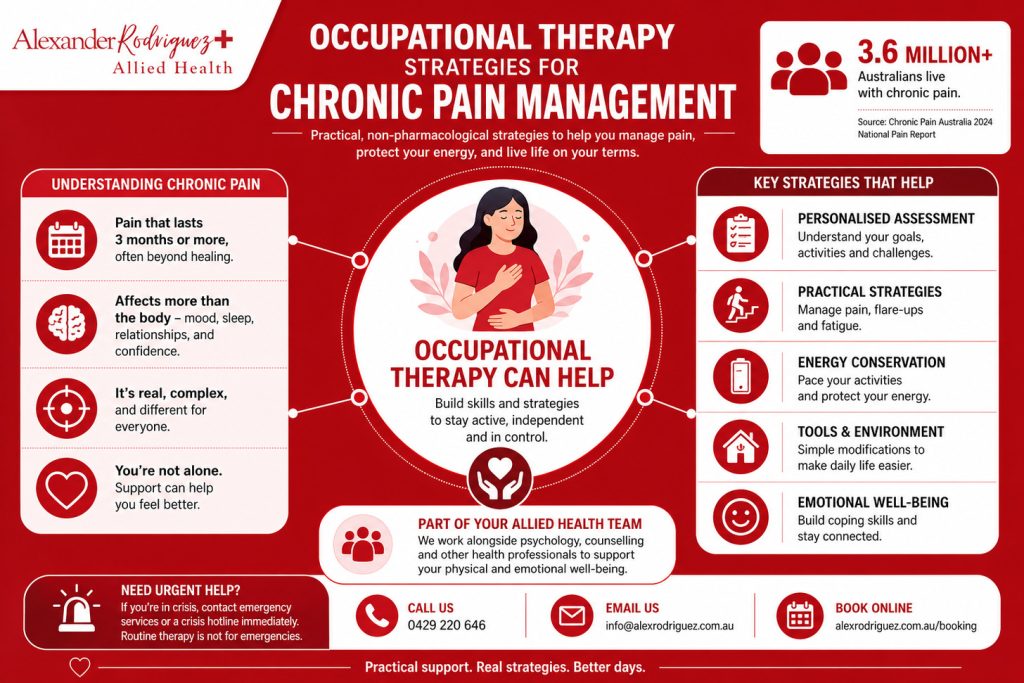
Chronic pain affects millions of Australians and can make everyday tasks feel much harder than they used to. According to Chronic Pain Australia’s 2024 National Painsuitrt, around 3.6 million people across Australia live with chronic pain, and many say it has changed the way they work, socialise and look after themselves day to day.
Chronic pain is generally described as pain that lasts longer than three months, often continuing well after an injury has healed, or sometimes without a clear cause at all. It is not just a physical feeling. It can affect your mood, your sleep, your relationships, and your confidence in doing the things you enjoy.
The good news is that chronic pain treatment doesn’t have to rely on medication alone. Many people find that how to manage chronic pain becomes clearer once they have the right support, structure, and daily strategies in place. This is where occupational therapy can help. Through practical, personalised occupational therapy programs, you can learn ways to manage flare-ups, protect your energy and stay engaged in the activities that matter most to you. As part of a broader Allied Health Service, occupational therapy can work alongside your other supports to help you find realistic chronic pain relief and move towards living life on your terms.
You don’t have to manage chronic pain on your own. Alex Rodriguez offers personalised occupational therapy support to help you find practical relief and get back to what matters most.
Call 0429 220 646, email info@alexrodriguez.com.au, or book online at alexrodriguez.com.au/booking to take the next step.




Alexander Rodriguez
Seize the Day, Book an Appointment Today
Reach out anytime. Book online, call us, or visit our office in person.
Key Takeaways
- Chronic pain lasts three months or more and affects your body, mind, and daily life.
- Managing it starts with a personalised plan built around your goals, not just pain levels.
- Pacing and energy conservation help you stay active without crashing after flare ups.
- Occupational therapy builds practical skills for daily tasks, movement, and home, work, and community life.
- Emotional and cognitive support, through counselling or psychology, is just as important as physical care.
- A coordinated Allied Health Service brings it all together for lasting chronic pain relief.
Understanding Chronic Pain and Occupational Therapy
Chronic pain is more than just a feeling of discomfort. It affects every part of your day, from how you move and sleep to how you think and feel. Unlike acute pain, which acts as a short-term warning sign after an injury, what is chronic pain really comes down to pain that continues long after healing is expected, often lasting three months or more. It can show up as constant aching, sharp flare-ups, or a dull background pain that never fully goes away. Over time, this can make even simple daily activities, like getting dressed, doing housework, or concentrating at work, feel exhausting and overwhelming.
Because chronic pain affects so many areas of life, effective chronic pain treatment usually looks beyond just the physical symptoms. Learning how to manage chronic pain often means building practical routines, pacing your energy, and making small adjustments to how you approach daily tasks. This is where occupational therapy plays an important role. Through structured occupational therapy programs, you can work on realistic strategies for movement, rest, and activity that support long-term chronic pain relief, without pushing your body past its limits. As part of a coordinated Allied Health Service, occupational therapy can also work alongside other supports, such as counselling or psychology, to help you manage the physical and emotional impact of chronic pain together.
How can chronic pain change your daily life?
Chronic pain can make simple tasks hard. Even getting dressed or showering can feel exhausting. Your confidence may start to wane as you struggle to keep up with work or hobbies.
Social activities often suffer too. You might feel isolated if you can’t join friends or community events. The table below shows the difference between temporary and long-term pain.
| Feature | Acute Pain | Chronic Pain |
|---|---|---|
| Duration | Short-term (days to weeks) | Long-term (3+ months) |
| Purpose | Signals injury or illness | Complex nervous system response |
| Impact | Limited to the recovery period | Affects lifestyle and well-being |
| Management | Rest and medical healing | Multidisciplinary support |
How occupational therapy supports chronic pain treatment
Effective chronic pain treatment looks at the whole person. Occupational therapy helps with physical, psychological, and environmental factors. It focuses on how you move and interact with your surroundings.
This approach meets your specific needs. It might involve adjusting your workspace or learning new household chores. You’ll build resilience and find strategies that fit your lifestyle. It’s about improving your overall quality of life.
Connecting pain relief with meaningful activities and independence
True relief comes from doing things that bring joy. When you can enjoy hobbies or social activities again, your focus shifts. Functional skill practice helps you regain control over your daily routine.
Breaking tasks into smaller steps helps you stay independent. This builds your confidence and makes you feel more capable. You’re not just managing pain; you’re designing a life that works for you.
When to seek professional support for persistent or worsening pain
Listen to your body and seek help when needed. If your pain is persistent, worsening, or severe, get expert advice. Prioritising your safety is key, especially if pain affects your movement or independence.
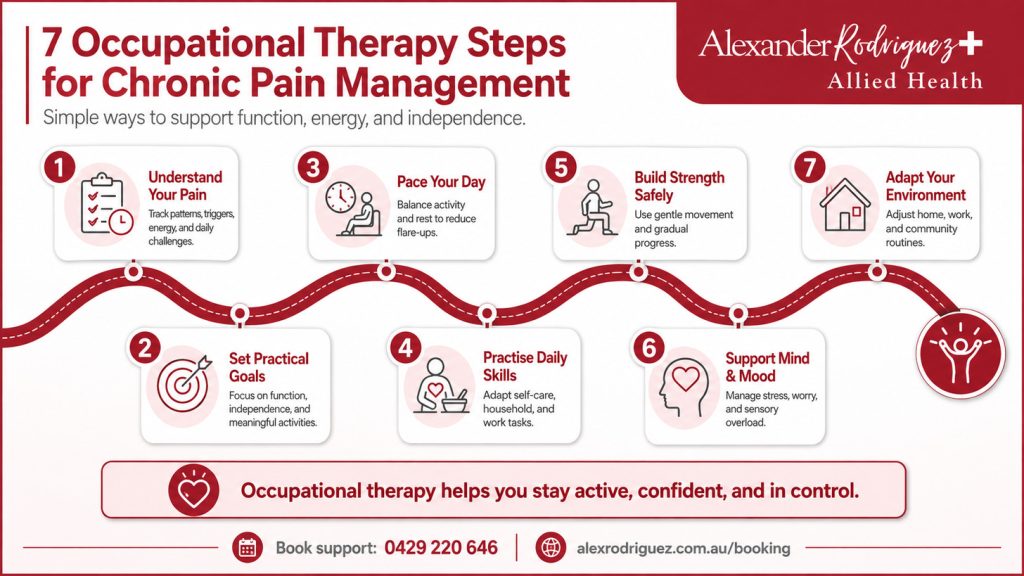
Step 1: Prepare for a Safe, Personalised Chronic Pain Management Plan
Creating a good management plan starts with understanding what you need, not just where your pain is. Before any occupational therapy programs begin, it helps to gather a clear picture of how chronic pain affects your daily routine, including your sleep, energy levels, work, and the activities you find hardest to manage. This might include details about when your pain flares up, what tends to trigger it, and which tasks feel the most difficult right now. Taking the time to collect this information isn’t just paperwork. It lays the groundwork for chronic pain treatment that fits your life, rather than a generic approach that doesn’t account for your circumstances.
Once these details are gathered, your occupational therapist can start shaping a plan around how to manage chronic pain in a way that feels realistic and sustainable for you. This early preparation step is a core part of a well-coordinated Allied Health Service, ensuring your goals, your history, and your day-to-day challenges are properly understood before any strategies are introduced. The aim is to set a safe, steady foundation so that as your plan develops, it genuinely supports chronic pain relief and helps you move forward at a pace that suits you.
Record your pain patterns, triggers, energy levels, and current abilities
Begin by keeping a diary of your daily life. Write down when your pain is at its worst and what makes it worse. Also, track your energy levels to see how they relate to your activities.
- Identify specific times of day when fatigue hits hardest.
- List movements or tasks that consistently increase your discomfort.
- Note which activities leave you feeling drained or refreshed.
Share your medical history, treatment goals, and daily challenges
Your therapist needs to know your health history to help you best. Be honest about your past treatments, current meds, and goals. This information helps your allied health service provider make a plan that respects your past and focuses on your future.
Identify activities affected by pain at home, work and in the community
Think about tasks that are hard or impossible because of your condition. This could be cooking, typing, or socialising. Knowing these areas helps your therapy sessions focus on how to manage chronic pain.
Safety considerations when pain, fatigue or mobility limitations affect function
Safety is crucial when dealing with chronic conditions. If pain or fatigue affects your balance or movement, tell us. We’ll work to make your home and work safe to prevent injury and reduce strain.
How Alex Rodriguez Allied Health can tailor occupational therapy programs
At Alex Rodriguez Allied Health, we believe everyone needs a unique recovery plan. We use your info to create occupational therapy programs that match your environment and learning style. Our team is committed to helping you regain independence and manage chronic pain with confidence.
Step 2: Set Practical Goals for Function and Independence
Changing how you approach recovery often starts with shifting your focus. Aiming only for chronic pain relief can feel discouraging, especially when pain doesn’t disappear completely. Instead, it helps to set practical, function-based goals around what you actually want to do each day, whether that’s returning to work, playing with your kids, cooking a meal without discomfort, or simply feeling more like yourself again. These goals become the foundation of your chronic pain treatment, giving your sessions clear direction and helping you track real progress over time.
This is where occupational therapy becomes especially valuable. Rather than focusing only on reducing pain, occupational therapy looks at how to manage chronic pain while building back your independence in everyday tasks. Through tailored occupational therapy programs, your therapist works with you to break bigger goals into small, achievable steps, adjusting activities, pacing, and routines as your needs change. As part of a broader Allied Health Service, this goal-setting process also considers your emotional well-being, since living with chronic pain can affect motivation and confidence just as much as it affects the body.
Choose meaningful goals instead of focusing only on pain intensity
Your goals should be about the things that matter to you. It’s not just about not feeling pain. Think about playing with your kids, getting back into hobbies, or feeling better in the morning.
Break large activities into achievable functional milestones
Big tasks can feel like too much when you’re dealing with ongoing symptoms. Break them down into smaller steps. This way, you can make progress without getting too tired.
Measure progress through participation, confidence, and routine consistency
Track your progress by how well you do in your chosen activities. As you get more confident, your daily life will become more stable. Alex Rodriguez Allied Health helps you see these improvements over time.
Examples of goals for self-care, household tasks, work, and social activities
Having clear goals keeps you motivated. Here are some ideas for your plan:
- Self-care: Showering or dressing on your own without needing to rest for a long time.
- Household tasks: Cooking a simple meal or folding laundry in short, manageable chunks.
- Work and social: Going to a work meeting or meeting a friend for coffee with confidence.
Adjusting goals when your symptoms fluctuate
Your energy levels can change from day to day. When you’re having a bad day, adjust your goals to fit your needs. Changing your goals is not a failure. It’s a smart move for lasting chronic pain relief and health.
Step 3: Build Daily Routines with Pacing and Energy Conservation
Stay independent. Once you understand how to manage chronic pain, you can start planning your day around your energy levels, rather than simply reacting when pain flares up. This shift, from reacting to planning, is often referred to as pacing, and it plays a central role in most occupational therapy programs. Pacing involves breaking tasks into manageable chunks, spacing out demanding activities, and building in regular rest before exhaustion or pain takes over.
Alongside pacing, energy conservation techniques help you get more out of your day without overloading your body. This might include adjusting how you complete household tasks, using supportive equipment where needed, or restructuring your work schedule to match your natural energy patterns. As part of an effective chronic pain treatment plan, occupational therapy helps you put these strategies into practice in a way that suits your specific routine and goals. Delivered through a coordinated Allied Health Service, this approach supports long-term chronic pain relief by helping you stay engaged in daily life while genuinely listening to what your body needs.
Balance activity and rest before pain forces you to stop
Many people wait until their pain is too much before resting. This can lead to feeling really tired and more pain. Instead, try to schedule short, frequent breaks to keep your energy steady.
Use pacing to prevent boom-and-bust activity cycles
The “boom-and-bust” cycle is when you do too much on good days and then crash. Pacing helps you use your energy evenly. Doing a bit at a time helps avoid the big highs and lows that make how to manage chronic pain harder.
Plan demanding tasks around your energy patterns
Notice when you feel most awake and strong during the day. Do your hardest tasks then, like shopping or big projects. Save easy tasks for when you’re feeling tired.
Breaking chores into smaller steps with planned recovery periods
Don’t try to do big tasks all at once. Break them into 15-minute bits with short breaks in between. This keeps you working without causing pain.
Using task rotation, seated work and adaptive equipment
Change your position often to avoid muscle tightness. Try seated work for things like cooking or use tools like long-handled reachers to avoid bending. These small changes can make a big difference in your daily life.
Creating an independence and routine-building support plan
Alex Rodriguez Allied Health can help you make a Independence and Routine Building Support plan. This plan is made just for you, taking into account your condition and daily tasks. We aim to create a routine that supports your goals for the long term.
| Strategy | Traditional Approach | Paced Approach |
|---|---|---|
| Activity Flow | All-or-nothing | Consistent and steady |
| Rest Timing | Only when forced | Planned and proactive |
| Task Completion | Single long session | Broken into segments |
| Energy Outcome | Frequent exhaustion | Sustainable energy |
Step 4: Practise Functional Skills for Everyday Activities
Learning functional skills is about more than exercises. It’s about how you move, adapt, and interact with the world around you while living with ongoing chronic pain. This might include practising safer ways to lift, bend, sit, or stand, adjusting how you approach household tasks, or finding new techniques for activities that used to feel automatic. Building these skills is a key part of working towards chronic pain relief, since small changes in how you move can make a real difference to your comfort and confidence throughout the day.
This functional, practical approach sits at the heart of occupational therapy. Rather than focusing on pain in isolation, occupational therapy looks at how chronic pain affects your ability to complete everyday activities, then works with you to rebuild those skills step by step. Through structured occupational therapy programs, you can practise real-life tasks in a supported way, helping you regain independence and reduce reliance on others for daily activities. As part of a broader Allied Health Service, this stage of chronic pain treatment helps translate strategies from your sessions into genuine, lasting change in your everyday life.
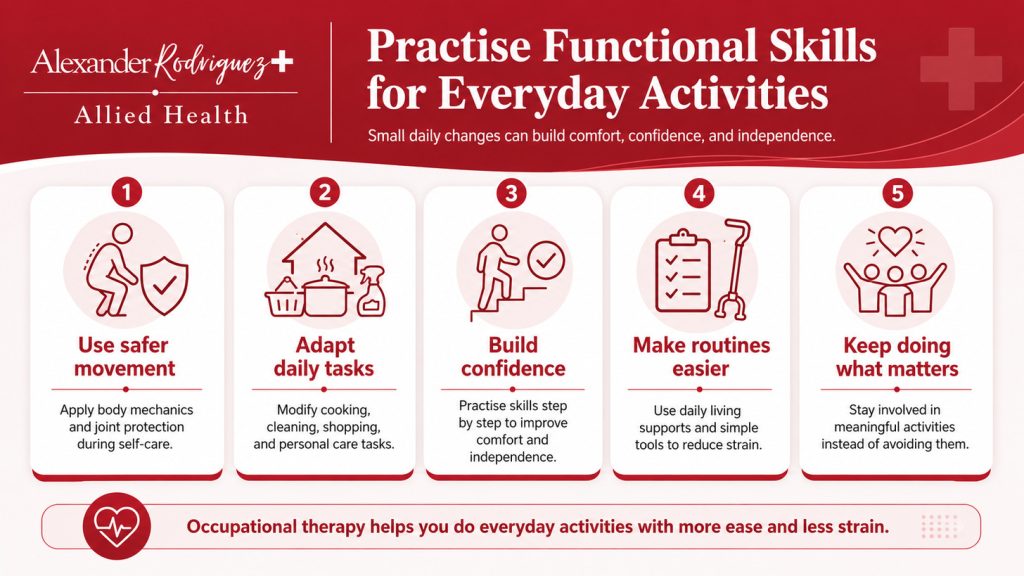
Apply body mechanics and joint protection during self-care
Even simple tasks like brushing your teeth can be done with less strain. Use proper body mechanics to avoid putting too much pressure on your joints. Joint protection helps spread out your weight evenly, which is crucial for comfort.
Modify cooking, cleaning, shopping, and personal care tasks
You don’t have to give up on things you enjoy. Just change how you do them. For example, using different grips for kitchen tools or carrying bags can help a lot. Adjusting your chores can also prevent getting too tired.
Build confidence through graded functional skill practice
Feeling confident comes from doing tasks without pain. Graded functional skill practice lets you slowly get better at things. It’s a safe way to build your confidence and ability.
Using daily living skills support to simplify challenging routines
Alex Rodriguez Allied Health offers Daily Living Skills Support. They help find the right tools for you. Tools like reachers or long-handled sponges make daily tasks easier. These small changes help save your energy for what’s important.
Adapting the environment to reduce reaching, lifting, and repetitive strain
Your home should support you, not hinder you. Rearrange your space to avoid awkward movements or heavy lifting. Cutting down on repetitive strain is a big part of your chronic pain relief plan.
Maintaining participation without avoiding meaningful activities
Staying away from activities can make things worse. Instead, find ways to keep doing what you love. Occupational therapy helps you stay active and manage your health.
| Activity | Traditional Method | Adapted Method |
|---|---|---|
| Kitchen Prep | Standing for long periods | Sitting on a stool with pre-cut items |
| Cleaning | Bending and heavy scrubbing | Using long-handled tools and light pressure |
| Shopping | Carrying heavy baskets | Using a trolley or home delivery services |
| Personal Care | Reaching overhead | Using adaptive equipment for easier access |
Step 5: Improve Strength, Mobility and Recovery Safely
Moving your body shouldn’t feel like a battle against your own pain. Many people living with chronic pain fall into an all-or-nothing pattern, pushing too hard on good days and then paying for it with a painful flare-up soon after. Instead, safe and sustainable movement is about finding a steady middle ground, gradually building strength and mobility without overwhelming your body. This kind of pacing is a key part of practical chronic pain treatment, helping you make progress without setting yourself back.
Through guided occupational therapy programs, movement is introduced in a way that respects your current limits while still working towards long-term goals. Your therapist will consider how to manage chronic pain safely, adjusting exercises, activity levels, and recovery time based on how your body responds. This might include graded strengthening, gentle mobility work, or techniques to support recovery after activity. As part of an integrated Allied Health Service, occupational therapy helps you build strength and confidence in your body again, supporting genuine chronic pain relief that lasts, rather than short-term gains followed by setbacks.
Use gentle movement to maintain mobility and physical confidence
Gentle movement is key to keeping you physically independent. Low-impact activities keep your joints lubricated and muscles supple. This helps you build physical confidence without overwhelming your nervous system.
Progress strengthening activities at an appropriate pace
Strengthening should match your current abilities. We focus on steady, incremental gains that respect your body’s limits. Effective chronic pain treatment relies on this gradual progression to ensure you stay active without setbacks.
Combine mobility strategies with injury recovery support
When you have existing injuries, your movement plan must be highly specific. We integrate targeted mobility work with injury recovery support to protect vulnerable areas while you get stronger. This dual approach ensures that your exercise routine promotes healing rather than causing further strain.
Recognising the difference between a manageable response and a warning sign
It is normal to feel some mild discomfort when starting new movements. However, you must learn to distinguish this from sharp, persistent pain that signals a need to stop. Understanding these cues is a vital part of our occupational therapy programs.
Coordinating occupational therapy with medical and allied health advice
Your safety is our priority, which is why we work closely with your broader healthcare team. By aligning our strategies with your GP or specialist advice, we create a cohesive plan. This collaboration ensures that your chronic pain treatment is both safe and evidence-based.
Adapting movement plans for chronic conditions and changing symptoms
Your health needs may shift from day to day, and your plan should be just as flexible. At Alex Rodriguez Allied Health, we specialise in adapting your routine to accommodate changing symptoms. We provide the support you need to navigate your health journey with confidence and care.
Step 6: Manage Emotional, Cognitive, and Sensory Responses to Pain
When pain strikes, your mind and senses often need just as much support as your body. To truly manage chronic pain, care needs to look beyond physical symptoms alone. Living with chronic pain can affect concentration, memory, and decision-making, making everyday tasks feel more mentally draining than they used to. It can also heighten sensitivity to noise, light, or touch and bring up feelings of frustration, low mood, or anxiety, especially during flare-ups. Recognising these emotional and cognitive responses is an important part of any complete chronic pain treatment plan.
This is why managing chronic pain often works best as a team effort. Occupational therapy can help you build practical strategies for managing sensory overload, staying organised, and pacing mentally demanding tasks alongside physical ones. For the emotional side of chronic pain, support through counselling or psychology can help you process difficult feelings and build healthier coping strategies. Together, as part of a coordinated Allied Health Service, these supports work towards genuine chronic pain relief that considers your whole wellbeing, not just your physical symptoms.
Use emotional regulation strategies during pain flare-ups
Pain can make you feel frustrated or anxious, making it feel worse. Emotional regulation helps you stay calm during these times. By accepting these feelings, you can stop stress from making your pain worse.
Apply cognitive and behavioural strategies to manage worry and avoidance
Worry and avoidance are common when you’re in pain. Cognitive and behavioural strategies give you tools to fight negative thoughts. This keeps you active and engaged, key to managing chronic pain.
Reduce sensory overload that can intensify discomfort or fatigue
Your environment can affect how you feel pain. Bright lights, loud noises, or busy places can overwhelm you. Sensory integration helps you find these triggers and create a more comfortable space.
Breathing, grounding, and attention-shifting techniques for difficult moments
When overwhelmed, simple techniques can help. Deep breathing calms you, while grounding exercises focus your mind on the present. These simple shifts can lessen the impact of a flare-up.
Using activity planning to support motivation and mental well-being
Mental health occupational therapy often involves planning your day. Breaking your day into parts keeps you focused. This helps you stay motivated, even when you’re tired.
How sensory integration support may improve comfort and participation
Changing your surroundings can greatly improve your life. Using noise-cancelling headphones or adjusting lights can reduce fatigue. This lets you enjoy the activities you love.
| Strategy Type | Primary Benefit | Practical Example |
|---|---|---|
| Emotional Regulation | Reduces stress-induced pain | Mindful breathing |
| Cognitive Strategy | Decreases avoidance behaviours | Goal-setting journals |
| Sensory Integration | Lowers environmental fatigue | Adjusting room lighting |
Step 7: Adapt Home, Work, and Community Activities
Changing your environment is one of the most practical ways to support how to manage chronic pain. Rather than pushing through discomfort in spaces that aren’t working for you, small adjustments at home, at work, or in the community can save valuable energy for the things that matter most. This might include rearranging your kitchen to reduce bending and reaching, using ergonomic equipment at your desk, or planning outings around rest breaks and accessible facilities. These changes may seem small, but together they can make daily life with chronic pain noticeably more manageable.
As part of tailored occupational therapy programs, occupational therapy looks closely at the environments you move through each day and identifies practical ways to adapt them to your needs. This can include recommending assistive equipment, adjusting workstations, or suggesting simple modifications that support safer movement and reduce strain. Delivered through a coordinated Allied Health Service, this approach forms an important part of ongoing chronic pain treatment, helping you stay engaged in home, work, and community life while supporting long-term chronic pain relief.
Make your home safer and easier to use
Your home should help you recover, not stress you out. Simple changes like rearranging furniture or adding grab rails can make a big difference. They help you feel more comfortable every day.
Modify workplace tasks, posture and scheduling
Workplace changes are crucial for keeping your job without hurting your health. Consider using ergonomic tools, taking breaks, or sharing tasks. These help keep your posture right all day.
Prepare for transport, appointments, shopping, and community participation
Going out needs careful planning to avoid getting tired. Plan appointments when you have the most energy or use delivery for shopping. These small steps help you stay connected with the community.
Home and work function support for changing physical abilities
Home and Work Function Support makes your environment fit your needs. It ensures your space adapts to you, not the other way around. This is important for your comfort.
Using assistive strategies while preserving choice and independence
Assistive tools don’t mean losing control; they give you freedom to do things safely. They help you make choices while keeping pain risks low.
Accessing mental health occupational therapy support when pain affects mood
Mental Health Occupational Therapy Support is vital when pain affects your mood. It combines practical goals with emotional techniques. This improves your quality of life.
Arrange ongoing occupational therapy support with Alex Rodriguez Allied Health
Working with professionals ensures your plan keeps up with your needs. Alex Rodriguez Allied Health offers occupational therapy to help you through changes with confidence.
Occupational Therapy services available from Alex Rodriguez Allied Health
Our occupational therapy programs are made just for you. As a dedicated allied health service, we help manage chronic conditions well.
Booking options and contact details
Getting started is easy and open. Contact us today to see how we can support your journey to better function and independence.
| Service Category | Primary Focus | Benefit |
|---|---|---|
| Daily Living Skills Support | Home environment | Increased safety |
| Emotional Regulation Support | Mental well-being | Reduced stress |
| Strengthening and Mobility Support | Physical capacity | Improved movement |
| Injury Recovery Support | Healing process | Faster return to activity |
For more information, call 0429 220 646 or email info@alexrodriguez.com.au. You can also book online at https://www.alexrodriguez.com.au/booking/.
Conclusion
Living with chronic pain can feel overwhelming, but you don’t have to navigate it alone or rely on guesswork to get through each day. As we’ve covered in this guide, effective chronic pain treatment goes beyond just addressing physical symptoms. It involves pacing your energy, building practical routines, adapting your environment, and supporting your emotional and cognitive wellbeing alongside your physical recovery.
Understanding how to manage chronic pain is an ongoing process, not a one-off fix. Through personalised occupational therapy programs, you can develop practical strategies that fit your life, your goals, and your body’s needs, helping you move towards meaningful chronic pain relief while staying engaged in the activities and relationships that matter most to you. As part of a coordinated Allied Health Service, this support can also work alongside counselling or psychology where needed, so both the physical and emotional sides of chronic pain are genuinely looked after.
You don’t have to manage chronic pain on your own. Alex Rodriguez offers personalised occupational therapy support to help you find practical relief and get back to what matters most.
Call 0429 220 646, email info@alexrodriguez.com.au, or book online at alexrodriguez.com.au/booking to take the next step.