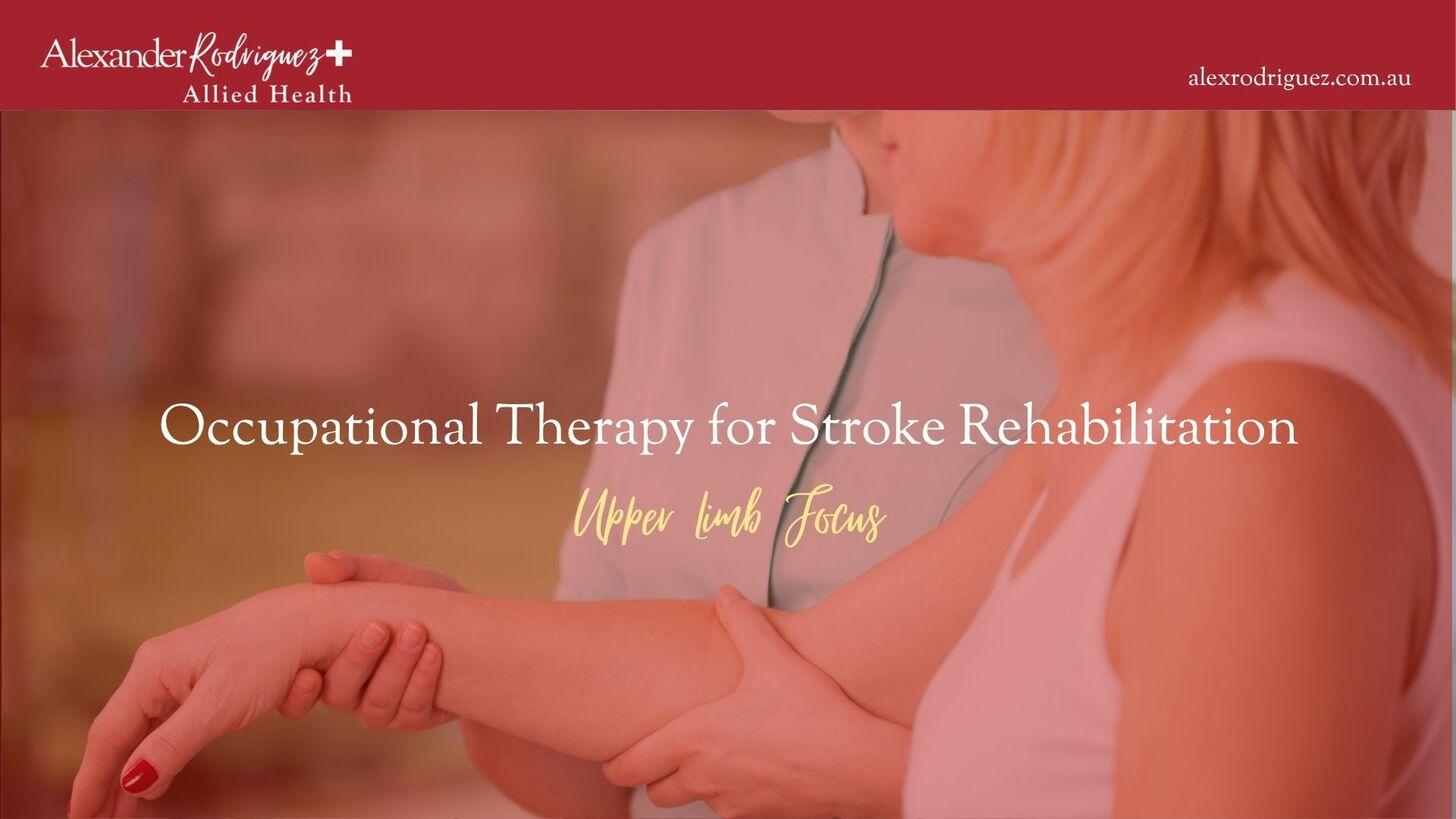
Occupational Therapy for Stroke Rehabilitation: Upper Limb Focus
Occupational therapy plays a key role in helping stroke survivors regain movement, confidence, and independence in daily life. Stroke remains one of Australia’s biggest health concerns, with someone in the country having a stroke every 11 minutes, according to Stroke Foundation Australia.
For many survivors, this means learning to manage new physical challenges, and research shows that around 57% of stroke survivors experience some form of upper limb impairment while in acute care, making everyday tasks like dressing, cooking, or writing feel much harder than before. This is where stroke rehabilitation and structured stroke treatment can make a real difference, giving you a clear path forward after such a life-changing event.
Working with a qualified Allied Health Service gives you the chance to rebuild strength, coordination, and fine motor skills in your affected arm and hand, one step at a time. This guide is here to support you with practical, easy-to-follow advice, so you understand what your recovery journey may involve. With the right support and a personalised plan, you can move forward with more clarity, strength, and confidence in your stroke rehabilitation.
Ready to Start Your Recovery Journey?
At Alex Rodriguez, our occupational therapy team can help you rebuild strength, confidence, and independence after a stroke.
Book Online, Email: info@alexrodriguez.com.au, Call: 0429 220 646




Alexander Rodriguez
Seize the Day, Book an Appointment Today
Reach out anytime. Book online, call us, or visit our office in person.
Key Takeaways
- Focusing on upper limb movement is essential for regaining your daily independence.
- Professional support helps you build better motor control through evidence-based practice.
- Small, consistent steps lead to significant improvements in your functional recovery.
- You can regain confidence by mastering simple tasks in your own home environment.
- Tailored strategies ensure your recovery plan matches your personal goals and lifestyle.
Understanding the Role of Occupational Therapy in Stroke Recovery
Recovering from a stroke is a journey that takes time, patience, and the right professional support around you. It’s rarely something one person can manage alone. A team of health experts, including doctors, nurses, physiotherapists, and allied health professionals, works together to meet your needs at every stage of recovery. Within this team, occupational therapy plays a central role in helping you return to the everyday tasks that matter most, from getting dressed in the morning to preparing a meal to returning to work. Every stroke affects people differently, depending on which part of the brain was affected and how severely, which is why your stroke treatment can’t follow a one-size-fits-all approach. Your therapy team will take the time to understand your specific challenges, whether that’s difficulty gripping objects, trouble with balance, or reduced movement on one side of your body, and from there, build a plan around your goals, your home environment, and the things you want to get back to doing.
This kind of tailored stroke rehabilitation ensures that every session works towards real, meaningful progress rather than a generic checklist. A big part of this work involves rebuilding fine motor skills, the small, precise movements you rely on constantly without even thinking about them, like buttoning a shirt, holding a pen, or turning a key in a lock. Your occupational therapist will guide you through exercises and strategies designed to gradually strengthen these movements, helping you regain both function and confidence in your affected arm and hand. Working with a trusted Allied Health Service also means you’re not navigating this alone; your therapist becomes a steady source of guidance, adjusting your program as you progress and helping you understand what’s realistic at each stage. Knowing your own role in this process, staying engaged, practicing between sessions, and communicating openly about what feels hard is often the first step towards real improvements in your abilities. Recovery isn’t always a straight line, but with the right support, steady progress is possible.
Why early intervention matters for your upper limb
Starting rehab early is crucial for success. It uses your brain’s ability to change, called neuroplasticity. Early movement helps avoid muscle and joint problems.
Dealing with upper limb issues early sets a strong base for progress. Regular practice keeps your muscles moving. It helps your brain reconnect with muscles.
This approach is key to doing everyday tasks with ease.
How Occupational Therapy Supports Your Recovery Path
Recovery looks different for everyone, and effective care recognises that from the start. Occupational therapy works best when it’s shaped around your needs, your goals, and the life you want to get back to. A well-designed plan should feel practical and personal, helping you move forward at a pace that makes sense for you rather than following a fixed routine.
Regaining control after a stroke often means working through challenges step by step, with the right guidance along the way. With consistent support and a plan built around your circumstances, it’s possible to rebuild strength, confidence, and independence over time.
Assessing Your Current Upper Limb Function and Goals
Understanding your upper limb function is the first step in any stroke rehabilitation journey. Before a recovery plan can be built, it’s important to get a clear picture of your current strength, movement, coordination, and sensation, along with any changes since your stroke. This assessment often looks at things like grip strength, range of motion, and how well you can complete everyday tasks that rely on your fine motor skills, such as writing, buttoning a shirt, or holding a cup.
Knowing where you’re starting from allows an effective stroke treatment plan to be mapped out around your specific needs and goals, rather than a generic set of exercises. Working with a qualified Allied Health Service as part of this process means your occupational therapy program can be adjusted at each stage, ensuring your sessions stay relevant and genuinely support your recovery over time.
Identifying your baseline movement capabilities
Standardised measures like the Functional Independence Measure (FIM) are often used to get a clear picture of current movement and strength levels. This helps identify which movements come easily and which ones need more support as recovery progresses.
Knowing your baseline is about more than just numbers, it’s about understanding exactly where you’re starting from. Looking closely at how daily tasks are managed helps highlight where your arm and hand need the most support. This information forms the foundation for building a plan that’s both safe and effective for your specific situation.
Setting realistic milestones for your rehabilitation
After we know your baseline, we set achievable goals together. Breaking big goals into smaller steps makes it feel less daunting. Celebrating these small victories is key to keeping you motivated during stroke rehabilitation.
The table below shows how we track your progress to keep you on track:
| Assessment Phase | Focus Area | Goal Type |
|---|---|---|
| Initial Baseline | Range of Motion | Diagnostic |
| Short-term Milestone | Muscle Activation | Functional |
| Long-term Goal | Daily Independence | Outcome-based |
| Review Period | Stroke Rehabilitation | Adaptive |
By focusing on clear targets, you can see how far you’ve come.
Your goals are adjusted as strength and ability improve, making sure your plan always matches where you’re currently at. Your hard work and dedication remain at the heart of driving your recovery forward.
Developing a Personalised Strengthening and Mobility Support Plan
A tailored plan for your upper limb is a key part of effective stroke treatment. It helps rebuild the connection between your brain and muscles, encouraging your body to relearn movements that may feel difficult or unfamiliar after a stroke. This process forms an important part of your broader stroke rehabilitation, focusing on gradual, consistent progress rather than quick fixes.
As part of your occupational therapy sessions, exercises are chosen to strengthen your arm and hand while also rebuilding fine motor skills needed for daily tasks like writing, cooking, or getting dressed. Working with a qualified Allied Health Service means this plan can be adjusted as you improve, ensuring every movement you practise brings you closer to your recovery goals.
Targeted exercises to regain muscle activation
Starting to regain control is about small, consistent steps. We focus on targeted exercises to help your brain talk to your arm and hand. These exercises are easy to start with, helping you feel more confident as you get better.
These exercises are designed to be like daily tasks. By doing them over and over, you help your nervous system find new ways to control your movements. This Strengthening and Mobility Support is crucial for your independence.
Safe techniques for improving range of motion
Keeping your joints flexible is as important as getting stronger. We use different methods to keep your joints soft and pain-free. Techniques like gentle stretching and splinting help prevent muscle tightness and other problems.
These methods are chosen to protect your muscles while encouraging natural movement. Using these tools safely lets you explore your limits without getting hurt. Here’s a quick look at some common techniques:
| Technique | Primary Benefit | Frequency |
|---|---|---|
| Dynamic Stretching | Increases flexibility | Daily |
| Static Splinting | Reduces muscle tension | Nightly |
| Active Range Exercises | Improves motor control | Multiple times daily |
| Dynamic Splinting | Supports joint alignment | As needed |
Being consistent is the secret to successful stroke treatment. By sticking to these safe techniques, you give your body the best chance to heal and regain function.
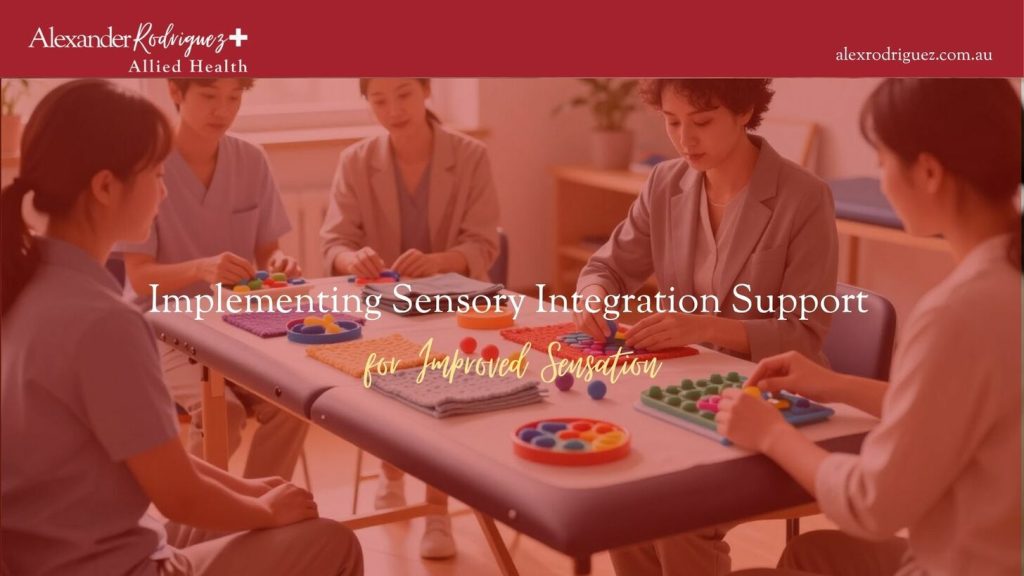
Implementing Sensory Integration Support for Improved Sensation
Recovery after a stroke isn’t just about getting stronger; it’s also about learning to feel the world again. Sensory changes, like reduced touch, temperature awareness, or difficulty sensing where your limb is in space, can make movement and coordination much harder, even when strength is improving. This is why sensory integration support forms an important part of comprehensive stroke rehabilitation, alongside physical exercises.
As part of your occupational therapy, sensory integration techniques help retrain how your brain processes information from your affected arm and hand, supporting better control and confidence in everyday movement. This work often goes hand in hand with rebuilding fine motor skills, since accurate sensation plays a big role in tasks like buttoning clothing, handling utensils, or picking up small objects. A well-rounded stroke treatment plan, delivered through a trusted Allied Health Service, brings these elements together, helping you not just move more, but feel more connected to your surroundings as you recover.
Techniques to re-educate your sensory pathways
Re-educating your senses is key in stroke treatment. We use special activities to help your brain understand your body better. These exercises are regular and repeated to help your brain adapt.
- Texture discrimination: Touching different materials like silk, wool, or sandpaper to stimulate nerve endings.
- Weight bearing: Applying gentle pressure through the arm to provide feedback to your joints.
- Temperature awareness: Using safe, controlled temperature changes to help your brain recognise hot and cold again.
Managing hypersensitivity or numbness in the hand and arm
Dealing with hypersensitivity or numbness can be tough, but a patient-focused approach can make a real difference. The goal is functional safety while gradually helping the affected limb feel more normal again. If the hand is overly sensitive, gentle techniques are often used to help the nervous system get used to touch over time.
If numbness is the main issue, the focus shifts towards protecting the limb from harm, since reduced sensation can make it harder to notice injuries. Checking the skin regularly and using visual cues to compensate for reduced feeling are both important parts of staying safe. Below is a table showing common sensory issues and how they’re typically managed.
| Sensory Challenge | Primary Goal | Support Strategy |
|---|---|---|
| Hypersensitivity | Reduce discomfort | Gradual texture exposure |
| Numbness | Ensure safety | Visual monitoring techniques |
| Poor Coordination | Improve precision | Proprioceptive loading |
| Delayed Response | Speed up processing | Repetitive sensory input |
Practising Functional Skills for Daily Tasks
Getting back to doing things on your own often starts with small, everyday actions rather than big milestones. Functional skill practice is a key part of stroke rehabilitation, helping you complete daily tasks with more ease, safety, and confidence as your recovery progresses. Rather than working in isolation, exercises are practised in the context of real life, such as making a cup of tea, opening jars, or getting dressed, so the skills you build actually translate to your home environment.
This practical, hands-on approach is a core part of occupational therapy, focusing on rebuilding the fine motor skills needed for tasks like writing, using cutlery, or managing buttons and zips. As your stroke treatment progresses, a qualified Allied Health Service will gradually introduce more complex, real-world situations, making the transition from therapy sessions to everyday home life feel smoother and more natural, so your progress carries over into the life you’re working to get back to.
Breaking down complex movements into manageable steps
Many daily tasks, like buttoning a shirt or using a spoon, require many actions. When these tasks seem too hard, we help you break them down into smaller steps. This way, you can focus on one fine motor skill at a time, without feeling overwhelmed.
Learning one small part at a time helps you build a strong base. This method lowers frustration and keeps you motivated. You’ll see your ability to do daily tasks grow as you progress.
Using repetitive task training to build neural pathways
Repetitive task training is a powerful tool for your brain after a stroke. Doing the same tasks over and over strengthens the brain’s motor control pathways. This is crucial for better fine motor skills and smoother movements.
The table below shows how different practices help you reach your recovery goals:
| Practice Type | Primary Focus | Key Benefit |
|---|---|---|
| Task-Specific | Daily Living | Increased Independence |
| Repetitive | Neural Plasticity | Improved Coordination |
| Graded | Skill Complexity | Reduced Frustration |
Staying consistent with your practice helps you grow in real-world settings. Every repetition brings you closer to doing the things that make your life meaningful and joyful.
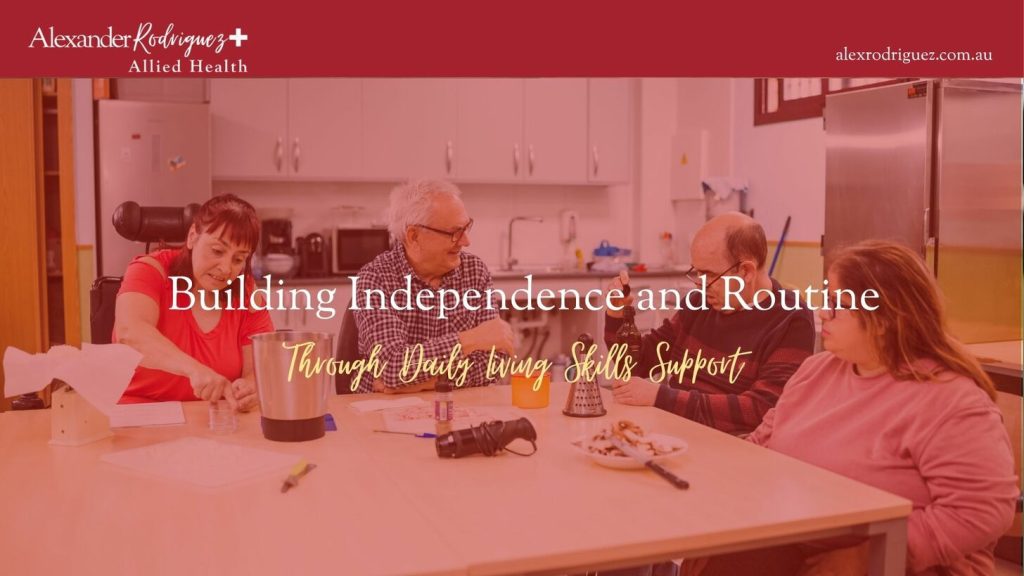
Building Independence and Routine Through Daily Living Skills Support
Getting back to normal after a stroke often begins with the simplest of tasks, brushing your teeth, making breakfast, or getting dressed without help. Daily living skills support focuses on these everyday goals, breaking them down into manageable steps as part of your broader stroke rehabilitation. Achieving these small wins matters; they build the foundation for a routine that feels steady and familiar again.
As part of occupational therapy, this work often involves practising the same fine motor skills used in tasks like buttoning clothes, preparing meals, or managing personal care, so your home starts to feel manageable rather than overwhelming. A structured stroke treatment plan, guided by a trusted Allied Health Service, helps you build these routines gradually, giving you back a sense of control over your day and your independence, one task at a time.
Strategies for dressing and grooming with one hand
Learning to dress and groom with one hand is a big step. We teach you techniques that make mornings easier and less tiring. Small changes can make a big difference in your daily life.
- Use button hooks or zipper pulls to manage clothing fasteners independently.
- Choose loose-fitting garments that are easier to put on and take off.
- Utilise non-slip mats in the bathroom to ensure safety while grooming.
- Explore adaptive grooming tools designed for one-handed use.
Creating a daily routine that fosters confidence
A daily routine gives you a sense of control and predictability. Our Independence and Routine Building Support helps you create a schedule. This balance of rest and activity is key for your recovery.
Your support network is also crucial. Occupational therapists teach carers how to use assistive tools safely. This way, your home stays a supportive place for you. Involving your loved ones helps create an environment that supports your growth and lasting independence.
Utilising Cognitive and Behavioural Strategy Support for Motor Control
Recovering motor control after a stroke is about more than physical exercise alone; it also involves how you think, plan, and respond to challenges along the way. Cognitive and behavioural strategy support helps address the mental barriers that can slow progress, such as frustration, fear of movement, or difficulty concentrating during tasks. This side of stroke rehabilitation is often just as important as the physical work, keeping your brain actively engaged in the recovery process.
Within occupational therapy, these strategies are often woven into practical exercises, helping you build the focus and problem-solving skills needed to support fine motor skills as they redevelop. A thoughtful stroke treatment plan takes this mind and body connection into account, and working with an experienced Allied Health Service ensures these cognitive and behavioural approaches are tailored to you, helping your brain and body work together as you regain control.
Mental imagery and visualisation techniques
Mental imagery is a proven method to reconnect with your affected limb. When you vividly imagine yourself doing a movement, you activate the same brain paths as real activity. This is great for improving your fine motor skills over time.
Begin by imagining your hand holding a cup or your fingers tapping a table for a few minutes each day. This mental practice gets your muscles ready for the real thing. It links your intention with your physical ability.
Overcoming learned non-use of the affected limb
Learned non-use happens when you stop using your affected arm because it’s hard or frustrating. Our Cognitive and Behavioural Strategy Support helps you overcome this by encouraging small, regular efforts. By making a conscious choice to use your limb in daily tasks, you stop your brain from forgetting how to control it.
Consistency is your greatest ally in this journey. Even if the movement seems small, trying is key for brain flexibility. As you keep trying, you’ll see better fine motor skills and more confidence in your daily life.
Managing Emotional Regulation Support During Your Recovery Journey
Your emotional health is just as important as your physical recovery after a stroke. While you work on rebuilding strength and movement, it’s common to experience a wide range of emotions, from frustration and grief to anxiety about the changes in your life. Emotional regulation support is often included as part of stroke rehabilitation, recognising that mental wellbeing plays a real role in how well recovery progresses.
Within occupational therapy, this might involve simple strategies to manage stress, build patience with the pace of progress, or work through difficult feelings as they come up during sessions. A well-rounded stroke treatment plan doesn’t separate mind from body, and a supportive Allied Health Service will help you navigate these emotional ups and downs alongside your physical recovery, because prioritising your mental health is just as crucial to your long-term happiness and success.
Coping with the psychological impact of stroke
Feeling frustrated, sad, or anxious is normal after a stroke. It’s okay to miss the life you had before. Recognising these feelings is the first step to finding balance again.
You don’t have to face these feelings alone. By knowing what triggers your emotions, you can find healthy ways to deal with them. Emotional Regulation Support helps you stay focused, even when recovery is tough.
Building Resilience through Mental Health Occupational Therapy Support
Recovery works best when the whole person is considered, not just physical abilities alone. Mental health occupational therapy support helps equip both individuals and their caregivers with practical tools for a successful recovery, recognising that emotional wellbeing plays just as important a role as physical progress.
Learning about emotions and how to manage them is often a key part of this process, helping to build inner strength and confidence throughout rehabilitation. By giving mental health the same attention as physical recovery, a strong foundation is laid for lasting independence and long-term wellbeing.
Adapting Your Home and Work Function Support
Your recovery journey goes well beyond the clinic; it extends into your home and workplace too. Getting the right home and work function support is a key part of stroke rehabilitation, helping you return to daily life safely and with genuine confidence rather than uncertainty. This often involves looking closely at your everyday environment to identify where small adjustments could make the biggest difference.
Simple changes, like rearranging furniture, adding grab rails, or adjusting how tasks are set up at work, can reduce physical strain and help prevent accidents as you regain movement and fine motor skills. As part of your occupational therapy, these practical adaptations are considered alongside your broader stroke treatment goals, and a trusted Allied Health Service can guide you through what changes might suit your specific home or workplace. This way, you can stay independent while continuing to focus on the rehabilitation goals that matter most to you.
Modifying your environment for better accessibility
Occupational therapists do a detailed home assessment. They look for environmental barriers. They check for risks like uneven flooring or poor lighting.
Simple changes, like grab rails or removing rugs, can help a lot. Creating a safe sanctuary at home saves your energy. It lets you focus on the exercises that help your recovery.
Returning to work with Chronic Condition Support
Going back to work is a big step, and making sure it’s a step that can be sustained matters just as much as taking it in the first place. Tailored chronic condition support focuses on helping manage both health needs and job demands together, rather than treating them as separate challenges.
Identifying necessary workplace changes, such as ergonomic seating or adjusted task setups, often forms an important part of this process. These changes help support long term wellbeing at work, making it easier to stay in a role while continuing to manage a chronic condition.
| Focus Area | Primary Goal | Key Benefit |
|---|---|---|
| Home Safety | Fall Prevention | Increased Independence |
| Workplace Ergonomics | Task Efficiency | Reduced Fatigue |
| Chronic Condition Support | Health Management | Sustainable Employment |
Whether it’s adapting the home or returning to the office, home and work function support helps make that transition more manageable. With the right chronic condition support in place, it becomes possible to manage health needs while still working towards personal and professional goals.
Accessing Professional Allied Health Service and Injury Recovery Support
Starting your recovery journey needs the right support from day one. Working with a qualified Allied Health Service is key to making sure you get the coordinated care needed to achieve your goals, whether you’re recovering from a stroke, injury, or other condition affecting movement and function.
Evidence-based stroke guidelines recommend that screening and assessment begin within 48 hours of admission, wherever possible, as this early start plays an important role in maximising recovery potential. Getting this timing right helps lay a strong foundation for your stroke rehabilitation, giving your occupational therapy team the information they need to build an effective stroke treatment plan early and support the fine motor skills and function you’ll continue working on throughout your recovery.
How to contact Alex Rodriguez Life Coach for a consultation
Looking for Injury Recovery Support? Contacting a specialist is often the first step towards getting the right care in place, and it doesn’t need to be complicated. Alex Rodriguez Allied Health offers custom guidance tailored to your rehab journey, taking the time to properly understand your circumstances, your history, and what you’re hoping to achieve before recommending a way forward. Whether you’re recovering from a stroke, managing an injury, or working through ongoing physical challenges, having the right person in your corner from the start can make a real difference to how your recovery unfolds.
During your consultation, we’ll talk through your needs, your current abilities, and what recovery looks like for you personally, not just on paper, but in your day-to-day life. This conversation helps shape a plan that genuinely fits your lifestyle, your goals, and your pace, rather than following a generic template. From there, your occupational therapy sessions can focus on the areas that matter most to you, whether that’s rebuilding fine motor skills, working towards greater independence at home, or supporting a broader stroke rehabilitation and stroke treatment journey. Reaching out for that first consultation is simply the starting point; everything that follows is built around you.
Contact Us to Begin Your Recovery
Your recovery journey is a marathon, not a sprint. Having the right support system around you makes a real difference in your daily life, and by combining physical, cognitive, and emotional strategies, genuine improvements in upper limb function become possible over time. Effective stroke rehabilitation takes patience and a steady commitment to your goals, but you have the inner strength to face these challenges with grace. Every small movement you make, no matter how minor it may seem, is a real victory on your path towards greater independence.
Staying committed to your occupational therapy and stroke treatment plan is often what makes the biggest difference to long-term results, especially when it comes to rebuilding fine motor skills, confidence, and independence over time. Keep moving forward with confidence as you build a brighter future. The efforts you put in today lay the foundation for a more capable and fulfilling life tomorrow. With the right Allied Health Service and support around you, you have both the tools and the strength needed to succeed in your recovery.
Conclusion
Your recovery journey is a marathon, not a sprint. Having the right support system around you makes a real difference in your daily life, and by combining physical, cognitive, and emotional strategies, genuine improvements in upper limb function become possible over time. Effective stroke rehabilitation takes patience and a steady commitment to your goals, but you have the inner strength to face these challenges with grace. Every small movement you make, no matter how minor it may seem, is a real victory on your path towards greater independence.
Staying committed to your occupational therapy and stroke treatment plan is often what makes the biggest difference to long-term results, especially when it comes to rebuilding fine motor skills, confidence, and independence over time. Keep moving forward with confidence as you build a brighter future. The efforts you put in today lay the foundation for a more capable and fulfilling life tomorrow. With the right Allied Health Service and support around you, you have both the tools and the strength needed to succeed in your recovery.
Ready to Start Your Recovery Journey?
At Alex Rodriguez Allied Health, our occupational therapy team can help you rebuild strength, confidence, and independence after a stroke.
Book Online, Email: info@alexrodriguez.com.au, Call: 0429 220 646
FAQ
What is the benefit of choosing an allied health service for my stroke treatment?
Choosing a professional service like Alex Rodriguez Life Coach ensures a comprehensive approach. Your physical, cognitive, and emotional needs are addressed by experts, leading to a holistic recovery.
How can I improve my fine motor skills after a stroke?
Fine motor skills improve through repetitive task training and functional skill practice. At Alex Rodriguez Life Coach, we break down complex movements into manageable steps to rebuild necessary neural pathways.
Why is the Functional Independence Measure (FIM) used in stroke rehabilitation?
The Functional Independence Measure (FIM) is used to assess your abilities. It helps track your progress, celebrate your achievements, and adjust your treatment plan for independence.
How soon should I start occupational therapy after a stroke?
Start occupational therapy within 48 hours of admission. Early intervention is crucial for effective treatment, capitalising on the brain’s early healing window.
What is “learned non-use,” and how do you treat it?
Learned non-use occurs when you stop using your affected limb due to difficulty. We use cognitive and behavioural strategies to encourage active use of your affected arm, restoring function and fine motor skills.
How do I book a consultation for injury recovery support?
Book a consultation by calling Alex Rodriguez Life Coach on 0429 220 646. We will discuss your needs and create a personalised rehabilitation plan.