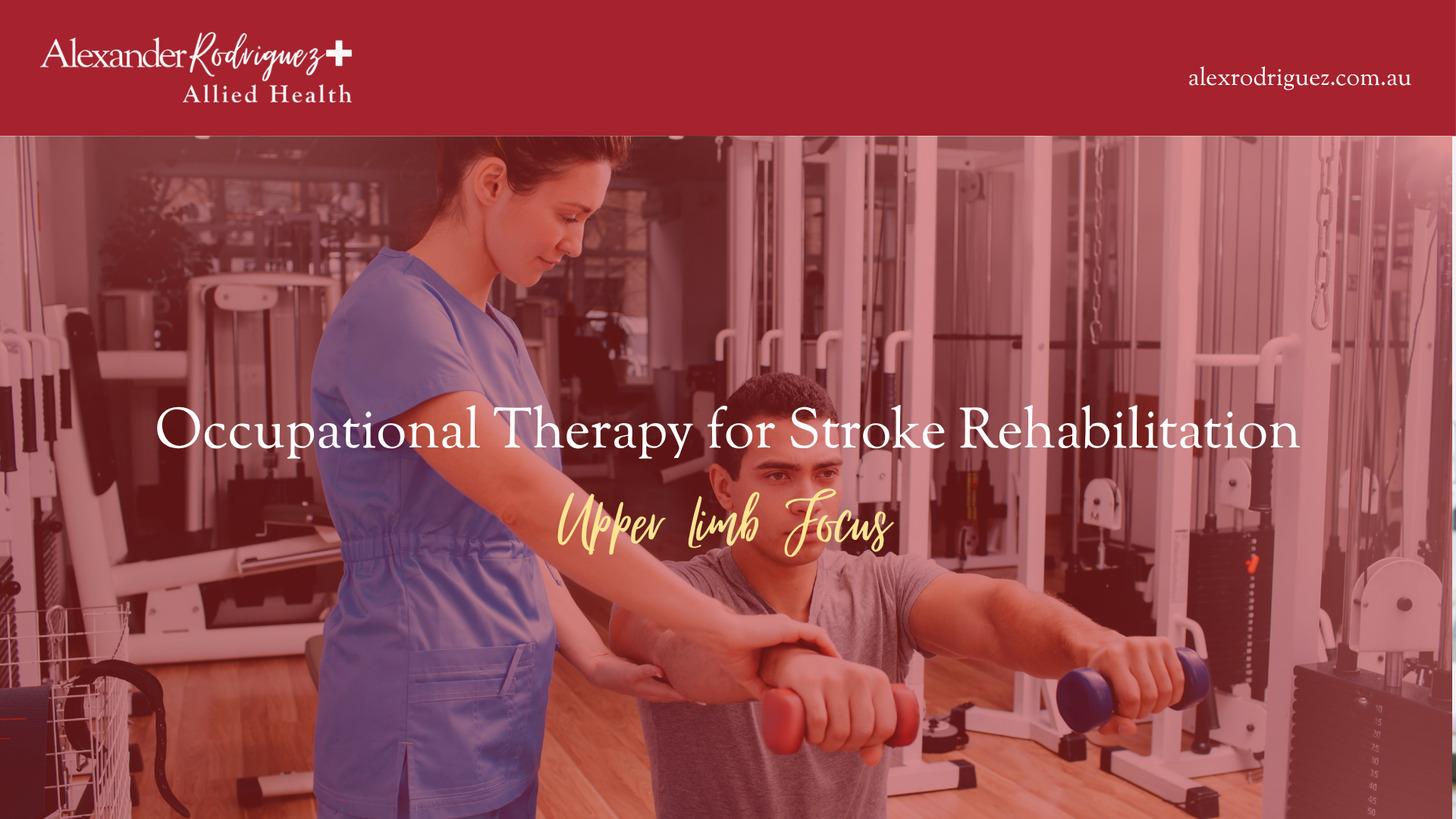
Occupational Therapy for Stroke Rehabilitation: Upper Limb Focus
Occupational therapy plays a vital role in your stroke recovery, especially when your upper limb has been affected. In Australia, stroke is one of the leading causes of long-term disability, with around 425,000 Australians living with the effects of stroke and more than 41,000 stroke events occurring each year. Many people experience weakness in the arm or hand, making everyday activities like eating, dressing, or writing difficult.
Through Stroke Rehabilitation, occupational therapy supports you to relearn these tasks by improving movement, coordination, and independence. As part of an Allied Health Service, your therapist works with you to build practical skills that fit into your daily life, helping you regain control and confidence during stroke treatment.
After a stroke, regaining upper limb function is often one of your biggest goals. Difficulties with grip, coordination, and hand use can affect your fine motor skills, which are essential for work, home tasks, and social activities. Australian research shows that ongoing rehabilitation significantly reduces long-term disability and improves quality of life for stroke survivors. With the guidance of occupational therapy, you practise targeted movements and meaningful activities that support real-life recovery. By staying engaged in Stroke Rehabilitation and working closely with your Allied Health Service, you give yourself the best chance to improve arm function and move forward with greater independence after stroke treatment.
At Alex Rodriguez, we understand how challenging living after a stroke can be. If you are noticing changes in your arm or hand movement, daily routines, or confidence, support is available to help you feel safer and more in control. Call us on 0429 220 646 or email nfo@alexrodriguez.com.au or book online to take the first step. We know how vital a positive outlook is, and our occupational therapy services are designed to support your stroke rehabilitation and help you see life in a brighter light.




Alexander Rodriguez
Seize the Day, Book an Appointment Today
Reach out anytime. Book online, call us, or visit our office in person.
Key Takeaways
- Occupational therapy is vital for improving upper limb function after a stroke.
- Personalised stroke treatment supports safe recovery and daily independence.
- Targeted Stroke Rehabilitation helps rebuild strength, movement, and coordination.
- Improving fine motor skills makes everyday tasks easier and more manageable.
- Support from an Allied Health Service addresses physical, emotional, and functional needs.
Understanding the Role of Occupational Therapy in Stroke Recovery
Your recovery journey is unique, and having the right support can make a meaningful difference. Occupational therapy plays an essential role in Stroke Rehabilitation by helping you move from hospital-based care into everyday life. After a stroke, simple tasks like dressing, cooking, or using your hands can feel challenging. Occupational therapists focus on practical stroke treatment approaches that help you adapt, rebuild skills, and regain independence in activities that matter most to you.
Through guided practice and tailored strategies, occupational therapy helps improve movement, coordination, and confidence, especially in daily routines that rely on your upper limb and fine motor skills. As part of an Allied Health Service, your therapist works alongside you to overcome barriers, build problem-solving skills, and support a smoother return to meaningful roles at home, work, and in the community.
Why your upper limb needs targeted rehabilitation
The upper limb is a main focus in your recovery. It’s vital for almost all daily tasks. Without specific care, regaining arm and hand function after a stroke can be tough.
Specialised stroke rehabilitation aims to retrain your brain and muscles. It improves coordination and strength by focusing on specific movements. This ensures you move with purpose and control.
Assessing Your Current Upper Limb Function
Your recovery journey begins with understanding what your arm and hand are able to do right now. After a stroke, changes in strength, movement, and coordination are common, and these can affect everyday tasks such as reaching, gripping, or using tools. Taking the time to assess your current upper limb function helps you and your therapist identify which movements are working well and which areas need extra support. This process forms a clear starting point for effective stroke treatment and ongoing Stroke Rehabilitation.
By setting a realistic baseline, occupational therapy can be tailored to your specific needs and goals. Your therapist may look at your range of movement, muscle control, and how your arm and hand perform during daily activities. This personalised approach allows your Allied Health Service team to design therapy that builds on your strengths while safely addressing limitations. With a clear plan in place, you can track progress over time, stay motivated, and work towards improving upper limb use and fine motor skills in a way that fits your lifestyle.
Identifying your baseline capabilities
Your therapist will do some gentle movements to see how your muscles and joints react. This helps find out which areas need the most injury recovery support. You might find some movements easy, while others need more effort and patience.
This is like taking a photo of your current health. Your therapist will check your range of motion, grip strength, and how you do simple tasks. This info helps create rehabilitation services that target your specific challenges.
Tracking progress through functional assessments
After setting your baseline, you’ll use functional assessments to track your progress. These assessments show how far you’ve come since your first session. Seeing these improvements can really motivate you during your stroke treatment.
Your therapist will regularly check these results to make sure your rehabilitation services are working. If an exercise gets too easy, they’ll change your routine to keep you moving towards your goals. This structured approach keeps your recovery focused on what matters most for your daily life.
| Assessment Metric | Purpose | Frequency |
|---|---|---|
| Range of Motion | Measure joint flexibility | Every 2 weeks |
| Grip Strength | Track muscle power | Monthly |
| Task Completion | Evaluate daily function | Every 4 weeks |
| Coordination Test | Assess motor control | Every 6 weeks |
Setting Realistic Goals for Functional Skill Practice
Breaking your recovery goals into small, manageable steps helps make the process clearer and less overwhelming. After a stroke, large goals can feel out of reach, but daily practice focused on simple, meaningful tasks allows steady progress. With guidance from occupational therapy, you can set goals that match your current ability and gradually build toward more complex movements using your arm and hand.
Achievable milestones play an important role in keeping you motivated throughout your stroke treatment journey. Focusing on what you can work on today, such as improving grip, reach, or coordination, helps you see progress more clearly. Each success builds confidence and supports long-term improvement during Stroke Rehabilitation, making it easier to stay engaged and work towards greater independence in everyday life.
Defining your personal recovery milestones
Big recovery goals can feel too much, but breaking them down makes them doable. Think of these as stepping stones to greater independence. Every small victory counts, like holding a cup or buttoning a shirt.
Working with rehabilitation services helps you focus on key skills for your lifestyle. Prioritising these skills means your efforts improve your life at home.
Creating a structured routine for daily practice
Consistency is key in recovery. By adding your practice to your daily routine, you make progress without it taking over your day.
Try to do your exercises at the same time each day. This builds a reliable rhythm. Whether it’s during your morning coffee or while watching the evening news, routine building helps your brain create new pathways.
Remember, your stroke treatment plan should change as you get better. Regularly check in with your therapist to make sure your rehabilitation services match your goals for independence.
Step-by-Step Guide to Daily Living Skills Support
Daily living skills support is a key part of occupational therapy and plays an important role in your Stroke Rehabilitation journey towards regaining independence at home. After a stroke, everyday tasks such as dressing, preparing meals, or personal care can be harder, especially when upper limb movement and fine motor skills are affected. Through personalised stroke treatment, occupational therapists focus on practical strategies that help you safely practise daily activities, build strength, and relearn movements that support real-life function.
You might think some movement-based strategies are only used with children, but these approaches are just as effective for adults recovering from neurological events. By focusing on small, consistent wins, occupational therapy helps your brain and body adapt over time. With support from an Allied Health Service, step-by-step practice strengthens your confidence, improves upper limb use, and allows you to manage your household with greater ease as you progress through Stroke Rehabilitation.
Breaking down complex tasks into manageable steps
Complex activities often feel overwhelming when your upper limb function is limited. The secret lies in task analysis, which involves breaking a single activity into smaller, bite-sized actions. By focusing on one movement at a time, you reduce cognitive load and physical strain.
For example, instead of trying to prepare an entire meal at once, focus solely on gathering your ingredients. Once that is complete, move to the next step of chopping or mixing. This structured approach ensures you remain safe while building the stamina needed for longer tasks.
Using adaptive equipment for independence
Adaptive equipment acts as a bridge between your current abilities and your goals. These tools are designed to compensate for reduced grip strength or a limited range of motion. Investing in the right gear allows you to maintain your dignity and privacy during daily routines.
Selecting the right tools for your kitchen
Your kitchen should be a space of creativity, not frustration. Consider using rocker knives, which allow you to cut food with a simple rocking motion rather than a sawing action. Non-slip mats are also essential to keep your bowls and plates stable while you work with one hand.
Modifying personal grooming routines
Grooming is a deeply personal experience that contributes to your overall well-being. Much like the developmental focus found in pediatric occupational therapy, we encourage you to use long-handled brushes or electric toothbrushes to reduce the need for complex wrist movements. Simplifying your setup by placing items at waist height can also prevent unnecessary reaching and fatigue.
Implementing Strengthening and Mobility Support Exercises
Getting your upper limbs moving again is a key part of regaining independence after a stroke. Occupational therapy plays an important role in Stroke Rehabilitation by helping you rebuild strength and improve mobility in your shoulder, elbow, wrist, and hand. After a stroke, weakness or stiffness can limit everyday actions like reaching, lifting, or holding objects. Targeted strengthening and mobility exercises support safe movement and help restore control as part of a structured stroke treatment plan.
With guidance from an Allied Health Service, these exercises are introduced gradually and adjusted to suit your ability and goals. Occupational therapy focuses not only on muscle strength but also on coordination and fine motor skills needed for daily tasks. By practising consistent, purposeful movements, you can improve upper limb function, build confidence, and take meaningful steps forward in your recovery journey through Stroke Rehabilitation.
Safe range-of-motion exercises for the shoulder and elbow
Stiffness is common after a stroke, but gentle movement can prevent it. Start with slow, controlled stretches to improve your movement. Always stop if you feel sharp pain.
Your therapist might recommend shoulder rolls or elbow extensions. These exercises keep your joints flexible, which is crucial for supporting your chronic condition. Sticking to these exercises is important for progress.
Building grip strength for everyday objects
Building grip strength lets you easily handle items like cups or door handles. Use tools like stress balls or therapy putty to strengthen your hand muscles. These methods, similar to those used in pediatric occupational therapy, are effective for adults too.
The table below shows how different exercises help with daily tasks:
| Exercise Type | Primary Benefit | Daily Application |
|---|---|---|
| Shoulder Pendulums | Reduces joint stiffness | Reaching for high shelves |
| Elbow Flexion | Improves arm control | Bringing food to your mouth |
| Grip Squeezes | Increases hand power | Holding a coffee mug |
| Wrist Rotations | Enhances dexterity | Turning a door handle |
By adding these exercises to your daily routine, you’re on the path to better health. Remember, every small step forward is a big win for your long-term success.
Refining Fine Motor Skills Through Therapeutic Activities
Regaining precise hand and finger movement is an important step in your recovery after a stroke. Fine motor skills allow your hands and fingers to work together smoothly, which is essential for tasks like writing, using cutlery, managing buttons, or handling small objects. During Stroke Rehabilitation, occupational therapy focuses on retraining these detailed movements so you can return to daily activities with greater ease and confidence as part of your overall stroke treatment.
Therapeutic activities are highly effective for improving coordination and control in a safe, structured way. Through occupational therapy, you practise task-based activities that challenge grip strength, dexterity, and hand-eye coordination without overwhelming your recovery. As part of an Allied Health Service, these activities are tailored to your current ability and progressed gradually, helping you rebuild fine motor control, improve upper limb function, and support meaningful independence throughout your Stroke Rehabilitation journey.
Exercises to improve dexterity and coordination
Improving hand function needs regular practice. Start with simple tasks that get harder as you get better.
Try these therapeutic activities every day to improve your dexterity:
- Coin sorting: Pick up coins of different sizes and put them into a narrow slot.
- Pegboard puzzles: Use your thumb and index finger to place small pegs into holes.
- Therapy putty: Squeeze, stretch, and roll soft putty to build finger strength and flexibility.
- Buttoning practice: Use a practice board with various button sizes to improve coordination.
Using repetitive task training for neural plasticity
Your brain can change and adapt, a process called neural plasticity. Doing the same movement over and over helps your brain make new pathways.
Repetitive task training is key to better fine motor skills. It’s not just about muscle exercise. It’s about training your nervous system to regain control.
Be patient with your progress. Small, repeated efforts lead to big gains over time. Every time you do therapeutic activities, you’re strengthening the connection between your mind and body.
Integrating Cognitive and Behavioural Strategy Support
The mental side of recovery is just as important as the physical, especially during Stroke Rehabilitation. While your hands and arms work to regain movement, your mind is adjusting to changes in memory, attention, and confidence. Occupational therapy recognises that improving fine motor skills is not only about exercise, but also about staying motivated, focused, and emotionally supported throughout your stroke treatment journey.
By integrating cognitive and behavioural strategies, occupational therapy helps you build a positive mindset and stronger self-belief. Techniques such as goal-setting, routine-building, and problem-solving support your ability to practise fine motor tasks consistently. As part of a holistic Allied Health Service, these strategies help you manage frustration, stay engaged in therapy, and maintain focus on progress. Supporting both mind and body allows you to achieve more meaningful and lasting improvements in fine motor skills during your Stroke Rehabilitation.
Managing fatigue during your rehabilitation sessions
Fatigue can make it hard to do therapeutic activities. It’s key to know your limits and listen to your body. Break tasks into smaller parts to manage your energy better.
Do your hardest exercises when you’re most awake. Short breaks help you keep going without getting too tired. Remember, pacing yourself is a sign of getting better, not failing.
Developing strategies to overcome frustration
Feeling frustrated is normal when progress is slow or when tasks are hard. Good behavioural strategies can help manage these feelings. Celebrate small victories to keep your focus on the journey, not just the end.
Positive self-talk can also help a lot. If you’re stuck, ask your support team for help. Being flexible in your routine lets you adjust to your changing needs while continuing your stroke rehabilitation.
| Strategy | Benefit | Implementation |
|---|---|---|
| Energy Pacing | Reduces burnout | Rest every 20 minutes |
| Goal Reframing | Boosts morale | Focus on daily wins |
| Mindful Breathing | Lowers frustration | Use during rest breaks |
Managing Sensory Integration Support for Better Control
Improving your sensory awareness can make a meaningful difference to how you move and function each day after a stroke. If the brain has difficulty interpreting signals from your arm or hand, tasks like gripping objects or judging pressure can become challenging. As part of occupational therapy, sensory integration support is used during Stroke Rehabilitation to help reconnect how your brain processes touch, movement, and position. This awareness is a key foundation for better control and more effective stroke treatment outcomes.
By focusing on sensory integration, occupational therapy helps your brain and upper limb work more smoothly together. Activities may involve texture feedback, guided movement, or task-based practice that supports coordination and fine motor skills. Delivered through an Allied Health Service, this approach helps you feel more confident using your arm and hand in daily routines. Over time, improved sensory processing supports safer movement, stronger control, and greater independence throughout your Stroke Rehabilitation journey.
Techniques for desensitisation and sensory re-education
After a stroke, you might feel too sensitive or numb in your hand and arm. We use special therapeutic activities to make these feelings normal again. Desensitisation involves touching your skin with different textures, like soft fabrics or brushes, to lessen discomfort.
Sensory re-education then teaches your brain to identify objects just by touch. For example, you might reach into a bag to find something without looking. This helps your nervous system get better at understanding touch signals.
Improving proprioception for safer movement
Proprioception is knowing where your body is without looking. If this sense is off, your movements might feel awkward. Getting better at this is crucial for staying safe while doing everyday things.
There are specific therapeutic activities to boost your proprioception. These exercises challenge your sense of where your joints are. They include:
- Weight-bearing activities help give feedback to your joints.
- Mirror therapy helps your brain see the right limb position.
- Guided reaching tasks that focus on getting the right spot.
By doing these exercises regularly, you’ll see a big boost in your fine motor skills. This increased control lets you move with more confidence and precision all day long.
Adapting Your Home and Work Function Support
Recovery goes beyond the clinic and into your everyday environments. Occupational therapy plays an important role in Stroke Rehabilitation by helping you adapt your home and work spaces to better support your current abilities. After a stroke, small barriers such as furniture layout, lighting, or work setup can affect safety and independence. Making practical adjustments allows you to use your upper limb more confidently and apply what you are learning through stroke treatment in real life.
Simple changes can make a big difference to how you function each day. With guidance from an Allied Health Service, occupational therapy focuses on modifying tasks, tools, and environments to support movement, comfort, and fine motor skills. These adaptations help reduce fatigue, lower the risk of injury, and improve confidence at home and work. By creating supportive spaces, you are better able to practise daily activities, maintain progress, and strengthen independence throughout your Stroke Rehabilitation journey.
Modifying your environment for safety and efficiency
Think about how you use objects at home. Improving fine motor skills can start with simple things. For example, using non-slip mats or ergonomic handles on kitchen tools can help.
These changes make it easier to do everyday tasks without straining your body. It’s like the tips given in pediatric occupational therapy for kids. Making your home more accessible helps you save energy and avoid getting tired easily.
Returning to work with professional guidance
Going back to work is a big step. You need to plan carefully. Work with your therapist to figure out tasks that are hard for you. They can help you find ways to do them better.
Here’s a table to help you plan changes for different places:
| Setting | Primary Goal | Example Modification |
|---|---|---|
| Home Kitchen | Safety & Ease | Installing lever-style taps |
| Home Office | Efficiency | Using a vertical mouse |
| Workplace | Sustainability | Adjusting desk height |
| Commute | Independence | Using adaptive travel aids |
Your therapist can also help you talk to your boss about making your job easier. Working together, you can make your workplace better for you. Remember, sticking to your routine is key to doing well at work and in life.
Prioritising Occupational Therapy Support at Alex Rodriguez
After a stroke, the emotional side of recovery can feel overwhelming and may affect your motivation, confidence, and day-to-day life. Alongside physical changes, it is common to experience frustration, anxiety, or low mood during Stroke Rehabilitation. Alex Rodriguez Occupational Therapy Service recognises that emotional regulation and mental well-being are essential parts of effective stroke treatment, not something to be left until later.
Through a supportive and person-centred approach, occupational therapy provides a safe space to work through your feelings, rebuild routines, and strengthen coping strategies. As part of a trusted Allied Health Service, our therapists support you to manage stress, adjust to change, and stay engaged in your recovery. By prioritising emotional well-being, you also support progress in physical goals such as upper limb recovery and fine motor skills, helping you move forward with greater confidence and resilience throughout your Stroke Rehabilitation journey.
Coping with the emotional impact of a stroke
It’s normal to feel many emotions after a stroke. You might feel frustrated, sad, or anxious as you adapt to new daily challenges. Alex Rodriguez Allied Health helps you find ways to manage your emotions and regain balance.
We help you create personalised coping strategies that suit you. By tackling these emotions early, you can maintain a positive outlook and stay motivated in your recovery.
How to book your session with Alex Rodriguez
Starting your mental wellness journey is a big step. We make it easy to get our occupational therapy support when you’re ready. Our team is dedicated to offering an allied health service that meets your needs.
Speak with Our Occupational Therapy Team
If you’d like to talk directly, call us on 0429 220 646. Our friendly staff are ready to answer your questions and book an appointment that fits your schedule.
Book an Appointment Using Our Online Booking Portal
Or, book online at https://www.alexrodriguez.com.au/booking. This easy digital tool lets you see available times and book your first session with Alex Rodriguez Allied Health at your convenience.
Conclusion
Your journey to regain upper limb function is unique, and receiving the right professional support can make recovery more effective and rewarding. With occupational therapy, your stroke treatment is designed around your individual needs, goals, and daily routines, helping you build confidence and practical ability over time.
Working closely with a dedicated Allied Health Service supports consistent progress through Stroke Rehabilitation, from improving upper limb strength to restoring important fine motor skills. Every small step you take contributes to greater independence and comfort in everyday life. With the right guidance and persistence, meaningful change is achievable. Celebrate your progress, stay committed to your recovery, and look forward to a more confident and fulfilling future.
At Alex Rodriguez, we understand how challenging living after a stroke can be. If you are noticing changes in your arm or hand movement, daily routines, or confidence, support is available to help you feel safer and more in control. Call us on 0429 220 646 or email nfo@alexrodriguez.com.au or book online to take the first step. We know how vital a positive outlook is, and our occupational therapy services are designed to support your stroke rehabilitation and help you see life in a brighter light.