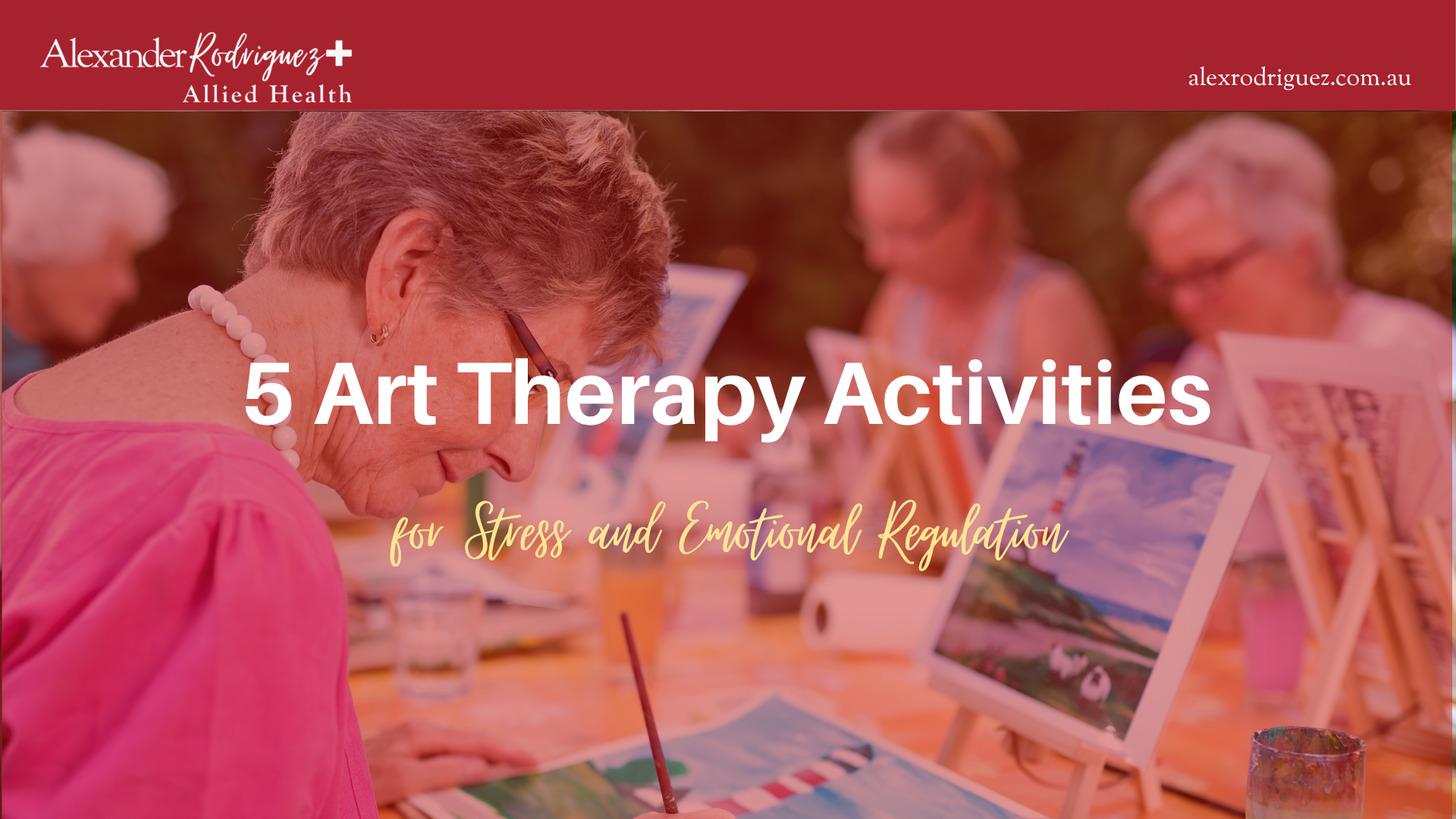
5 Art Therapy Activities for Stress and Emotional Regulation
Art therapy is a gentle and effective form of psychological therapy that uses creative expression to support your mental health and emotional well-being. According to Beyond Blue’s 2024 Australia’s Mental Health and Wellbeing Check, nearly half of all Australian adults experienced symptoms of anxiety or depression within just two weeks. That is a significant number of people quietly carrying stress, worry, and emotional weight in their everyday lives.
If you have been feeling overwhelmed, burnt out, or simply struggling to process what you are going through, you are not alone. Finding healthy ways to manage those feelings is one of the most important things you can do for yourself, and creative activities can be a surprisingly powerful place to start.
Stress relief does not always have to come from talking things through. Sometimes, expressing what you feel through colour, shape, or movement can reach the parts of you that words simply cannot. Art-based emotional regulation activities offer a low-pressure, accessible way to explore your inner world, build self-awareness, and develop practical coping skills. These five activities draw on principles used in allied health service and psychology service settings, and they are designed to be tried at home, at your own pace, and without any artistic experience needed. Whether you are managing ongoing stress or simply looking for new ways to care for your mental health, these techniques are a meaningful place to begin.
Looking for More Support? Our Psychology Services Can Help
If stress or difficult emotions are affecting your daily life, you do not have to navigate it alone. Alex Rodríguez offers personalised psychology services designed around your needs.
Call 0429 220 646, email info@alexrodriguez.com.au, or book a consultation online.




Alexander Rodriguez
Seize the Day, Book an Appointment Today
Reach out anytime. Book online, call us, or visit our office in person.
Key Takeaways
- Art therapy supports mental health, stress relief, and emotional regulation without needing any artistic skill.
- Creative expression reduces cortisol, steadies your heart rate, and calms your nervous system.
- The five activities in this blog are simple, practical, and easy to try at home.
- Art therapy complements psychological therapy and allied health service support beautifully.
- Even a few minutes of daily creative practice can meaningfully improve your wellbeing.
Understanding the Role of Art Therapy in Mental Health
Art therapy is a professionally supported practice that uses creative expression to support your physical, mental, and emotional well-being. When words feel difficult or simply not enough, art gives you another way to process what you are carrying inside. At its core, it is a form of psychological therapy that allows you to express complex emotions without needing to find the right words. This non-verbal approach can often reach deeper layers of thought and feeling, gently bringing awareness to experiences that are difficult to articulate. Whether through drawing, collage, or simple mark-making, creating something gives those experiences a shape you can actually work with.
From a mental health and allied health service perspective, the process of making art can shift how you relate to your challenges. It builds self-awareness, strengthens emotional regulation, and develops resilience over time. You do not need artistic talent or prior experience to benefit. What matters is the process, not the outcome. With the right support, art therapy can be a genuinely powerful tool for stress relief, personal growth, and a deeper understanding of yourself.
How Art Therapy Supports Emotional Regulation
One of the most recognised benefits of art therapy is its ability to support emotional regulation. When you are feeling overwhelmed, anxious, or emotionally stuck, creative expression offers a healthy outlet for externalising those feelings rather than holding them in. The act of putting emotion onto paper or into a physical form helps your nervous system slow down, creating space for reflection and calm. Over time, regularly engaging in art-based activities can help you recognise your emotional patterns, respond to triggers more thoughtfully, and build a stronger sense of inner stability.
How Art Therapy Connects to Everyday Mental Health
Art therapy is not just for people in crisis. It is a practical stress relief tool that can support your mental health on an everyday level. Whether you are managing work pressure, relationship challenges, grief, or general anxiety, creative expression offers a low-pressure way to check in with yourself and process what you are going through. As part of a broader allied health service or psychological therapy plan, it can complement other forms of support and help you develop coping skills that feel natural, accessible, and genuinely sustainable in your daily life.
The Science Behind Creative Expression and Emotional Regulation
Research into art therapy and mental health shows that creative expression has a measurable impact on how your brain and body respond to stress. When you engage in art-based activities, your body produces less cortisol, the hormone responsible for your stress response, which helps your nervous system shift into a calmer, more settled state. At the same time, focusing on colours, shapes, textures, and the physical act of creating draws your attention into the present moment. This gentle form of mindfulness activates your parasympathetic nervous system, often referred to as the rest-and-digest response, which lowers your heart rate, reduces muscle tension, and creates the conditions your mind needs to process difficult emotions more clearly. For many people, this is what makes art therapy such an effective tool for stress relief and emotional regulation.
From a psychological therapy perspective, the science also points to how creative expression supports communication between different parts of the brain. Art-making engages both the logical and emotional centres, which means it can help you access and process feelings that are stored deeper than conscious thought. This is particularly useful when verbal communication feels limited or when past experiences are difficult to put into words. As part of a broader allied health service or mental health support plan, understanding how creativity affects the brain can help you feel more confident about using these tools in your everyday life. It is not about making something beautiful. It is about giving your mind and body a safe and structured way to heal.
Art therapy changes your brain in amazing ways. It lets your mind process visuals instead of words. This is calming when you’re feeling stressed.
The Physiological Effects of Art Therapy on Stress and Anxiety
Knowing how your body reacts to creativity boosts your confidence. Regularly using creative tools helps you stay calm, even when things get tough. Here’s a table showing how your body changes when you create. Creative tools helps you stay calm, even when things get tough. Here’s a table showing how your body changes when you create.
| Physiological Marker | State of High Stress | State of Creative Flow |
|---|---|---|
| Cortisol Levels | Elevated | Reduced |
| Heart Rate | Rapid | Steady |
| Nervous System | Sympathetic (Fight/Flight) | Parasympathetic (Rest/Digest) |
| Mental Focus | Fragmented | Present-moment awareness |
Mindful Scribbling to Release Pent-up Stress
Picking up a pen and letting it move freely across the page is one of the simplest and most accessible art therapy activities you can try at home. Known as mindful scribbling, this practice requires no artistic skill, no planning, and no particular outcome in mind. All you need is a pen and a piece of paper. The act of drawing without direction encourages your mind to slow down and settle into the present moment, creating a quiet mental space where tension and pent-up stress can begin to loosen. As your hand moves, your focus naturally shifts away from the thoughts that have been weighing on you, giving your nervous system a gentle but effective reset.
From an emotional regulation perspective, mindful scribbling works because it gives your body a physical outlet for emotions that have been building up without release. Rather than suppressing what you feel or searching for the right words to describe it, you are simply allowing it to move through you and onto the page. This is one of the reasons art therapy and psychological therapy practitioners value expressive drawing as a tool for stress relief and mental health support. There is no right or wrong way to do it. The scribble itself is not the point. The process of letting go is.
Why repetitive motion calms the nervous system
The brain likes predictable, rhythmic patterns. Repetitive scribbling gives your nervous system a steady, soothing input. This helps lower your heart rate. The motion acts as a gentle anchor, pulling your focus back to the present.
By drawing simple lines or circles, you process energy safely. This method is very effective for stress relief. It tells your brain you’re in a safe, controlled place.
How to start your first session
Start by sitting comfortably and grabbing a plain piece of paper and your favourite pen. Don’t worry about the final image. Focus on the sensation of the pen moving on the paper. Notice the texture and the sound of the ink.
Let your hand move freely without judging. If you feel tension, breathe deeply while moving. This is a great way to take care of yourself and connect with your inner self.
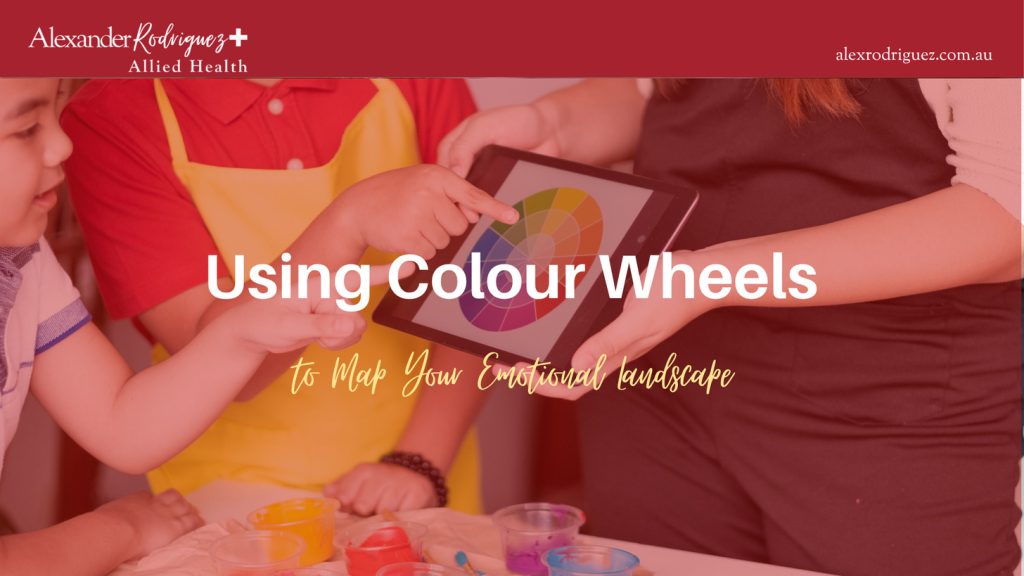
Using Colour Wheels to Map Your Emotional Landscape
Creating a personal colour wheel is a simple but surprisingly insightful art therapy activity that helps you build a stronger connection with your emotional world. The idea is to assign colours to specific feelings, for example, blue for sadness, yellow for joy, red for anger, or grey for exhaustion, and then map those colours in a way that reflects your current emotional state. There are no rules around which colour means what. The associations you choose are entirely personal, and that is precisely what makes this exercise so valuable. By visually representing your emotions rather than trying to articulate them verbally, you create a clear and tangible picture of what is happening inside you, which is often the first step towards meaningful emotional regulation.
From a psychological therapy and mental health perspective, this kind of emotional mapping helps you develop what is known as emotional literacy, the ability to identify, name, and understand your feelings with greater clarity and confidence. When you can see your emotions laid out in front of you, they feel less overwhelming and more manageable. This sense of distance and perspective is one of the reasons colour-based activities are valued within art therapy and broader allied health service practice. Over time, returning to your colour wheel regularly can also help you track shifts in your emotional landscape, giving you a practical and visual tool for stress relief and greater self-awareness in your everyday life.
Identifying your current emotional state
Start by sitting quietly and feeling your body. Think about what you’re feeling right now. It could be calm, frustration, joy, or anxiety.
Don’t worry about fancy names. Just focus on the feeling itself. Is it sharp, heavy, light, or unpredictable? Noticing these changes is key to controlling your mind.
Choosing colours that represent your feelings
After you’ve figured out how you feel, pick a colour that feels right. It’s all about what feels true to you. Maybe blue feels sad, or yellow feels excited.
By putting these colours on a wheel, you get a visual guide. This helps you see your moods over time. It makes your feelings easier to handle. Seeing them clearly can make them less overwhelming.
| Emotion | Suggested Colour | Physical Sensation |
|---|---|---|
| Calm | Soft Green | Slow breathing |
| Frustration | Deep Red | Tight muscles |
| Joy | Bright Yellow | Lightness in chest |
| Anxiety | Dark Grey | Racing heart |
Using this colour wheel often can really help with emotional regulation. It helps you spot patterns in your mood. This way, you can handle your life better.
Collage Making for Visualising Resilience and Clarity
Collage making is one of the most accessible and creatively freeing art therapy activities you can explore. By cutting and arranging images, words, textures, and colours from magazines, printed photos, or any materials you have on hand, you create a visual representation of your inner world, your values, your strengths, and the life you are working towards. Unlike other creative practices, collage requires no drawing ability or artistic confidence. The focus is entirely on what feels meaningful to you and why. This process of selecting and arranging imagery encourages you to tune into your instincts, clarify your thoughts, and connect with a deeper sense of purpose, all of which are powerful foundations for building resilience and mental health stability during uncertain or challenging times.
From an emotional regulation and psychological therapy perspective, collage making works because it externalises your internal experience in a way that feels safe and non-threatening. Seeing your values, hopes, and strengths represented visually on a page can act as a grounding reminder of what matters most to you, particularly when stress or anxiety makes it difficult to think clearly. Many allied health service practitioners incorporate collage-based activities into broader therapeutic work because the process itself, not just the finished piece, encourages reflection, stress relief, and a renewed sense of self-awareness. Returning to your collage during difficult moments can help anchor you and remind you of the inner clarity and resilience you already carry.
Gathering materials for your vision board
To start, collect items that speak to your personal journey. Look for old magazines, colourful photos, and natural textures like dried leaves or fabric. These elements help create a three-dimensional picture of your goals.
Don’t stress about finding perfect images right away. Just gather what draws your eye and feels important to you. A mix of textures and colours will make your board feel authentic and grounded.
Focusing on positive outcomes and self-esteem
With your materials ready, start picking images that show your strengths and future goals. This is a great way to boost your self-esteem by celebrating your achievements. Choose themes that show growth, peace, and overcoming challenges.
As you arrange these pieces, you’ll see your outlook shift to positive outcomes. This visual guide reminds you of your potential. It helps you stay focused, even when life gets tough.
| Material Type | Emotional Benefit | Suggested Use |
|---|---|---|
| Magazine Clippings | Provides clear visual goals | Representing future aspirations |
| Natural Textures | Grounds the physical senses | Adding depth to the background |
| Personal Photos | Connects to past resilience | Highlighting core strengths |
| Bright Colours | Boosts mood and energy | Emphasising positive outcomes |
Clay Sculpting to Ground Your Physical and Mental State
Clay sculpting is one of the most physically grounding art therapy activities available, and its benefits go far beyond simply keeping your hands busy. When you press, shape, and mould clay, you engage your sense of touch in a way that draws your full attention into the present moment. This sensory focus is what makes clay work so effective for stress relief. It is difficult to stay stuck in anxious thoughts when your hands are actively engaged with a physical material that responds directly to your touch. The repetitive, rhythmic nature of working with clay also has a naturally calming effect on the nervous system, helping your body shift out of a state of tension and into one of steadiness and calm. No experience or artistic skill is needed. Simply picking up the clay and beginning to move it is enough to start feeling the difference.
From a mental health and emotional regulation perspective, clay sculpting offers something that many other creative activities do not: a direct and immediate connection between your physical body and your emotional state. This mind-body connection is a key principle in both art therapy and psychological therapy, particularly when working through stress, anxiety, or feelings of disconnection. The act of grounding yourself through touch and physical sensation helps regulate your nervous system and brings a sense of control and presence that can feel difficult to access during overwhelming moments. As part of a broader allied health service support plan, or simply as a personal wellbeing practice, clay sculpting is a practical and deeply human way to find stillness, process difficult emotions, and reconnect with yourself.
The tactile benefits of working with clay
Clay offers unique physical feedback. As you press your fingers into it, you feel more connected to your body. This grounding effect is key when you feel lost or anxious.
Working with clay makes you slow down and breathe. It can absorb your emotions, offering a way to release them. This makes it a powerful tool for stress relief.
Techniques for releasing tension through touch
Start by kneading the clay with your palms. Press hard to get rid of air bubbles, like working out frustrations. This motion soothes your nervous system.
Then, shape the clay into forms that show your feelings. You don’t need to make a perfect piece. The goal is to use touch to process and release tension. By pressing, pulling, and smoothing, you find stress relief through your hands’ effort.
Guided Drawing for Processing Complex Emotions
Guided drawing is a structured art therapy activity that uses creative prompts or themes to help you explore and process emotions that feel too complex or layered to put into words. Unlike free drawing, guided drawing gives you a gentle starting point, for example, drawing how your body feels right now, illustrating a safe place in your mind, or mapping out a recent experience through shapes and imagery. This light structure makes the process feel more accessible, particularly if you are new to art therapy or find that a completely blank page feels overwhelming. By directing your focus towards a specific theme or feeling, guided drawing helps you move past surface-level thoughts and connect with deeper emotional layers that may have been difficult to access through conversation or reflection alone.
From a psychological therapy and mental health perspective, guided drawing is a valuable tool for building emotional regulation and self-awareness. The act of translating a complex internal experience into a visual form helps your brain process and organise what you are feeling in a way that feels contained and manageable. This is particularly useful when navigating grief, confusion, relationship challenges, or prolonged stress relief needs, where emotions can feel shapeless and hard to grasp. Many allied health service practitioners use guided drawing as part of a broader therapeutic approach because it bridges the gap between the conscious and subconscious mind, offering genuine insight into your emotional world. You do not need to be an artist to benefit. You simply need a willingness to follow the prompt and see where it leads you.
Setting an intention before you begin
Before starting, take a moment to centre your thoughts. Having a clear intention helps focus your creative energy. You might aim to tackle a challenge, seek peace, or release frustration.
This preparation shifts you from daily life to mindful reflection. With a clear goal, your drawing becomes a powerful tool for self-discovery and emotional control.
Interpreting your shapes and lines
After drawing, see your marks as a symbolic language for your feelings. Sharp lines might show stress or anger, while smooth curves suggest calm. Your interpretation is personal and unique.
Looking at your work with curiosity can reveal insights into your emotions. This reflection helps you understand what your mind needs for balance. Use the table below to categorise your visual elements.
| Visual Element | Potential Meaning | Emotional State |
|---|---|---|
| Jagged, dark lines | Internal tension | High stress |
| Soft, circular shapes | Need for comfort | Seeking balance |
| Open, expansive space | Desire for freedom | Clarity |
| Dense, overlapping marks | Feeling overwhelmed | Processing complexity |
Professional Psychology Services at Alex Rodriguez Allied Health
Finding the right mental health support is one of the most important steps you can take for your long-term wellbeing. At Alex Rodriguez Allied Health, we understand that reaching out can feel daunting, which is why we have created a safe, welcoming, and non-judgmental space where you can explore your thoughts, feelings, and experiences at your own pace. Our psychology service is designed to provide compassionate, personalised support that meets you where you are, whether you are navigating stress, anxiety, grief, relationship difficulties, or simply feeling like something is off and you are not quite sure why. You do not need to have everything figured out before you get in touch. That is what we are here for.
Our approach draws on evidence-based psychological therapy and broader allied health service principles to offer support that is practical, meaningful, and tailored to your individual needs and goals. We believe that with the right guidance, you can develop stronger emotional regulation skills, build resilience, and move towards a greater sense of clarity and well-being in your everyday life. Whether creative therapies like art therapy have opened the door for you or you are exploring professional support for the first time, our team is here to walk alongside you every step of the way.
How our team supports your mental health journey
Our dedicated team is committed to providing comprehensive psychological therapy tailored to your unique needs. We know everyone’s path is different. That’s why we focus on personalised care to help you achieve your goals.
As a trusted allied health service, we put your comfort and progress first. Whether you need mental clarity or to build resilience, our practitioners are here to guide you. They will support you through every stage of your recovery.
Accessing stress, anxiety, and trauma support
We offer a wide range of specialised care for life’s toughest moments. Our psychology service includes expert support for stress, anxiety, depression, and trauma recovery.
We also provide dedicated assistance for emotional regulation, relationship issues, and family stress. By choosing our allied health service, you get access to evidence-based strategies. These are designed to improve your overall quality of life.
Contacting our clinic for individual therapy sessions
If you’re ready to start, we invite you to reach out to our friendly team. You can discuss your needs for individual therapy sessions by calling us on 0429 220 646.
We’re happy to answer any questions you have about our professional psychological therapy options.
Booking your appointment online
Booking is easy and convenient. Visit our website to book your appointment online at https://www.alexrodriguez.com.au/counsellor-booking/.
Taking this first step is a powerful act of self-care. We look forward to supporting you on your path toward improved mental health and lasting resilience.
Conclusion
Art therapy is a flexible and genuinely accessible tool for building better emotional regulation, finding stress relief, and developing a deeper understanding of yourself. The five activities explored in this blog are designed to meet you exactly where you are, no artistic experience required, no pressure to get it right, and no specific outcome to chase. Whether you spend a few minutes mindfully scribbling at the end of a long day or slowly build a collage that reflects your inner world, each small creative act is a meaningful step towards greater self-awareness and mental health resilience. The key is to start gently, stay curious, and allow the process to unfold at its own pace.
Your path to emotional balance is entirely your own, and it does not have to look like anyone else’s. As you explore these art therapy activities and make them part of your everyday life, you may find that they open doors to feelings, strengths, and insights you did not know were there. If you feel ready to take that next step with professional guidance, compassionate psychology service and allied health service support is available to help you navigate complex emotions with care. With the right psychological therapy and personalised support behind you, a calmer, more grounded, and more mindful life is well within reach.
Looking for More Support? Our Psychology Services Can Help
If stress or difficult emotions are affecting your daily life, you do not have to navigate it alone. Alex Rodríguez Allied Health offers personalised psychology services designed around your needs.
Call 0429 220 646, email info@alexrodriguez.com.au, or book a consultation online.